Most water heater repairs in Everett cost between $150 and $600, though the final number depends on the type of unit, the parts involved, and whether the problem is caught early or left to get worse. Simple fixes like replacing a thermostat or pressure relief valve sit at the lower end. Gas control valve failures and tank damage push toward the higher range. Understanding what drives those numbers helps you ask the right questions before any work begins — and avoid paying more than you should.
This guide walks through every major cost factor for water heater services in Everett — from parts and labor to emergency rates and the repair-vs-replace decision. It also covers the warning signs that mean it’s time to stop guessing and call a licensed plumber.
Average Water Heater Repair Costs in Everett
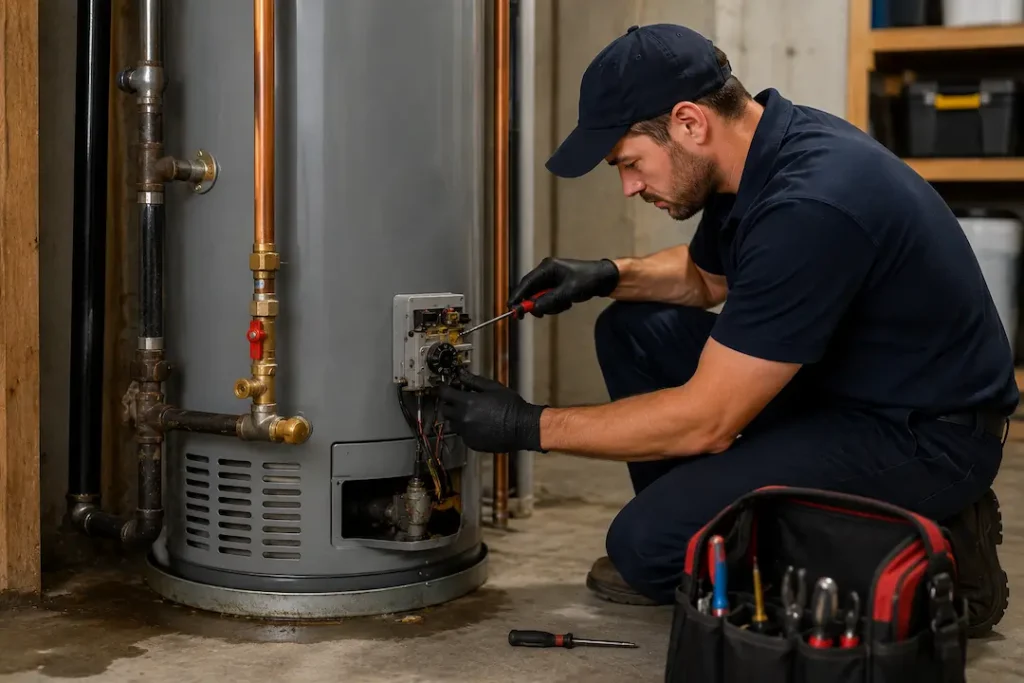
The table below shows what most homeowners in Everett pay for common water heater repairs. These are ballpark figures — your actual cost depends on parts availability, your unit’s age, and the company you hire.
| Repair Type | Typical Cost Range |
|---|---|
| Thermostat replacement | $150 – $250 |
| Pressure relief valve replacement | $150 – $300 |
| Heating element replacement (electric) | $200 – $400 |
| Anode rod replacement | $200 – $350 |
| Dip tube replacement | $300 – $450 |
| Gas control valve repair | $300 – $600 |
| Sediment flush (tank cleaning) | $100 – $200 |
| Tank leak repair / assessment | $200 – $500+ |
Emergency calls after hours add $100 to $200 to the base price. Weekend and holiday rates increase costs by 20% to 50%.
What Factors Affect Your Final Bill
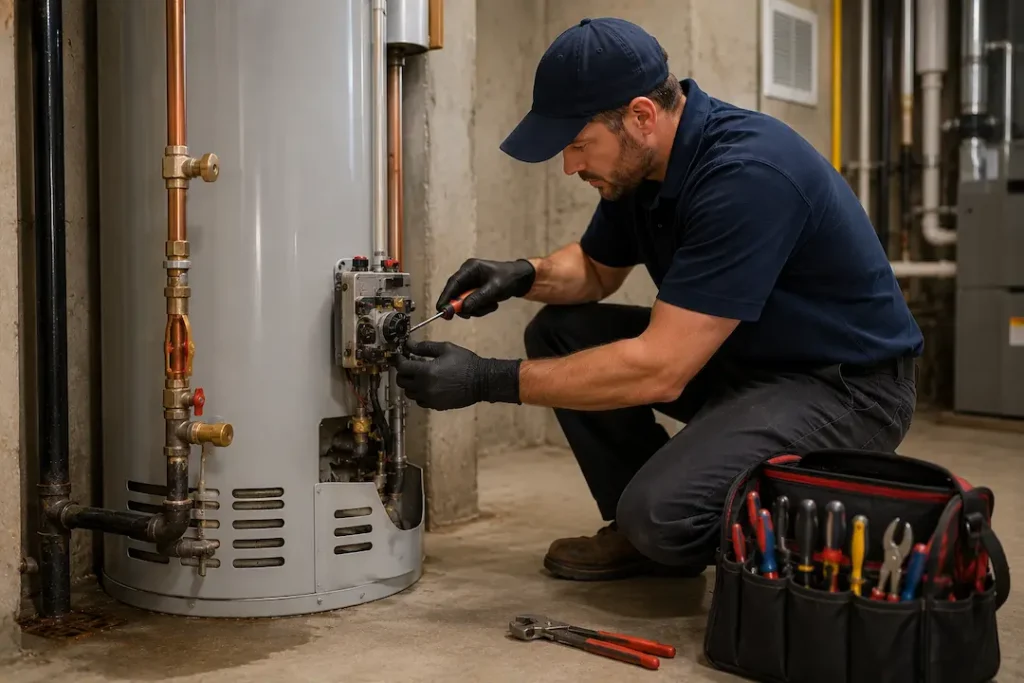
Several variables move the needle on what a repair actually costs. Knowing them helps you evaluate quotes more accurately.
Type of Water Heater
Gas water heaters generally cost more to repair than electric models. The parts are pricier and the work requires specialized knowledge of gas systems. Tankless units — whether gas or electric — carry the highest repair costs because their components are more complex and technicians need specific training to service them properly.
Age and Parts Availability
Older units can significantly increase labor costs. Parts for water heaters more than 10–12 years old are sometimes harder to source, which raises both part prices and the time a technician spends on the job. If your unit is past its typical lifespan, the cost of sourcing rare parts may tip the scale toward replacement.
Labor Rates in Everett
Labor rates in the Everett area typically run $75 to $150 per hour. The complexity of the repair determines how many hours are needed. A simple thermostat swap might take an hour. A gas valve replacement or sediment flush on a heavily scaled tank can run two to three hours.
Accessibility
Water heaters tucked into crawl spaces, tight utility closets, or attic spaces take longer to service. That extra time shows up on the invoice. Units in open utility rooms or garages are straightforward to work on.
Permit Requirements
Certain gas and electrical repairs in Everett require permits and inspections. Permit fees typically add $50 to $100. Tankless water heater installation in Everett almost always requires a permit, and licensed plumbers handle that process as part of the job.
Gas vs. Electric: Which Costs More to Repair?
Gas water heater repairs generally run $50 to $150 higher than equivalent electric repairs at every level of complexity.
- Electric heating element replacement: $150 – $300
- Gas control valve replacement: $300 – $500
- Electric thermostat swap: $150 – $250
- Gas igniter or pilot assembly: $200 – $400
The gap exists because gas components require more diagnostic time and carry higher safety stakes. A mistake on an electric unit is inconvenient. A mistake on a gas line is dangerous, which is why gas work always needs a licensed plumber.
Simple Leak Test You Can Do in 5 Minutes
Finding water heater leaks early saves money and prevents basement floods. This quick test requires no special tools or plumbing expertise.
What you’ll need:
- Paper towels or a dry cloth
- A flashlight
- Your hands
Wipe down the entire base of the water heater with a dry paper towel, including the floor around it. If moisture is present, dry everything completely. Wait five minutes, then run your hand along the bottom of the tank and press the paper towel against the tank base, valves, and pipe connections.
Check these spots in particular:
- Temperature and pressure relief valve (side or top)
- Cold water inlet pipe
- Hot water outlet pipe
- Drain valve at the bottom
- Tank base where it meets the floor
Wet paper towels mean active leaking. Even a small drip adds up to gallons of wasted water each month. A leak from the tank itself usually means the unit needs replacement — corrosion eats through the metal over time and isn’t repairable. Connection leaks, though, might just need a new washer or a tightened fitting.
Don’t ignore what seems like a tiny drip. That small leak can turn into a burst tank at 2 AM on a Saturday. Water heaters hold 40–80 gallons, and nobody wants that on their floor.
When It’s Time to Call a Plumber
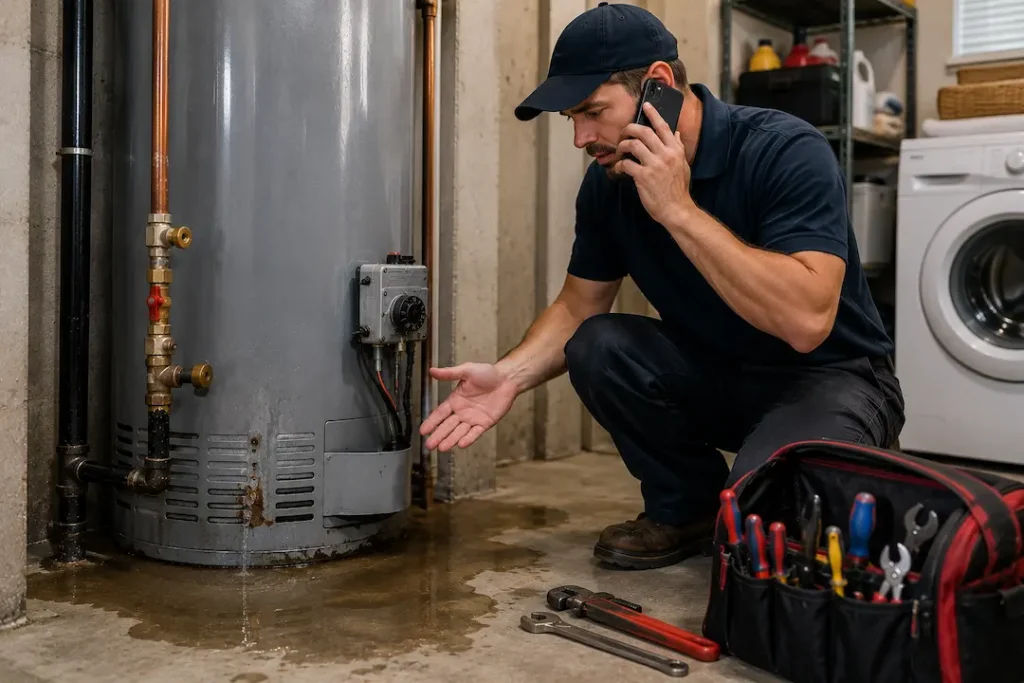
Some water heater problems need professional attention right away. A puddle around the tank base means trouble. Leaking water can damage floors and create mold issues fast.
Gas leaks require immediate action. The smell of rotten eggs near a gas water heater signals danger. Turn off the gas supply and call a plumber immediately. Never attempt gas line repairs without proper licensing.
Strange noises beyond normal operation suggest internal issues. Loud banging, popping, or rumbling sounds often point to sediment buildup or failing heating elements — both of which get more expensive the longer they go unaddressed.
When hot water runs out faster than usual or never gets hot enough, the heating system likely needs repair. These issues rarely fix themselves.
| Call right away for | Why it matters |
|---|---|
| No hot water at all | Complete system failure |
| Gas odors | Safety hazard |
| Major leaks | Water damage prevention |
| Electrical sparking | Fire risk |
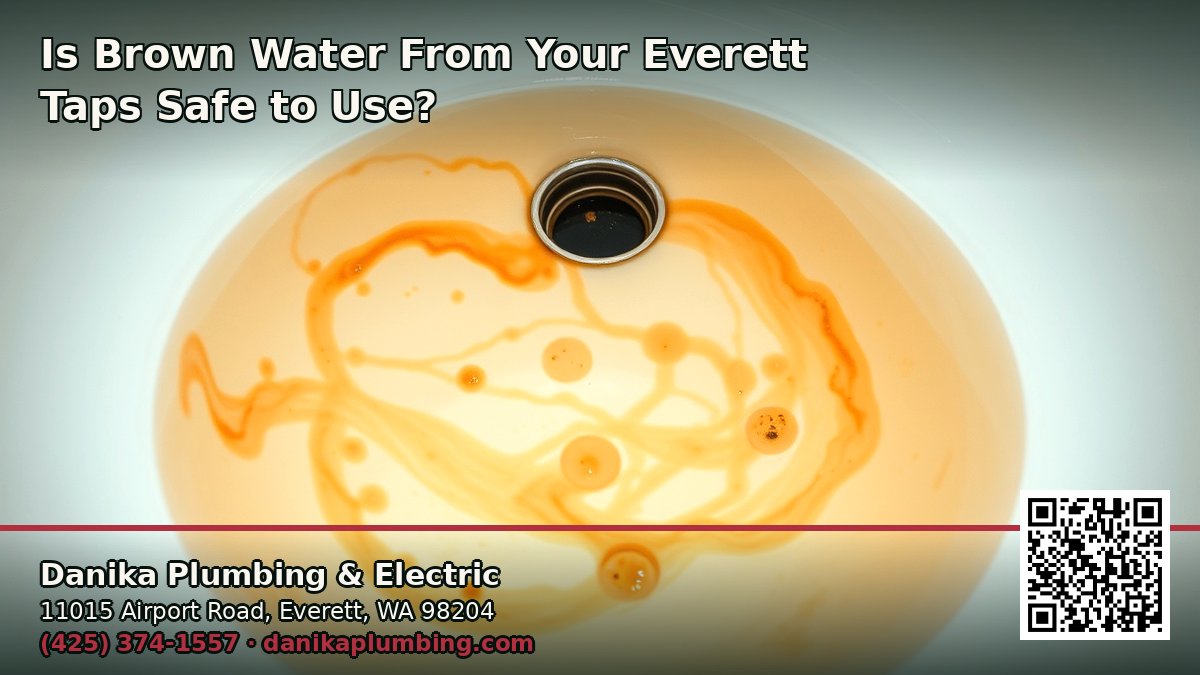
| Discolored or rusty water | Tank corrosion — may need replacement |
Homeowners should also call for help when they lack experience with plumbing repairs. Water heaters involve electricity or gas connections that require proper licensing. One mistake can cost more than hiring someone qualified from the start.
Permit requirements in Everett make professional installation necessary for most water heater work. A licensed plumber in Everett WA knows local codes and handles inspections properly. The typical DIY fix turns expensive when something goes wrong — a small leak becomes a flood, and a simple part replacement can damage the entire unit. Professional plumbers carry insurance and warranties that protect homeowners from these risks.
If you’re also noticing signs of a water leak beyond the unit itself — staining on ceilings or walls — that’s worth mentioning when you call, since it may point to a supply line issue rather than the heater.
Repair vs. Replace: How to Decide
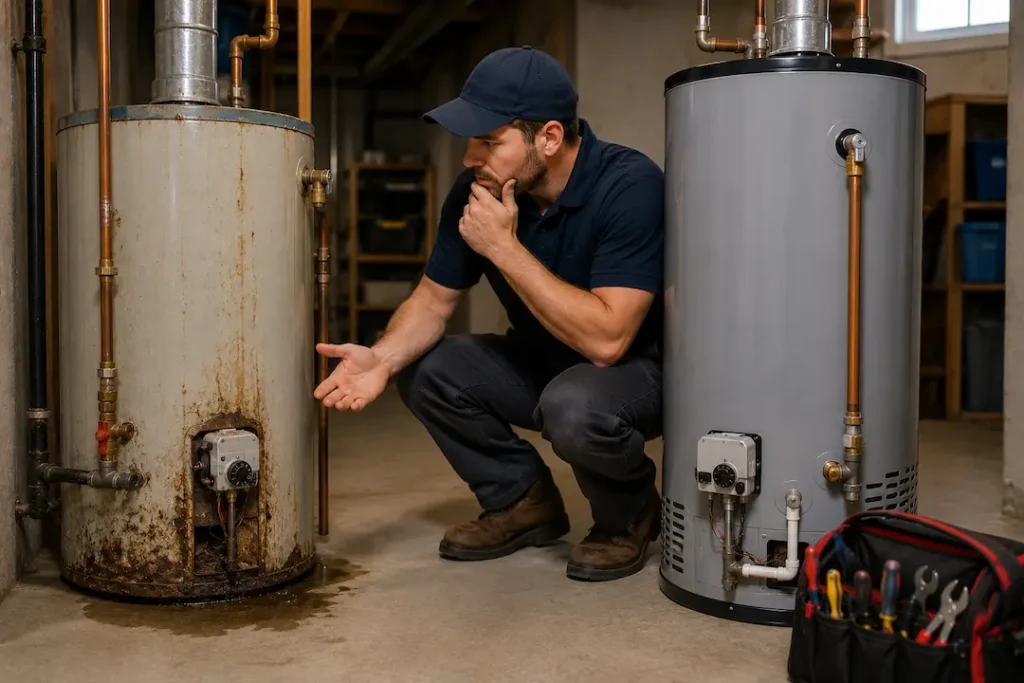
Age is the primary decision factor. Water heaters older than 10 years often make better candidates for replacement than repair. The average lifespan of a tank unit is 8–12 years; tankless units last 15–20 years with proper maintenance.
The 50% rule helps homeowners decide: if repairs cost more than half the price of a new unit, replacement makes more financial sense. A new standard water heater costs $800 to $1,500 installed. Spending $600 to repair a 12-year-old unit doesn’t add up.
Energy efficiency enters the equation too. New models save $100 to $300 yearly on utility bills compared to older units. Over 10 years, that’s a meaningful offset against the cost of a replacement.
Know the signs you need a new water heater before committing to a repair: rust-colored water, a unit that constantly needs relighting, or a tank that’s already leaked once are all signals that a repair is just delaying the inevitable.
Get Your Water Heater Fixed Today
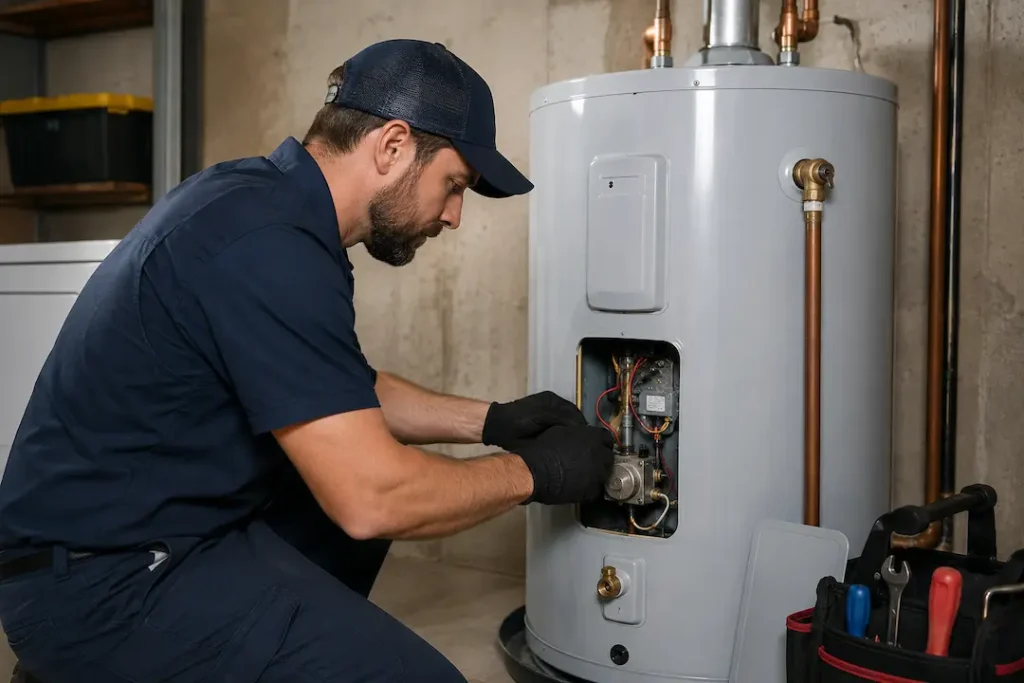
A cold shower in March isn’t fun. Neither is waiting three days for lukewarm water.
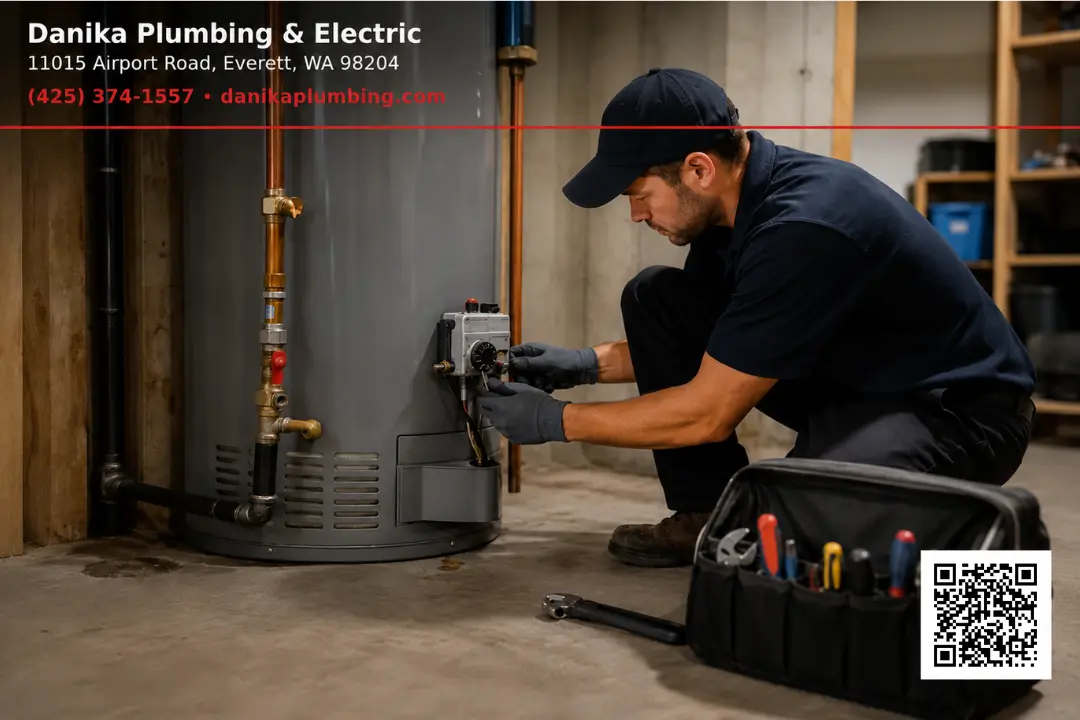
Danika Plumbing & Electric knows Everett homeowners deserve better. The team fixes water heaters fast — whether it’s a small leak, a failing element, or a complete breakdown. They’ve seen every problem imaginable, from mysterious puddles to units that sound like angry geese.
Here’s what happens next:
- Call for a free estimate
- Get same-day service in most cases
- Receive honest pricing before any work starts
- Enjoy hot water again within hours
The technicians show up on time, explain the problem in plain English, and clean up after themselves. Most repairs cost less than replacing the entire unit — that old water heater might just need a new heating element or thermostat. The experts at Danika Plumbing & Electric can tell the difference between a $200 fix and a $2,000 replacement.
Serving Everett and the greater Snohomish County area means they understand local water conditions. Hard water does specific things to water heaters in this region, and the team knows exactly what to look for.
Don’t spend another day rationing hot water. Call Danika Plumbing & Electric now and get your water heater working the way it should. The phone number is ready. The trucks are loaded. Hot showers await.
Frequently Asked Questions
Water heater repair costs in Everett typically range from $150 to $600, though complex issues can push prices higher. Most homeowners pay around $300 for standard water heater repairs.
What is a typical price range for repairing a water heater in Everett?
Standard water heater repairs in Everett run between $150 and $600 for most jobs. Simple fixes like replacing a thermostat or pressure relief valve sit at the lower end. More involved repairs push toward the higher range — a heating element replacement usually costs $200 to $400, and gas control valve repairs can reach $500 or more. Emergency calls after hours add $100 to $200 to the base price, and weekend or holiday rates increase costs by 20% to 50%.
How does the cost of fixing a gas water heater compare to an electric one in Everett?
Gas water heater repairs generally cost more than electric repairs. The parts are pricier and the work requires specialized knowledge of gas systems. Electric water heater fixes average $200 to $400 for common problems, while gas repairs typically start at $250 and can exceed $600. Gas valve replacements alone cost $300 to $500, compared to $150 to $300 for electric heating elements at equivalent repair complexity.
Are there common water heater issues that tend to be more expensive to fix?
Tank leaks represent the costliest problem homeowners face. These repairs often aren’t worth doing, as they signal the tank needs replacement. Sediment buildup that causes tank damage requires extensive flushing or replacement, ranging from $200 to $400 if caught early. Failed dip tubes cost $300 to $450 to replace. Corroded anode rods run $200 to $350 when labor is included. Gas valve failures typically cost $300 to $600.
What factors influence the total cost of a water heater repair service in Everett?
The type of water heater affects the final bill significantly — tankless units require specialized knowledge and cost more to fix than traditional tanks. Parts availability plays a role too, since older models need harder-to-find components that carry premium prices. Labor rates vary by company, ranging from $75 to $150 per hour in Everett. Accessibility matters as well: water heaters in crawl spaces or tight attics take longer to service. Permit requirements for certain gas repairs add $50 to $100.
Is it more cost-effective to repair or replace a water heater in Everett?
Age serves as the primary decision factor. Water heaters older than 10 years often make better candidates for replacement than repair. The 50% rule helps homeowners decide: if repairs cost more than half the price of a new unit, replacement makes more sense. A new standard water heater costs $800 to $1,500 installed, so spending $600 to repair a 12-year-old unit rarely adds up. New models also save $100 to $300 yearly on utility bills compared to older units.
How can Everett homeowners make sure they’re getting a fair price for water heater repairs?
Getting multiple quotes is the most reliable protection against inflated prices — three estimates give a clear picture of fair market rates. Ask for itemized estimates that show parts costs separate from labor. Check licenses and reviews before hiring; licensed plumbers carry insurance and stand behind their work. Request upfront clarity on the diagnostic fee policy, since some companies charge $75 to $125 regardless of whether you proceed. Avoid any company that pressures you to decide on the spot — legitimate plumbers give you time to consider your options.