
Toilet Repair
A toilet tells you exactly what is wrong with it. Running, rocking, sweating, clogging, flushing weakly — those are different failures with different fixes, and several of them come down to a part that costs very little.
The expensive mistake is guessing. Replacing a fixture that flushes badly because of a blocked drain solves nothing, and tightening the bolts on a rocking toilet usually cracks the porcelain. So this page is organized the way a plumber actually works a service call: symptom first, cause second, fix third. Find yours below, or call and describe it and we will tell you what we expect to find.
Reviewed by our customers
What our customers say about our toilet repairs


Read the symptom before you price the repair
Toilets fail in a small number of familiar ways, and nearly every call we take comes down to one of six behaviors. Here is what each one usually means and what actually corrects it.
It runs and will not stop
Look in the tank. If water is trickling over the top of the overflow tube, the fill valve is not shutting off or the float is set too high. If the tube is dry but the fill valve keeps kicking on every few minutes, water is escaping past the flapper into the bowl. Drop food coloring in the tank and wait without flushing — color in the bowl confirms it.
Flappers harden, warp and stop seating, and in-tank cleaning tablets chew through them faster than anything else. The part costs very little. The running water does not: a toilet that trickles day and night is one of the quieter ways a household water bill climbs without explanation.
It clogs nearly every week
An occasional clog is a plunger's job. A weekly one is a symptom. If nothing unusual is going down and it still backs up, the blockage is either in the fixture's trapway or past it in the branch drain. Listen when you flush — if the tub or the sink gurgles at the same time, that points at a vent or a shared line rather than the toilet.
Around here the drain side is a real suspect. Older Everett and Snohomish neighborhoods have mature trees over side sewers of a certain age, and roots find joints. We auger the fixture first because it is quick, and where the fixture is clear we move to clearing the branch drain and putting a camera down the line rather than selling you a toilet that was never the problem.
Water shows up around the base
Usually the wax ring has failed, most often because the toilet has been moving. But not always, and the difference matters. Dry the floor completely, then watch: water that appears only after a flush points at the wax seal or the closet flange under it; a steady damp patch all day points at the supply line or the shut-off valve behind the fixture; drips down the back of the tank suggest the tank-to-bowl gasket.
A cracked flange is the one people miss. The ring bolted to the floor can corrode or snap at the ears, and no amount of new wax will seal a toilet to a broken flange. Whatever the cause, water under a toilet reaches the subfloor, and in this climate wet subfloor does not recover. If the floor feels soft near the base, tell us — that changes what we bring.
The three toilet faults people put up with for years
It rocks when you sit down
Every rock works the wax seal a little looser, which is why a wobble eventually becomes a leak. The cause is usually one of three things: closet bolts that have backed off, a flange sitting below the finished floor after tile or vinyl plank went in over the old surface, or a subfloor that has already softened.
Do not solve it by cranking the bolts down. Porcelain has no give and cracks under that kind of persuasion, and then a small job becomes a new fixture. The proper repair is to pull the toilet, look at the flange and the floor beneath it, add a flange extender or repair ring where the height is wrong, reset on a fresh seal, then shim and caulk so it sits dead still.
The flush is weak or leaves the bowl half full
Start with the cheap causes. Tank water sitting below the fill line means less energy behind the flush. A chain with too much slack lets the flapper drop early and cuts the cycle short. Mineral and debris buildup in the rim holes under the bowl lip starves the wash, which shows up as a lazy swirl instead of a proper siphon.
If all of that checks out, the trapway may be partly blocked, or the fixture may simply be an early low-flow design that never flushed convincingly when it was new. That last one is not repairable. It is the one honest argument for replacement we make regularly.
The tank sweats all summer
Cold supply water on one side of the porcelain, warm humid bathroom air on the other, and the tank beads up and drips onto the floor. People report it as a leak at the base, and it does the same damage to flooring over time.
The fixes are ventilation, insulation or temperature. An insulated tank liner helps, an anti-sweat valve that blends a little warm water into the fill helps more, and a bath fan that actually moves air and runs long enough after a shower solves the underlying humidity. Since we hold electrical registration as well, adding a properly sized fan or a timer switch is the same company, same visit.
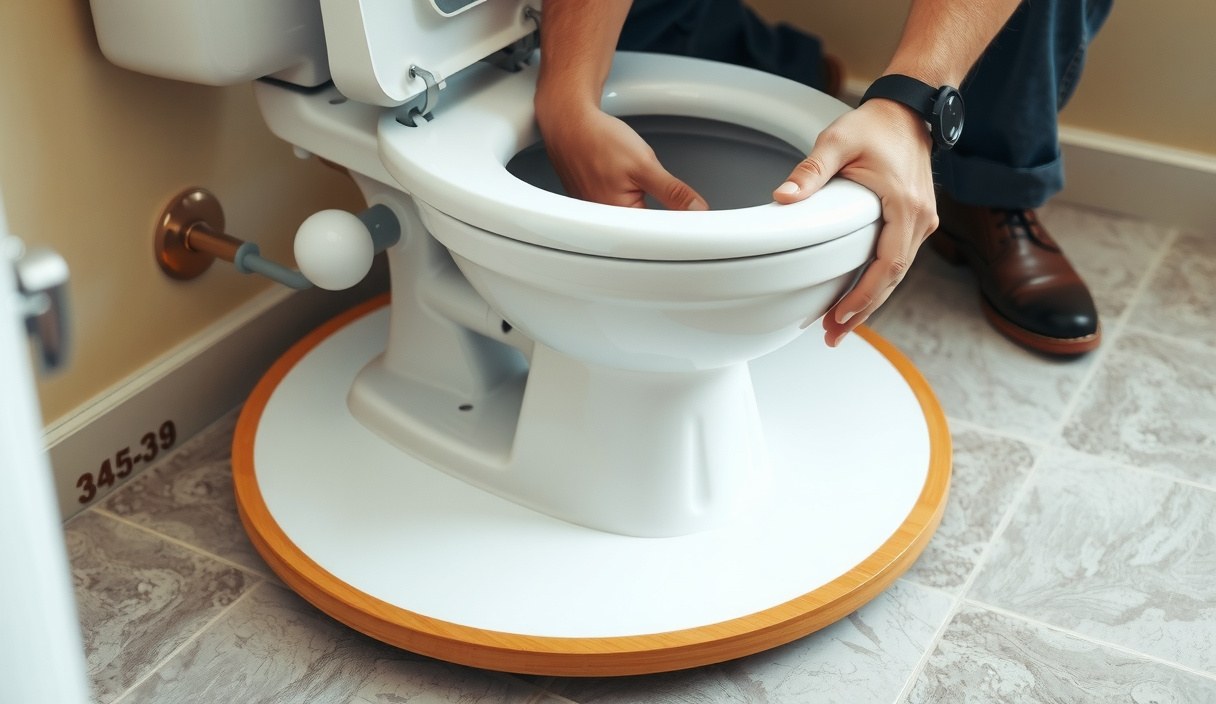
Repair the toilet, or replace the fixture? How we decide
Most of what goes wrong with a toilet is a part, and parts are worth fixing. Flappers, fill valves, supply lines, shut-off valves, seals, bolts, seats and flanges are all straightforward work, and we would rather leave you with a repaired fixture than an upsell.
Replacement earns its keep in a shorter list of cases. Cracked porcelain in the tank or bowl cannot be repaired, and a hairline crack will choose its own moment to become a flood. A first-generation low-flow fixture that has always needed two flushes is not going to improve. When the same toilet has needed several visits, the parts bill starts overtaking the fixture. And if the flange and subfloor need rebuilding anyway, the toilet is already off the floor, which is the cheapest hour you will ever get to change it.
We quote both paths where both are real, in writing, before anything starts. It is worth knowing what the published pricing says, including where it disagrees with itself: two national sources put a professional toilet repair at $130 to $310 and $140 to $300, while the Seattle-metro figure runs considerably higher at $224 to $653. That is roughly a two-fold spread. Some of it is real — Puget Sound labour sits above national rates on every service we have checked — and some of it looks like jobs at the top of the Seattle range being closer to a rebuild than a part swap. Installing a new toilet in the Seattle metro is quoted at $375 to $687. All of those are market ranges, and none of them is your quote.Sources: HomeGuide and HomeAdvisor, national scope, for the repair ranges (the HomeAdvisor page carries a 2022 revision date under a 2026 title); Angi, Seattle metro, for the higher repair range and for installation. All pulled August 2026.
Why us
A small job gets the same standard as a big one.
Plenty of shops treat a toilet call as filler between the profitable work. We do not. The truck arrives stocked with the parts these repairs actually need, our plumbers explain the diagnosis in plain language, and the price is agreed before the first nut turns. Danika Plumbing & Electric is licensed, bonded and insured under Washington State L&I, working out of Everett.
(425) 374-1557Finished in one visit
Common parts ride on the truck, so most repairs end today.
Shown, not just told
You see the failed part and why it failed.
Licensed and insured
WA State L&I registered, bonded, accountable.
Both trades
Bath fan, light or outlet? Same crew, no second contractor.
Toilet installation services, and the constant-clog question
A replacement done properly is mostly preparation. The rough-in has to match, since the distance from the finished wall to the closet bolts comes in a few standard sizes and a mismatch means a fixture that will not sit. The flange should end up level with the finished floor, not buried under it, which is where a lot of post-remodel wobble comes from. And while the fixture is off, the supply line and the shut-off valve behind it are cheap to renew and miserable to change later.
Which brings back the toilet that clogs constantly. Sometimes that is genuinely the fixture — an early water-saving model with a narrow trapway and not enough behind the flush to clear it. Sometimes it is the drain, and swapping the toilet just buys a quieter month before the same backups return. The order matters: check the fixture, check the line, then decide. We handle toilet installation and repair in Everett the same way whether it ends in a five-dollar flapper or a new fixture set on a rebuilt flange, and we haul the old one away.
Coverage
Bathrooms we get to
Our shop sits on Airport Road in Everett, and the trucks run through Marysville, Lynnwood, Edmonds, Mukilteo, Mill Creek, Lake Stevens, Monroe, Snohomish, Mountlake Terrace and the unincorporated county between them. A toilet call is often the visit where two or three other things get sorted, so mention the faucet that has been dripping since winter when you book, and take a look at everything else we handle while you are here.
Good to know
Questions that come up on toilet calls
Why does my toilet run for a few seconds when nobody has flushed it?
Is water around the base of the toilet always the wax ring?
My toilet clogs every week. Is that the toilet or the drain?
Is it worth repairing an old toilet or should I just replace it?
Can you replace the toilet during the same visit as the repair call?
Book it before it becomes a floor repair.
Running, rocking, clogging or leaking — tell us what it is doing and we will tell you what it takes to put right.
Licensed · Bonded · Insured · WA L&I Registered · 11015 Airport Road, Everett, WA