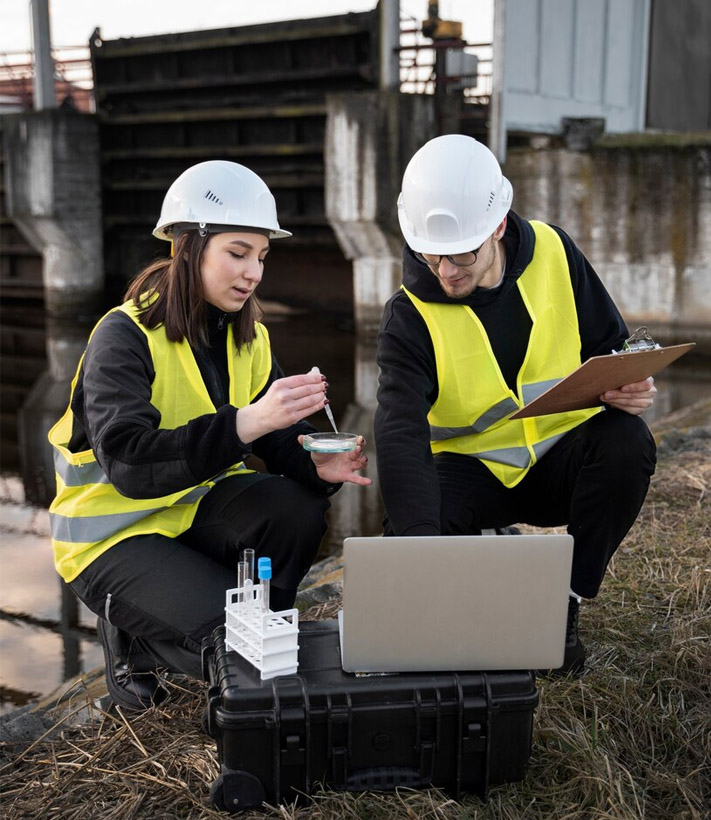
Sewer Repair & Replacement in Everett, WA
Home » Sewer Repair Everett WA
Sewer Line Repair & Replacement in Everett, WA
Sewer problems in Everett have a way of showing up all at once — and never at a convenient time.
Whether it’s a cracked lateral under your front yard, roots that have been quietly taking over your line since the 2010s, or a pipe that’s simply done after 50-plus years of service, the result is the same: you need someone who knows what they’re doing, and you need them now.
We handle sewer line repair, trenchless rehab, full replacement, new installation, and camera inspection throughout Everett and the surrounding Snohomish County area. And before we recommend anything, we look first. That part’s non-negotiable.
Here’s what you actually need to know.
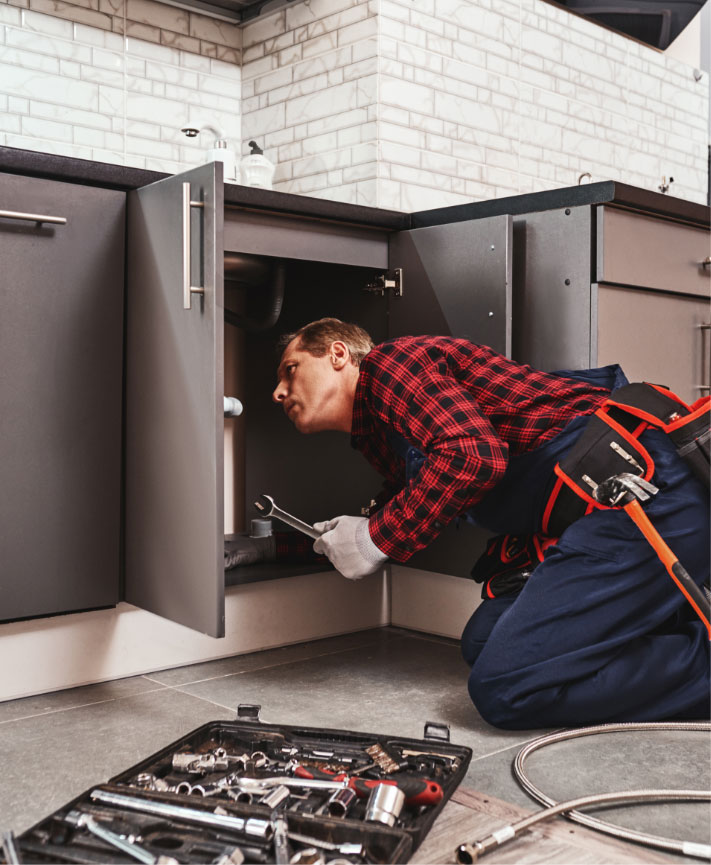
Professional Sewer Line Services in Everett
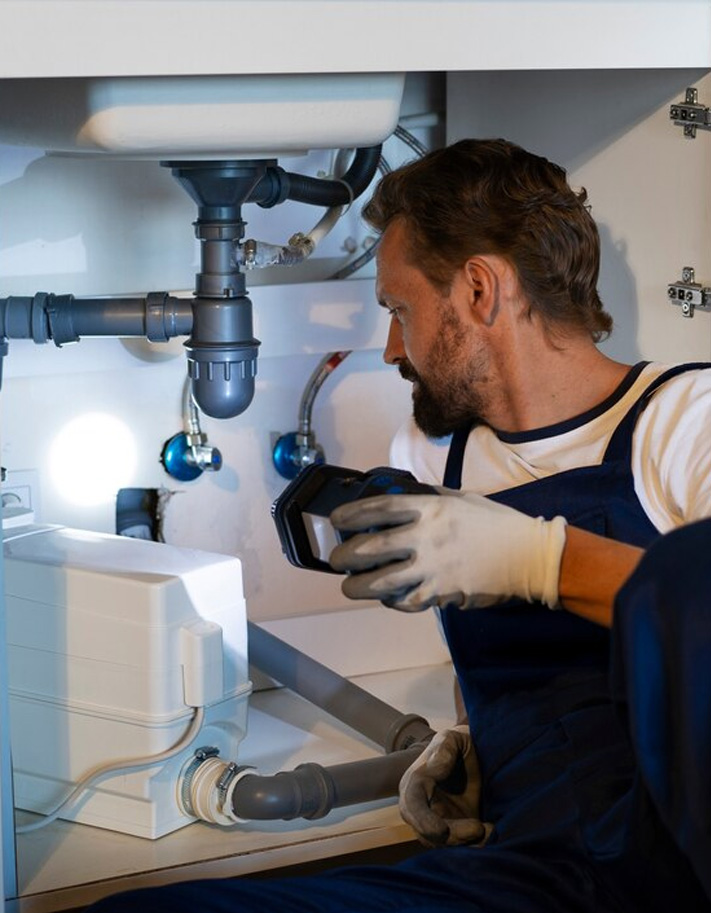
We’re not a one-trick shop. Sewer problems come in a lot of different forms, and the right fix depends on what’s actually happening underground — not what’s easiest to sell.
Here’s what we cover:
- Sewer line repair — targeted fixes when the damage is isolated
- Trenchless sewer rehabilitation — pipe lining and pipe bursting, no digging up your yard
- Full sewer line replacement — when repair isn't the honest answer
- New sewer line installation — new builds, ADUs, home additions, septic conversions
- Sewer camera inspection — the starting point for almost everything we do
We work throughout Everett and into Edmonds, Lynnwood, Mukilteo, Bothell, Marysville, and the broader Snohomish and King County area. If you’re out here dealing with a sewer issue, there’s a good chance we’ve already been down your street.
Signs You Need Sewer Line Repair in Everett
Most homeowners ignore the early warning signs. Understandable — a slow drain is easy to chalk up to buildup. One gurgling toilet? Probably nothing.
But here’s the thing. Sewer problems show up in patterns. When more than one symptom hits at once, it’s usually not a coincidence.
Watch for:
- Multiple drains slowing at the same time— kitchen, bathroom, laundry, all of them.
- Sewage backing up Iinto the lowest drain in the house (usually a basement floor drain or tub)
- Gurgling sounds from the toilet after you run a sink or shower in the same house
- Soft, wet patches in the yard above your sewer lateral — this one's never good
- Persistent sewage odor inside the home or outside near the cleanout
We had a homeowner off Rucker Avenue call us last fall. She’d been dealing with a slow bathroom drain for a few months, finally called when sewage backed up into her tub. Camera showed a root intrusion about 22 feet out from the foundation. We caught it before it became a full collapse. That’s the thing about sewer problems — earlier is almost always cheaper.
Two or more of those symptoms at once? Stop waiting. Schedule a camera inspection before the situation decides for you.
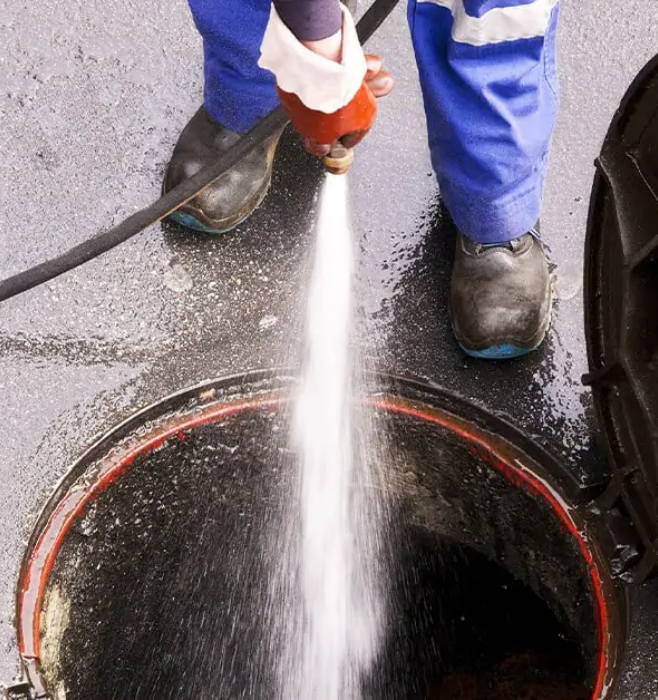
Sewer Camera Inspection & Diagnostics in Everett
A sewer camera inspection is the only way to actually know what’s going on inside your pipes. You can’t diagnose this stuff from the surface. Anyone who hands you a replacement quote without running a camera first is guessing — and you’re the one paying for that guess.
Here’s how it works: we feed a high-definition camera through your cleanout or a toilet access point and watch the footage live. The whole thing usually takes under an hour. We’re looking for root intrusion, cracks, belly sections where the pipe has sagged and water pools, joint separation, corrosion, partial collapse — all of it.

You can watch with us if you want. We’d actually prefer you do. It’s a lot easier to explain your options when you’re seeing the same footage we’re seeing.
What we’re looking for:
- Tree root intrusion (by far the most common thing we find in Everett-area lines)
- Cracked or fractured pipe sections
- Pipe belly — low spots where water sits and solids accumulate
- Joint separation and offset
- Corrosion and internal deterioration
- Partial or full collapse
One thing a lot of Everett homebuyers still don’t know: a pre-purchase sewer inspection is one of the smartest calls you can make before closing on a house. Anything built before 1975 in this area commonly has clay or cast iron laterals that are well past their expected service life. We’ve run cameras on lines that looked completely fine from the outside and found sections that were 80% collapsed.
We document everything with timestamped footage and written reports — useful for insurance claims, permit applications, or HOA records when you need it in writing.
Trenchless Sewer Line Repair in Everett
Trenchless sewer repair gets talked about a lot. Sometimes it gets oversold. But when it’s the right fit, it genuinely is better — not just for convenience, but financially too.
The basic idea: we fix or rehabilitate your sewer line without digging a trench down the length of your yard. No torn-up landscaping. No cracked driveway. No two-week restoration project after the actual pipe work is done.
There are two methods, and they’re not interchangeable:
- Pipe Lining (CIPP — Cured-in-Place Pipe) We insert a resin-saturated liner into the existing pipe and cure it in place. End result is essentially a smooth new pipe inside your old one. Works well when the line is cracked or corroded but still intact enough to hold the liner. Flow actually improves because the finished surface is smoother than the original clay or cast iron.
- Pipe Bursting We pull a new pipe through the old one while simultaneously fracturing and displacing the old pipe outward. This one's for when the existing pipe is too far gone for lining — or when we need to upsize the diameter. Still minimal excavation, usually just small access pits at each end.
- Trenchless costs more per linear foot than traditional open-trench work. That's just true. But when you factor in what it costs to restore a driveway, replant a yard, or redo concrete — the math usually goes the other way.
We worked on a property on Mukilteo Speedway where traditional replacement would have meant cutting through a paved pad and replanting mature shrubs. Trenchless lining handled it in one day. The parking pad stayed put.
That said — trenchless isn’t possible on every job. Fully collapsed sections, certain configurations, severely offset joints — sometimes you need to dig. We’ll tell you upfront which situation you’re in, and we won’t push trenchless if it’s not the right call.

Sewer Line Replacement in Everett
Sometimes repair isn’t the honest answer.
If a line has root intrusion running its full length, multiple collapsed sections, or it’s 60-year-old clay that’s been quietly crumbling for a decade — patching it is just postponing the inevitable. And making it more expensive while you wait.
Full sewer line replacement means excavating the full length of the lateral, pulling out the old pipe, and installing new material — typically PVC or HDPE, both of which have long service lives and are far more root-resistant than the clay and cast iron they’re replacing.

- Total linear footage of the lateral
- Depth of the line (deeper = more excavation)
- Soil conditions and what we run into underground
- Whether concrete, pavement, or other flatwork needs to be cut and restored
- Permit requirements
Speaking of permits — we pull them. Every time. We’ve seen what happens when someone skips that step and it shows up at resale. Not worth it.
Typical timeline for a residential replacement: one to three days on-site, depending on site conditions. Add a few days upfront for permit processing if required before we break ground.
If the camera shows a line that needs full replacement, we’ll tell you. We’ll show you the footage, explain why targeted repair doesn’t make sense in your specific situation, and give you a written estimate before anything gets dug up.
New Sewer Line Installation in Everett
New sewer line installation comes up more than most people expect — especially right now, with how many ADUs are being built across the Everett area, and how many rural properties are transitioning off septic onto city sewer.
Getting the underground work right from the start matters more than most people realize. The most common problems we find on properties with poorly installed lines: wrong slope (the standard is ¼ inch drop per linear foot — not optional), improper pipe bedding, undersized diameter for the fixture count, and connections that never got inspected or signed off.
We walked into a job once where a previous contractor had installed a brand-new sewer lateral with virtually zero fall over a 40-foot run. Standing water in a new line. That’s not a repair situation — that’s start over.
For new construction, we coordinate with your builder or GC to get the underground rough-in right the first time. For ADUs and home additions, we assess the existing main line capacity, determine connection points, and handle the permit and inspection process.
Connecting to city sewer in Everett — or converting from a septic system — involves coordination with the City of Everett utilities or Snohomish County depending on your property’s location. We handle that process. It’s part of the job, not an add-on.
- New construction sewer rough-in and lateral installation
- Home addition and remodel sewer extensions
- ADU and backyard cottage connections
- Septic-to-city sewer conversions
- Permit coordination and final inspection scheduling
If you’re building or adding on, let’s talk before the slab goes in.

What Causes Sewer Line Damage in Everett?
Worth understanding — because the cause determines the fix. And out here in Snohomish County, there are a few causes that show up again and again.
- Tree Root Intrusion — This is the big one. Willow, maple, older ornamentals — they have aggressive root systems that find their way into sewer joints, especially the older clay tile joints common in Everett homes built before 1970. Once roots are in, they expand every year. Somewhere around half the lines we camera-inspect in the Everett area have some level of root involvement. Some are manageable. Some aren't.
- Aging Clay and Cast Iron Pipe — A huge percentage of Everett's residential sewer laterals were installed in clay tile or cast iron before 1975. Both materials have long service lives — but long isn't forever. Clay tiles crack and shift. Cast iron corrodes from the inside out. At some point, you're not maintaining a pipe anymore, you're just delaying a replacement.
- Shifting Soil — Snohomish County has a mix of soil types — glacial till, silty loam, areas with poor drainage and seasonal saturation. When soil shifts, pipes shift with it. That leads to joint separation, pipe belly, and eventually collapse in bad cases.
- Heavy Rainfall — Everett averages around 38 inches of rain per year. That volume finds its way into cracked pipes, adding infiltration load and accelerating soil movement around buried lines.
- Root Cutting Without Repair — We see this a lot. Someone had the line rodded a few years back — roots cleared out, problem seemed solved. But the underlying damage that let roots in was never fixed. They're back. Usually faster the second time.
Our Sewer Repair Process in Everett
We keep this straightforward, because it should be — even when the problem isn’t.
- Inspection first. Camera goes in before anything else. No guessing, no assumptions. You see what we see.
- Diagnosis. We tell you what’s wrong, where it is, and how bad it is. We show you the footage. If it’s a cracked joint 18 feet out from the foundation, we’ll tell you that. If it’s a line that needs full replacement, we’ll tell you that too.
- Options, explained clearly. We lay out the realistic choices — targeted repair, trenchless rehab, or replacement. We explain the actual tradeoffs. We’ll tell you what we’d do if it were our house.
- Written estimate before work starts. You get a number in writing before anyone picks up a shovel. No verbal quotes that balloon mid-job.
- The work. We do what we said we’d do. We keep the site as clean as possible. If we open your yard, we backfill and compact properly — we’re not filling a hole and calling it done.
- Final testing. Post-repair camera pass or flow test to confirm the fix held. We show you the result before we pack up.

Success Stories from Real Everett Homeowners
Posted on Google
 Xifeng Dong12 September 2026
 This is a great experience. My friend told me this company number. I really want to recommend one of their worker. Saiff Abbas has done excellent work. He is very professional.Posted on Google
 Dan Ing11 September 2026Danika Plumbing was awesome! Saif came out and fixed the original issue, but he also went above and beyond by taking care of several other little plumbing issues while he was here. He handled everything quickly, easily, and professionally, and even took the extra time to zip-tie the hoses together and organize everything so it looked cleaner and better than it did before. I really appreciated that he went the extra mile just to make sure everything was done right, without trying to add unnecessary charges. It’s not often you come across someone who takes that much pride in their work and genuinely wants to help. Thank you, Saif, and Danika Plumbing, for the excellent service. Highly recommended!Posted on Google
 Deon Wilkins7 September 2026Fast, efficient, and clean work with special attention to detail.Posted on Google
 tyler seymour3 September 2026Saiff was very friendly and quick and did an excellent job with my water heater pipe fixPosted on Google
 thomas oates3 September 2026I don’t write reviews, but Mike Lashbaugh at Danika Plumbing deserves a medal for a couple of reasons. A few months ago I had a hot water tank in the basement fail. The drain was plugged and the tank was full. I called Danika and they sent Mike out. He couldn’t get the 50 gallon tank to drain either. It was no problem. He loaded the tank on a dolly and single handedly hauled the full 45-50 gallons of water and tank (400 plus lbs) up the stairs. The price was competitive, he did a great job and made it look easy. But the real talent was on display two days ago when I had a main sewer stack leak in the basement. Three plumbers came out and looked at it. The large leaking pipe is in a 114 year old building. It was a cast iron sewer stack buried in a brick wall, then it traveled through 15 inches of concrete foundation and then through part of a brick chimney. The first three plumbers didn’t want any part of it and left. They left. I thought I was super screwed. At 2:00 pm in the afternoon, Mike showed up and didn’t flinch. He studied it for about 15 minutes, clearly identifying the problem, and determined there was no need for a scope. He quoted a fair price, then disappeared for about an hour to get bigger tools. At 3:00 PM in the afternoon he started busting out bricks and foundation and part of the chimney with a hammer drill. What mike didn’t do is pull out a gimicky ipad, start creating reasons why he has to charge more and telling me “that’s what the software says” while explaining how difficult the job was. Any moron could see it was a big horrible problem. A couple of hours later Nick, his apprentice, showed up and helped excavate the buried line. Between 3:00 pm and 8:00PM they were able to free the pipe after 114 years, cut it, and replace all the leaks and sections that had holes. A new main sewer stack connection was completely installed in 5 hours. * Mike made it look easy. Not only was it fixed, it was fixed right, no corners cut, no unnecessary charges, and he did not drag it out for days. My tenants did not miss a day, and I didn’t have to refund any rent. Service was only interrupted between 3:00 pm and 8:00 PM. *5 hours!. What Mike did in five hours was unbelievable. The best part is, you can trust Mike. Thank you Mike Lashbaugh at Danika.Posted on Google
 Jim H28 August 2026Excellent service, parts and experience dealing with Danika for our new toilets.Posted on Google
 Terry Sinn26 August 2026Travis was kind,considerate and very knowledgeable. Fixed our plumbing issues and left spaces spotless.Posted on Google
 Nicole Trolio21 August 2026Travis was fantastic! Explained his solution to my plumbing problem and the best way to get it done. Got it done the same day! Put up with my large "helper" dogs!Posted on Google
 John Swartos20 August 2026Travis was amazing, I wish I could give him 10 stars. Showed up early, super professional, clean work, wore shoe covers, solved our plumbing issues quickly and dropped some great knowledge that I, as a newer homeowner found very informative. Highly recommend them for any plumbing needs!Posted on Google
 Bo14 August 2026Super fast and efficient. Definitely hire again .Posted on Google
 Anthony Simicich13 August 2026Travis was the most amazing plumber I’ve ever had! Highly recommend!Posted on Google
 Shirley Gorman12 August 2026Travis installed new plumbing for a bathroom remodel at my home. He did a great a job and I could not be more pleased with the results. Extra kudos to him for his outstanding customer service skills!Posted on Google
 ThePrincessndey5 August 2026Travis was awesome, helped us with our gas leak same day.Posted on Google
 lucy woodruff5 August 2026Travis did an amazing job at our store! He came by this morning to add a water filter to our ice machine and was so quick and clean. Thank you Travis!Posted on Google
 Matt Karan31 July 2026I called in the evening outside of business hours due to an unexpected leak, and was very quickly contacted the next morning to get an appointment scheduled to replace our garbage disposal. We received great communication throughout the process, and our technician Travis was very polite and professional and got our new disposal installed quickly.Posted on Google
 Cari Mensing30 July 2026He was a very nice, respectful guy who really knew what he was doing.Posted on Google
 Sarah Close29 July 2026Technician Travis at Danika plumbing and electric was absolutely wonderful to work with. He was knowledgeable and very efficient. Highly recommend!Posted on Google
 Alison C29 July 2026Travis is wonderful. Worked with me to get residents in the condominium to stop running water giving them time. Fixed the leak once we had most of them stopped haha in less than 15 minutes. Cleaning up now. I want to marry him but he's taken.Posted on Google
 Jannean W24 July 2026Everyone was great and answered all of my questions perfectly. Thank you. 😁Posted on Google
 Marilisa Vergottini23 July 2026I have used Danika plumbing regularly for the last 4 years when working with clients (I am a real estate agent). Clients have been consistently happy with their work and as a result, so have I! From the first call with reception/office manager, the experience is seamless and professional (that’s rare!). Today, I used Danika for the first time on a plumbing issue at my own house. They were timely, professional, and got the job done. Super happy with their service!Posted on Google
 Doug Howlett21 July 2026Toilet installation was quick and without problems. Travis described the process and detailed any potential future issues.Posted on Google
 Gail Pyper18 July 2026Travis & Nick were very professional, thorough & demonstrated excellent problem solving skills. There were challenges during the process & they met each one with grace & determination.Posted on Google
 Ricardo Limon17 July 2026Travis and Nick did a great job. Respectful, professional and left everything cleaned. They also explained what the issue was which I appreciated. Great experience overall!Posted on Google
 Anai Perez15 July 2026Travis helped us when we had a toilet issues and promptly fixed I it toilet.Posted on Google
 Sharda Whitman15 July 2026Travis was super helpful and informative. He not only repaired my kitchen faucet but noticed a cracks in the piping and replaced that as well at not additional charge. He also did a free inspection of other sinks, toilets and water heater. I highly recommend Dannika. They are very thorough and reliable! Travis was able to repair my sink the same day which was very convenient. Will be using them again for sure.
We pride ourselves on handling every challenge with professionalism, a dash of good humor, and a genuine commitment to offering the best plumbing services in Everett.
Sewer Line Repair FAQs — Everett, WA
It depends on what the camera finds. A targeted repair on an isolated crack or root intrusion might run $800–$2,500. Trenchless pipe lining typically runs $4,000–$10,000 depending on footage. Full lateral replacement in Everett averages $6,000–$18,000 depending on depth, length, soil, and whether any concrete or pavement needs to be restored. You’ll get a written number before anything starts — no surprises.
Usually yes — especially when there’s landscaping, a driveway, or concrete flatwork over the line. The per-foot cost runs higher than open-trench, but when you add up what it costs to restore a driveway or replant a mature yard, trenchless almost always comes out ahead financially. It also takes less time. Caveat: not every line qualifies. We’ll tell you upfront whether your situation is a candidate.
Most residential replacements run one to three days on-site. Add a few days for permit processing if required before we break ground. We give you a realistic timeline when we scope the job — we don’t like surprises any more than you do.
Usually no. Standard homeowners policies typically don’t cover sewer lateral repair or replacement — this catches a lot of Everett homeowners off guard. Some policies offer sewer line riders as add-ons, and there are standalone service agreements available through certain utilities. Check your actual policy before assuming you’re covered. We can provide documented inspection reports if you do have applicable coverage and need to file a claim.
The pattern to watch for: multiple drains slowing at the same time, sewage backing up into the lowest fixture in the house, gurgling after you flush, persistent sewage odor in the yard near your cleanout, and soft or sunken spots in the yard above the lateral. Any one of those is worth a camera inspection. More than one showing up at the same time — call us now, don’t wait on it.
Why Everett Homeowners Choose Danika Plumbing & Electric for Sewer Work
We’re a local company. We work in Everett and Snohomish County regularly — we’re not driving two hours from another market and charging you for the windshield time.
- Licensed, bonded, and insured — Washington State licensed plumbing contractor
- Camera inspection before any repair or replacement recommendation — always, no exceptions
- Written estimates before work starts — no surprises halfway through the job
- We pull permits. Every time.
- Emergency sewer service available — we're not leaving you with an active backup overnight if we can help it
- Straight talk on repair vs. replacement — we don't push the more expensive option when it's not warranted
We’ve worked on sewer lines in every kind of Everett property — 1950s homes near the waterfront with original clay laterals, newer subdivisions in south Everett where roots found new pipe faster than anyone expected, multi-unit buildings on Colby where one failing lateral was backing up four units at once.
The conditions change. The approach doesn’t.