
Gas & Propane Line Work
Gas is the one utility in your home that never gets a second chance.
Water finds the floor and announces itself. A bad gas joint announces nothing until it does. That is why fuel gas piping is its own licensed discipline, with its own permit, inspector, and pressure test — and why our gas line work in Everett follows all three, on a barbecue stub-out the same as on a furnace conversion.
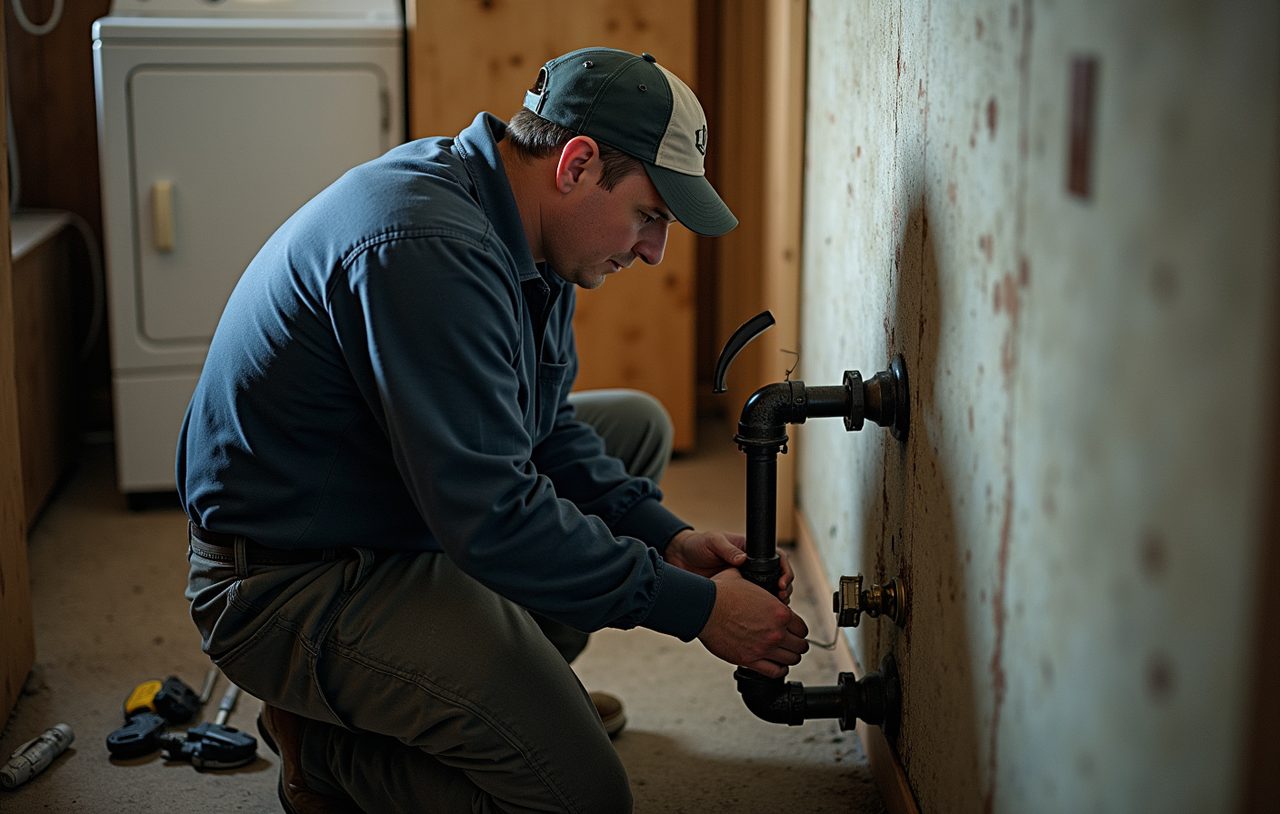
Reviewed by our customers
What our customers say about our gas line work


Read this part first
If you smell gas right now, leave the building before you read anything else
Natural gas and propane are odorless as delivered. That sulfur or rotten-egg smell is an odorant added deliberately, so your nose becomes the detector — treat it as real every time, even if it fades. The published guidance from gas utilities and fire departments does not change:
Get everyone out. Leave the building immediately, people and pets both.
Touch nothing electrical on the way out. No light switches, no thermostats, no garage door opener, no appliance controls, no phone inside. Do not light a match or a lighter.
Call from outside, well away from the building. Call 911, then your gas utility's emergency line — for most of Everett and Snohomish County that is Puget Sound Energy, whose number is on your gas bill.
Stay out until you are told otherwise. The utility and the fire department clear the property. Not a plumber, and not you.
Our work begins after that. Once the utility has made the property safe, a licensed gas fitter finds what failed, repairs or replaces the gas line, pressure tests it, and gets it re-inspected before gas goes back on. That is a different call from an emergency.
Planned work
The gas line installation services homeowners here actually book
Almost every gas job we run is a happy one: somebody wants to cook on a flame instead of a coil, or is tired of hauling propane tanks across a wet driveway in November, or bought a standby generator after the last windstorm and wants it fed properly. Planned, quoted, permitted, scheduled.
- A new gas line to a range during a kitchen remodel
- A dryer connection in a laundry room plumbed for electric only
- A patio stub-out for a built-in BBQ, fire pit, or covered-deck heater
- A dedicated feed for a standby generator, sized for its full draw
- Furnace and water heater conversions from electric or oil
- A buried gas line to a detached shop, garage heater, or spa heater
Water heaters are the conversion we see most here — a home with gas heat for decades but an electric tank beside the furnace, because that is what the builder installed. We quote the gas line and the water heater replacement together; splitting them across two trades is how people end up with a new tank and no fuel to it. Patio runs get the same scrutiny, since they exit into weather that stays damp from October through May.
It is worth knowing where all this conversion work comes from, because utility gas is not a given around here. Census figures count thousands of Snohomish County households heating on something they have to buy, haul, store or split.
| Heating fuel | Occupied units |
|---|---|
| Bottled, tank or LP gas | 12,961 |
| Wood | 7,992 |
| Fuel oil or kerosene | 2,035 |
| No fuel used | 1,794 |
| Solar | 301 |
| Coal or coke | 49 |
Propane is the bulk of it, and a tank property changes the job before it starts: there is no meter to measure back to, so the gas line begins at a regulator and a tank position that may itself need moving. Inside Everett proper the oil holdouts are a small and specific group — 332 occupied homes still heat with fuel oil or kerosene, each one attached to a tank in a crawlspace or a yard that somebody eventually wants gone. Those conversions are among the most satisfying work we do, and the most worth permitting properly.
Sources: HomeGuide, Gas Line Installation Cost; Angi, Gas Line Installation and Repair Costs; Fixr, Gas Line Installation Cost. National scope, all pulled 6 Aug 2026.You will notice there is no total-job price here, and that is deliberate. Those same three guides disagree with each other by two to three times on what a finished gas job costs, which tells you how much a national average really knows about your home. Distance from the meter, an open crawlspace route versus fishing through finished walls, buried versus interior pipe, and the total BTU load being added move the figure far more than any published range does. So we measure the gas line, size the pipe to the load, and put a number in writing.
The part that gets skipped
What separates a gas fitter from a handyman with a pipe wrench
The pipe is the easy part. Sizing is the engineering, and sizing is where unlicensed work goes wrong. Every appliance carries an input rating on its data plate in BTUs per hour, and the system has to deliver all of them at once without pressure sagging at the far end. That math runs on total connected load, developed length from the meter, the fittings in the route, and delivery pressure — not a rule of thumb.
Undersize it and nothing dramatic happens on day one. What shows up later is a furnace that short-cycles when the dryer runs, lazy yellow-tipped burners, a tankless heater that cannot hold temperature. So we size against the whole load, including whatever you might add later.
Material
Black iron pipe
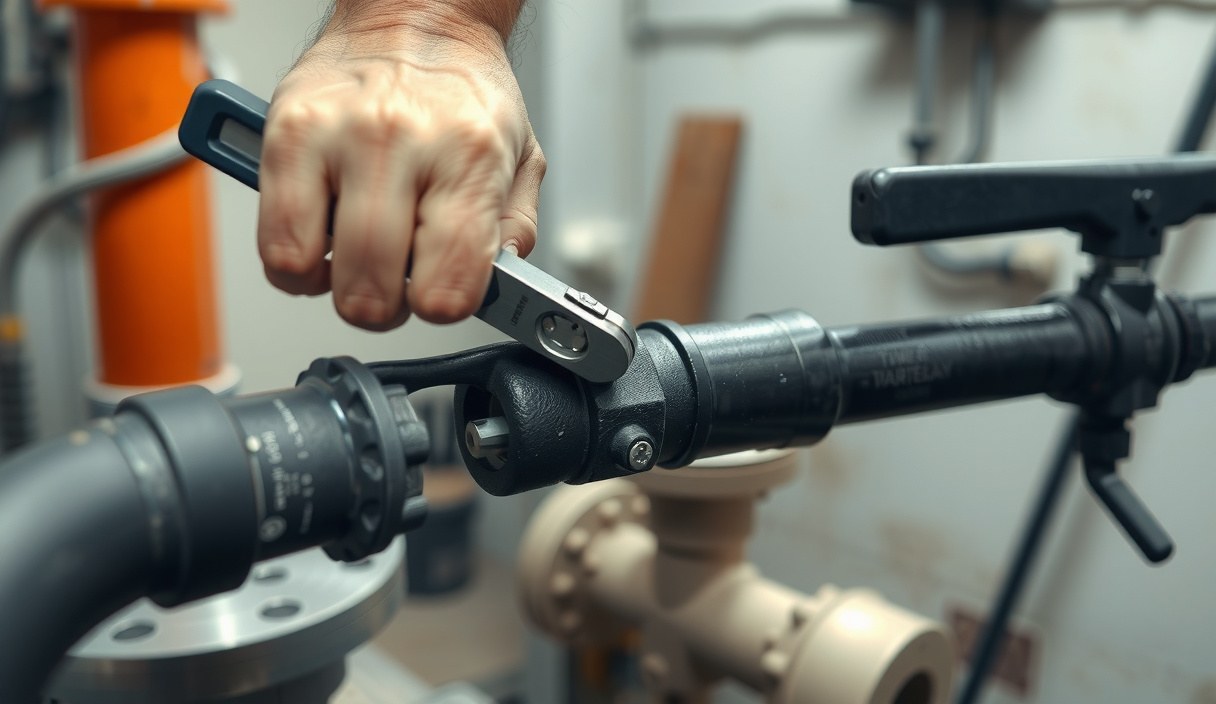
Threaded steel: rigid, tough, the default for exposed runs in crawlspaces and garages. Joints are cut, threaded, dressed and sealed with a gas-rated compound — never tape meant for water.
Material
CSST
Jacketed, flexible corrugated stainless tubing — the practical choice for fishing a gas line through a finished wall or joist bay. It must be installed by a trained fitter and bonded to the grounding electrode system.
Bonding is the detail most likely to be missed, and one reason we like being a plumbing and electrical shop under one roof. CSST has to be bonded to the grounding system to limit arcing damage from a nearby strike or a fault, and a plumber who does not touch panels leaves that to somebody else. Our gas fitter and our electrician are one phone call.
- A sediment trap ahead of each appliance, so debris drops out before the valve
- A shutoff at every appliance, reachable without moving it
- Buried and exterior segments run in material, coating and depth suited to wet ground
- A pressure test held on a gauge to the code standard, witnessed by the inspector
- A leak check at every joint once service is restored
Permits & inspection
Permitted, tested, inspected — then the utility turns it back on
New gas piping is permitted work. Which office issues it depends on your address: inside city limits, the City of Everett; out around Silver Firs, Clearview, or the Snohomish valley, Snohomish County. Either way we pull it, schedule the inspection, and meet the inspector. Unpermitted gas work surfaces at the worst possible moment — a sale, or an insurance claim.
Site visit
We list every appliance, read the data plates, check the meter, and walk the route before quoting.
Permit filed
Load calculation and pipe sizing on paper, permit submitted to the right jurisdiction.
Pipe run
Material chosen per segment, joints made up properly, traps and shutoffs set, CSST bonded.
Test & inspect
The system goes on a gauge and holds. The inspector sees it under pressure before anything gets covered.
Gas restored
We coordinate the utility hand-off, connect and relight each appliance, and leak-check live joints.
Adding load the meter has never seen?
A new furnace, tankless heater, or standby generator can push a house past what its meter was sized to deliver. Better to have that utility conversation during the quote than after the gas line is in the ground — we flag it early and coordinate with Puget Sound Energy.
Why us
On gas, there is no version of "close enough."
Danika Plumbing & Electric has worked on Snohomish County houses long enough to know which neighborhoods still run original steel. Every gas job runs under Washington State L&I registration: permitted, tested, signed off. Same crew, same standard, same number to call later.
(425) 374-1557Licensed & bonded
WA L&I registered, bonded and insured, on every gas permit we pull.
Permit handled
Filed with the right jurisdiction; we meet the inspector ourselves.
Plumbing + electrical
CSST bonding and generator hookups without a second contractor.
Written price up front
You see the number before we open a wall. Nothing appears later.
Existing lines
Gas line repair services on piping you already have
Plenty of gas calls are about pipe that has sat under the floor since before the current owner bought the place. Older steel corrodes where it exits a wall or enters soil, and soil around here spends half the year wet. Joints made up decades ago can weep too slowly to smell but fast enough to show on a gauge. Remodels and enthusiastic landscaping put screws and shovels through gas lines nobody mapped.
Diagnosis is methodical rather than dramatic. We isolate sections, put the system on a gauge, and watch whether it holds; a pressure drop says there is a leak, and electronic detection plus solution at the joints narrows it to the failing segment. From there the choice is honest — repair the section if the rest of the gas line is sound, replace the whole run if it has reached the end of its life. The same crew handles repairs to your water piping, so one crawlspace visit can cover more than one problem.
The small amount of maintenance a gas system actually needs
Gas lines ask for very little maintenance, which is exactly why they get ignored for thirty years. The maintenance that matters in a Pacific Northwest home is short and mostly visual: look at the exposed steel where it leaves a wall or enters the ground and check it is not scaling or weeping rust, keep soil, bark and stacked firewood off buried and exterior segments so they stay dry, and make sure every appliance shutoff is still reachable without dragging the appliance out. Sediment traps do their work quietly and only want attention when something starts behaving oddly.
The other half of it is the appliances. A furnace, water heater or gas range serviced on schedule burns clean, and a burner that has gone lazy and yellow-tipped is telling you something about supply before it becomes a fault. If you are adding load — a generator, a tankless heater, an outdoor kitchen — that is the moment to have the whole gas line sized again rather than assumed. Catching an undersized or corroding run on a service visit is far cheaper than the alternative, which is to install a replacement under a finished floor in a home you are still living in.
Worth saying plainly: a gauge test and a detector are diagnostic tools, not emergency response. If gas is in the air right now, the protocol at the top of this page comes first.
Where we work
Gas fitting across Snohomish County
Our shop is on Airport Road in Everett, so most of this county is a short drive. We run gas lines in Everett, Marysville, Lynnwood, Edmonds, Mukilteo, Mill Creek, Lake Stevens, Monroe, Snohomish, and Mountlake Terrace. Inside city limits and want the local detail? Read the page on gas line installation in Everett. Gas is one piece of what we do; the rest of the plumbing side covers the same houses, from drains to repipes.
Before you book
What people ask us about gas lines
Do I need a permit to install a gas line in Everett?
Can you run a gas line to an outdoor BBQ, fire pit, or patio heater?
How much does gas line installation cost?
Is CSST safe, or should I insist on black iron pipe?
How do I know if I have a gas leak?
Adding gas is an upgrade, not an emergency.
Which means it is worth doing to spec rather than to budget. Financing is available on larger runs and appliance conversions.
Ready to run the gas line?
Tell us what you want to fuel in your home — a range, a dryer, a fire pit, a generator — and we will size it, price it in writing, permit it, test it, and hand it over inspected.
Danika Plumbing & Electric · 11015 Airport Road, Everett, WA 98204 · Licensed · Bonded · Insured · WA L&I Registered