High-Pressure Drain Cleaning
A cable makes a hole through the clog. Water takes the clog out.
That is the whole argument in one sentence, and it is why the jetter rides on the truck. Drains around Snohomish County fill with the same three things: kitchen grease that cooled and stuck, rust and mineral crust growing inward through old galvanized and cast iron, and root hairs that found a joint and moved in. A cable bores through the middle of it; high-pressure water scours the wall and gives back the diameter you already paid for. Our hydro jetting work starts with a camera, because what the pipe is made of matters as much as what is inside it.
Reviewed by our customers
What our customers say about our jetting work


Cable vs. water
Cabling punches a hole. Hydro jetting cleans the wall.
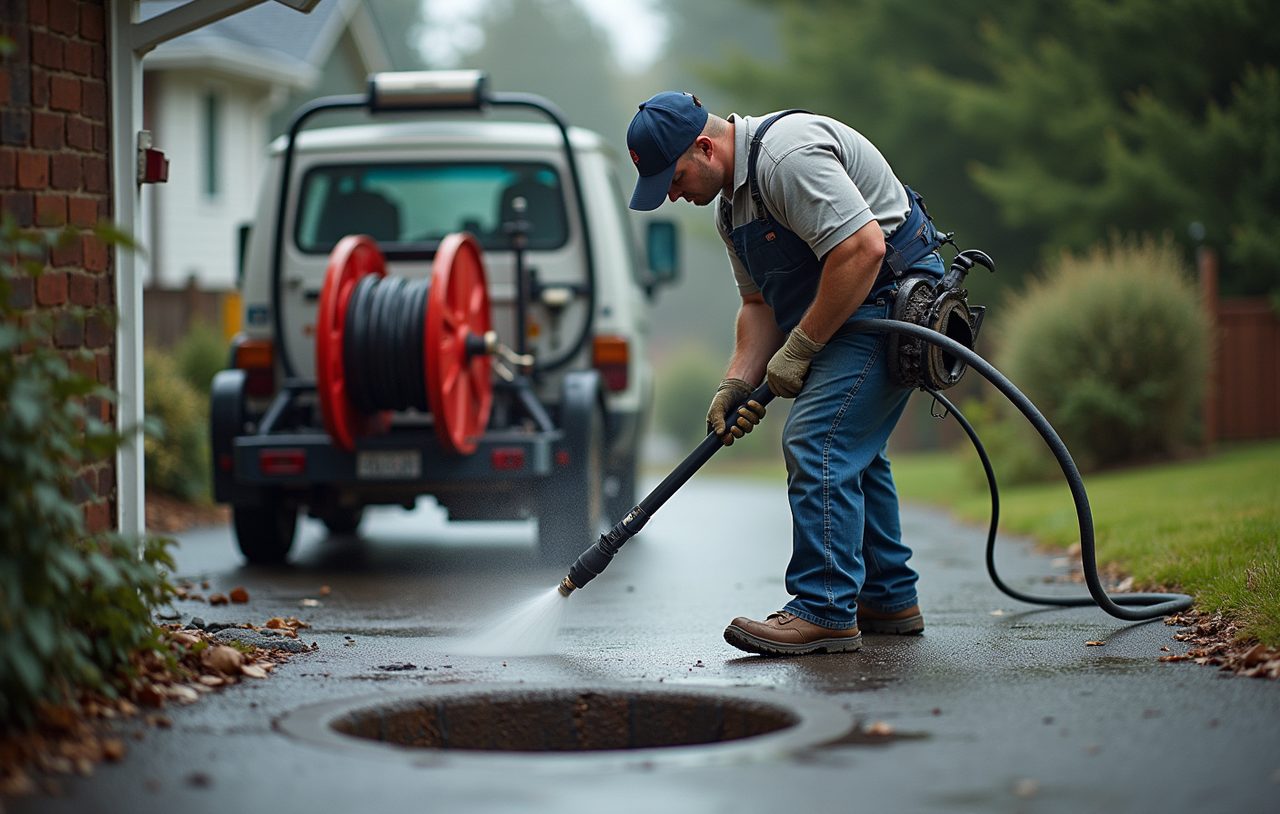
Hydro jetting is drain cleaning done with water rather than steel — a hose fed down the pipe, water at high pressure, and a nozzle whose jets face backwards so the wall gets scoured instead of punctured. Set the two next to each other and the difference stops sounding like a sales pitch. A drain machine — the snake, the auger, the cable, whatever your last plumber called it — spins a steel cable down the pipe with a cutting head on the end. Fast, inexpensive, right a great deal of the time, and what we reach for first when one fixture has stopped and the rest of the house drains fine. It bores a channel through the obstruction. Water moves again, the sink empties, everyone is happy by lunchtime. But the grease ring, the scale and the root mat are still on the pipe wall, waiting to catch the next thing down.
Hydro jet drain cleaning works from the opposite direction. A hose travels down the pipe carrying water at high pressure through a nozzle that aims most of its jets backward. Those rear jets do two jobs at once: they pull the hose forward, and they scour the wall behind them, dragging debris toward the cleanout instead of packing it downstream. What comes back is bare wall at full diameter, with nothing left for the next batch of grease to grab.
The honest summary: cabling restores flow, jetting restores the pipe. Which one your drain needs depends on what the camera finds, and we would rather tell you a cable is enough than sell you the bigger service. For a slow lavatory or a hair-packed shower branch, straightforward drain cleaning ends the story that afternoon.
The right call
The lines that actually need a jetter
Four patterns send most of the jetting work our way. The first is the repeat: a drain gets cleared, behaves for a while, then slows again on the same fixture. That line never got clean — it got a channel. The second is grease, and not only in restaurants; home kitchen branches in older Everett houses build a hard, waxy ring that a cutting head slices through like a straw through a milkshake, leaving the ring intact.
The third is scale. Galvanized and cast iron drains grow rust nodules and mineral crust inward until the working diameter is a fraction of what is stamped on the pipe, and no spinning blade shaves that off evenly — scale removal is where high-pressure water is in a class of its own. The fourth is roots already cut once: slicing a mat out of a joint is satisfying and temporary, because the fine hairs left in the crack are what grows back, and water at pressure strips those out in a way steel never has.
- The same drain backing up again soon after it was cleared
- A kitchen or laundry line that stays slow however often it is snaked
- Root hairs regrowing through a joint a cable already cut
- Rust and crust narrowing old galvanized or cast iron pipes
- A commercial kitchen carrying a daily grease line load
- A main that must be clean before a survey or a spot repair
None of that makes jetting the answer to everything. Roots keep coming back because a joint is open, and at some point the honest recommendation stops being another cleaning and starts being fixing the sewer line itself — better said on the first visit than the third.
Where we stop
When hydro jetting services are the wrong answer
Hydro jetting is only ever as good as the pipes it goes into, and that is the part most pages selling this service leave out. High-pressure water is hard on a pipe that has already failed, and there are lines under Snohomish County houses we will not put a jetter into.
Orangeburg is the clearest case — sewer pipe rolled from layers of wood fiber and pitch, common under older residential lots around here, and by the time we see it on camera it has gone soft and oval. Jetting it does not clean it; it finishes it. Cracked clay tile is the second: pressure escapes through the break, washes soil in behind it, and a slow drain becomes an excavation. Cast iron rusted through along the bottom, the channelled invert every plumber knows on sight, is the third. Thin or badly patched ABS turns up too, usually where a previous owner improvised.
It helps to know how old the ground under this city actually is where sewer is concerned:
Everett has been laying sewer since 1890
The city’s first sewers went in the ground in 1890, with the citywide system spreading out from north Everett in 1897. Everett Public Works now runs roughly 345 miles of mains, interceptors and laterals plus 31 lift stations, serving about 165,000 people, and the treatment plant handles up to 25 million gallons a day. None of that is your side sewer — that pipe is private — but it tells you what construction era the oldest streets in town are working with, and it is the reason a camera goes down before a jetter does.
Source: City of Everett Public Works, Sewer (everettwa.gov/588/Sewer); Everett WA; pulled Aug 2026.So a camera inspection goes down first. We look at material, joints, offsets and the low spots where water stands, noting every place the pipe is holding itself together out of habit. If the line can take it, we jet. If it cannot, we say so on the spot and show you the footage — we jetted it and it collapsed is a sentence nobody wants to be on either end of.
The process
How a hydro jetting job runs, from cleanout to second camera pass
Same sequence on a kitchen branch or a restaurant main. You see the pipe before and after.
Scope it
Camera first: material, joints, sags, and what is actually narrowing the pipe.
Find the access
Usually an existing cleanout. Where there is none, we pull a fixture or set one.
Match the nozzle
Grease, hard scale and roots each want a different head and working pressure.
Work it back
The hose runs downstream, then cleans on the way out, pulling debris back.
Scope it again
Same camera, same line, clean wall. You watch it rather than take our word.
Pricing follows access, line length and what that first pass turns up — a reachable cleanout on one kitchen branch is a different job from a main under a driveway. For a sense of scale, the two Seattle-metro surveys we checked put residential hydro jetting somewhere between $389 and $860, with a straightforward clog at the bottom of that band and heavy grease or root work at the top. A national guide puts the same work markedly higher, at $600 to $1,400. We give you the local band and flag the gap rather than quietly splitting the difference between the two. You get the number in writing before the hose comes off the reel. On site we protect the flooring around the access and carry the debris out rather than pushing your problem into somebody else's line.
Sources: Angi, Seattle metro, pulled Aug 2026 (two separate Seattle pages giving $389–$667 and $500–$860); HomeGuide, national, pulled Aug 2026. Ranges are published typicals for planning, not a Danika quote.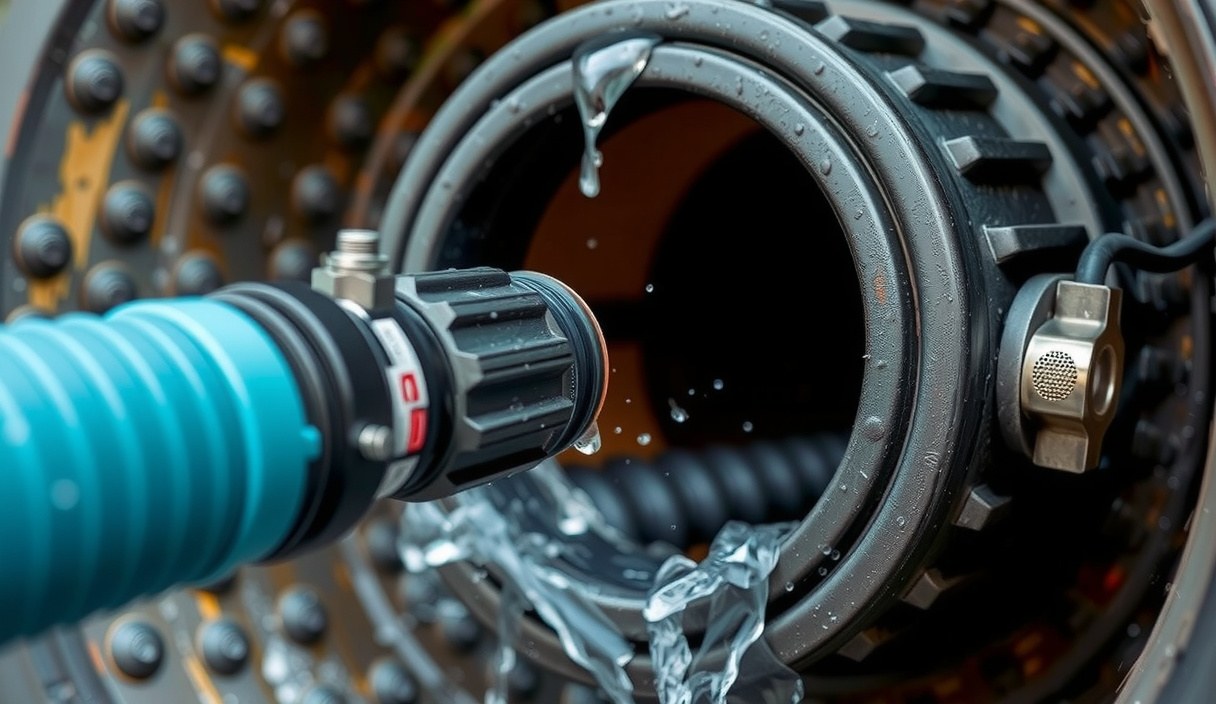
Food service & commercial
Grease lines, kitchens, and the commercial side
Restaurants live and die by the back-of-house drain, and kitchens along Evergreen Way, around downtown Everett, up through Marysville and out at Mill Creek Town Center all learn the same lesson. An interceptor only catches what makes it into the interceptor. The branch lines feeding it — from the wok range, the three-compartment sink, the mop basin, the dish machine — collect what cooled on the way there, and warm water plus detergent moves that film along until it reaches somewhere cold and stops.
A backup at seven on a Friday evening costs a kitchen more than any maintenance visit will, which is the whole economic case for scheduling this work. We come in before service or after close, jet the branches and the main, then pull a camera pass so the owner sees where the film rebuilds fastest. That sets the interval — the footage, not a number picked off a calendar.
The same logic covers apartment kitchen stacks, care facilities, schools, salons pushing product into a small line, and offices where a break-room sink quietly does restaurant duty. We handle the rest of a property's plumbing work under one account too, which keeps the history in one place rather than split across three vendors.
Why us
The camera goes in before the hose does.
Licensed, bonded and working out of Airport Road in Everett: the people who scope your drain are the ones who clean it and the ones who come back if it acts up. No dispatch centre three states away, no sub you have never met, no pressure on a pipe that cannot hold it.
(425) 374-1557Licensed & bonded
WA L&I registered, insured, accountable in writing.
Footage both ways
You see the line before we start and after we finish.
We will talk you out of it
If a cable solves it or the pipe is too far gone, that is what we tell you.
Plumbing + electrical
One company, one standard, fewer numbers saved in your phone.
Service area
Where we take the jetter
Home base is Airport Road in Everett, and the truck covers most of Snohomish County from there — Mukilteo, Marysville, Lynnwood, Edmonds, Mill Creek, Lake Stevens, Snohomish, Monroe, Mountlake Terrace, Bothell, and south into Shoreline and Kenmore. In town, start with hydro jetting in Everett. Not sure your address is in range? Ask — drive time is our problem, not yours.
Before you book
What people ask before they book
What is the difference between hydro jetting and snaking a drain?
Can hydro jetting damage my pipes?
How often should a restaurant grease line be jetted?
Will jetting get rid of tree roots for good?
Do I need a cleanout for you to jet the line?
How much does hydro jetting cost?
Jetting once usually beats cabling four times.
If a recurring line has already cost you several call-outs, financing can make the permanent fix the easier call.
Give the pipe its diameter back.
Camera first, pressure second, footage both ways — anywhere in the county your line runs.
Licensed · Bonded · Insured · WA L&I Registered · 11015 Airport Road, Everett, WA 98204