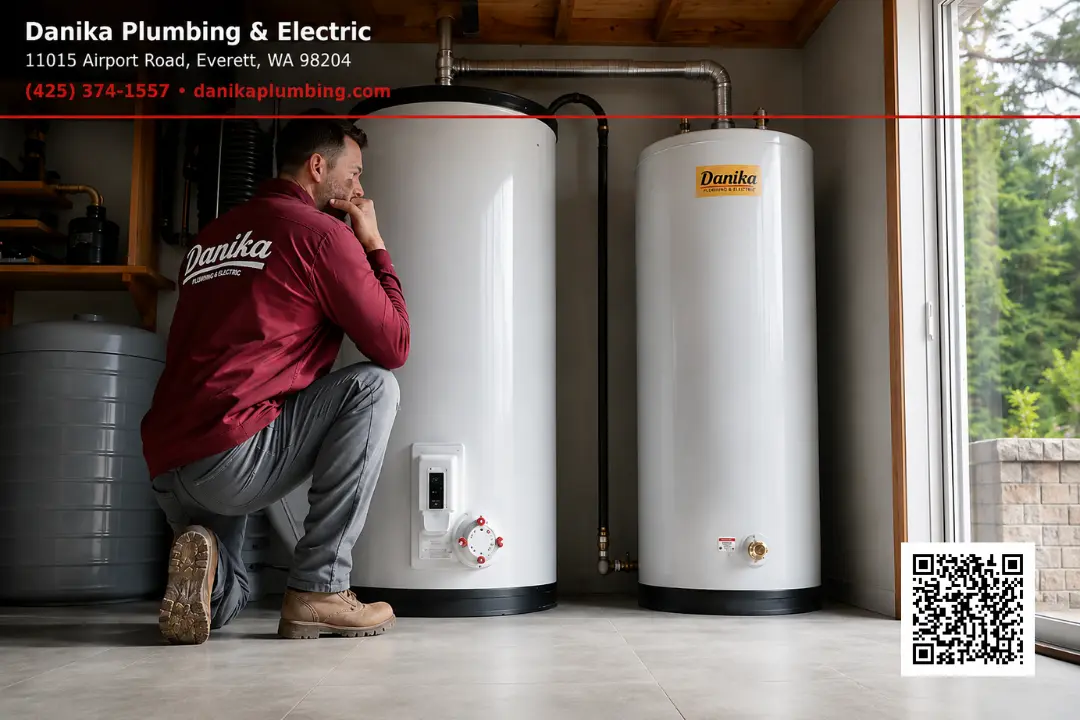
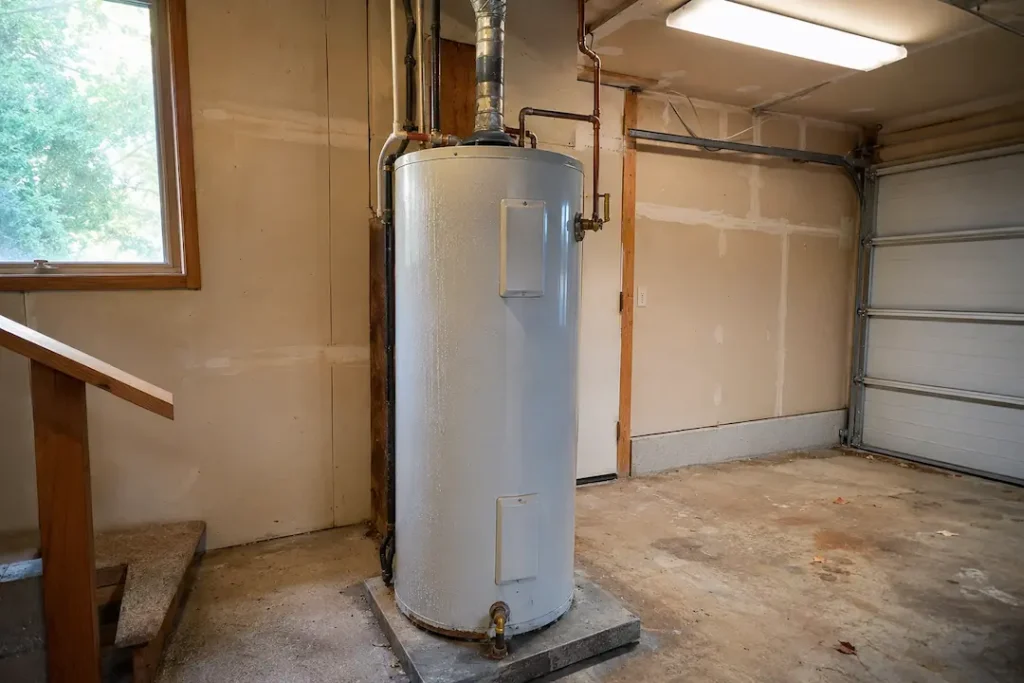
It usually starts at the worst time. You are half-asleep, the house is quiet, and somewhere down in the garage your water heater lets out a sound like someone dropped a bag of marbles into a boiling pot. Popping. Rumbling. Maybe a low banging that you feel more than hear. Most people rent out a visit from a plumber thinking about worst-case scenarios — burst tanks, floods, the whole thing. That is rarely where a noisy water heater ends up. But it is your heater telling you something. So let us translate.
What we can do is walk through what each sound actually means, the real causes behind the most common ones, and what you should do about it — from a quick flush you can handle yourself to the sounds that mean you pick up the phone. That is the conversation we have with most Lynnwood homeowners when they call us about a noisy tank, so here it is in plain terms.
Before you dig in — related reading
A few pages from our site that pair well with this one:
- If your tank is on its last legs, the water heater specialists on our team handle repair and replacement.
- Homeowners in town can reach our Lynnwood plumbing team for a same-week look.
- Not sure if noise means it is time to swap the unit? Here are the signs you need a new water heater.
- Running a gas model? Walk through troubleshooting a gas water heater first.
- Planning a replacement? See how long a water heater replacement takes.
- Closer to the Everett side? That is covered by our Everett water heater team.
The 30-Second Answer
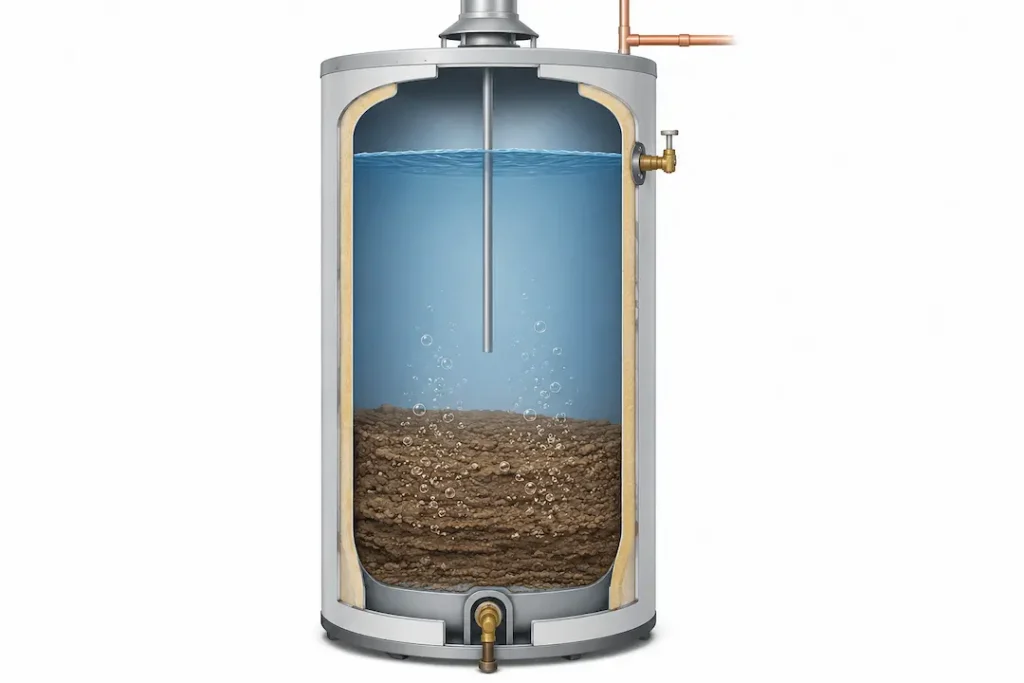
Most water heater noise comes down to sediment. Minerals and grit settle to the bottom of the tank, the burner or element heats through that layer, and trapped water pops and rumbles as it escapes — like a kettle that never quite finishes boiling. Banging often points to water pressure or water hammer in your pipes. Ticking is usually harmless metal expanding. Hissing or sizzling can mean a small leak hitting hot metal, and that one is worth a closer look.
A flush fixes the most common cases. The sounds that should make you pick up the phone are the wet ones — anything paired with pooling water, rust at the base, or a constant hiss from the relief valve.
Should I Be Concerned About a Water Heater Making Noise?
Short version: pay attention, but do not panic. A little popping after a long hot shower is your tank doing tank things. Sediment shifts, water boils off it, you hear it. Annoying — not dangerous. What changes the math is how the noise behaves. A new sound that gets louder week over week, a rumble you can feel through the floor, or any noise that shows up alongside lukewarm water means the sediment layer has gotten thick enough to steal efficiency.
Here is a number worth knowing: a sediment-clogged tank can burn through 10 to 20 percent more energy to heat the same water, according to the DOE’s ENERGY STAR program. That racket is not just noise — it is quietly padding your PSE bill.
One local wrinkle. Folks assume the Pacific Northwest’s soft water means sediment cannot be the culprit. Lynnwood mostly gets its water through the Alderwood Water & Wastewater District, and our regional supply does run soft. But soft does not mean mineral-free — tanks still collect grit, rust flakes, and scale over years of cycling, especially with the cooler inlet temps that make heaters work harder through winter. We have pulled a coffee can of sludge out of plenty of soft-water tanks.
What Does Each Water Heater Sound Actually Mean?
Different noise, different story. Here is the quick field guide we use when customers describe what they are hearing:
- Popping or rumbling. The classic. Sediment on the bottom, water trapped underneath it boiling free. Most common sound by far, and the one a flush usually cures.
- Banging or knocking. Often water hammer — pipes lurching when a valve or faucet shuts off fast. Can also mean your home’s water pressure is running high (over 80 PSI starts causing trouble).
- Ticking or tapping. Usually nothing. Metal pipes and fittings expanding and contracting as they warm and cool. Heat traps and the nipple fittings on top of the tank are common spots.
- Hissing or sizzling. This is the one to respect. It can mean water is dripping onto a hot surface — a small leak, condensation on a gas burner, or the temperature-and-pressure (T&P) relief valve venting because something is too hot or too pressurized.
- Screeching or whistling. Restricted flow. Usually a valve that is only partway open or a buildup narrowing a line somewhere.
If you can match your sound to one of those, you are already halfway to knowing whether this is a Saturday-morning project or a call to us.
How Do You Fix a Noisy Hot Water Heater?
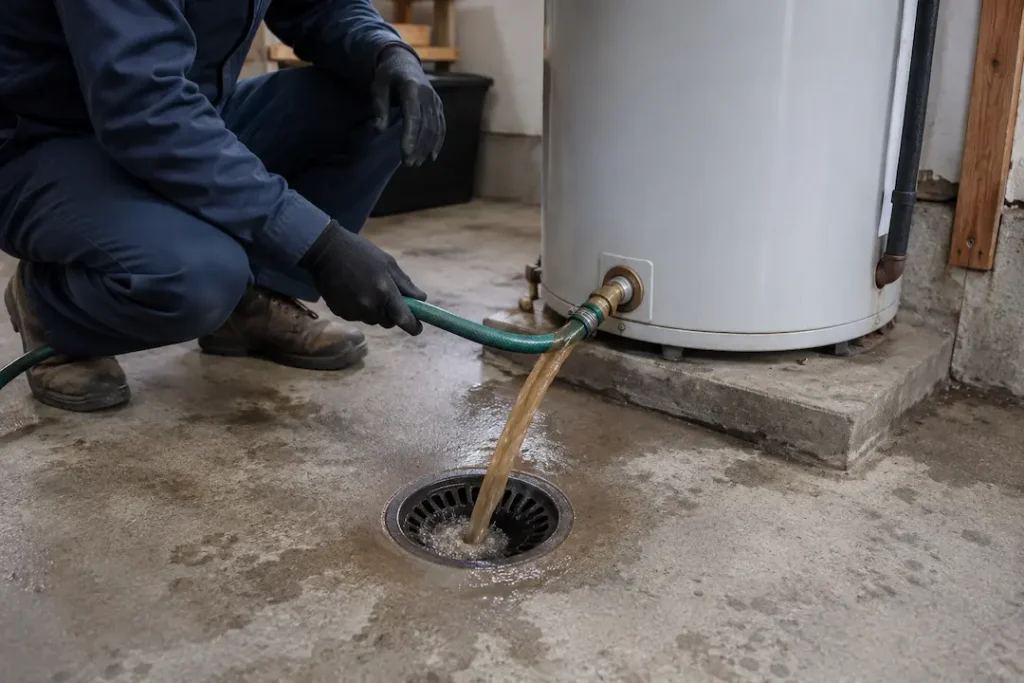
For the popping-and-rumbling crowd, a flush is the move. Roughly how it goes:
- Kill the power (electric) or set the gas valve to “pilot.” Do not skip this.
- Shut the cold-water supply valve at the top of the tank.
- Hook a garden hose to the drain valve near the bottom and run it to a floor drain or outside, somewhere downhill.
- Open a hot tap somewhere in the house to break the vacuum, then open the drain valve and let it run.
- Once empty, briefly crack the cold supply back open to stir up and rinse out leftover grit. Repeat until the water runs clear.
- Close the drain, refill the tank fully (that hot tap should sputter and then run steady), and only then restore power or gas.
Two honest cautions. If your heater has not been flushed in five or six years, that old drain valve sometimes refuses to seal again afterward — we have turned more than one quick flush into a valve swap. And on a heavily scaled tank, flushing helps but will not undo years of buildup. Sometimes the quiet move is a new unit.
For banging tied to pressure, the fix is different: a plumber checks your PSI and may add or adjust a pressure-reducing valve. Washington requires thermal expansion control on closed systems, so an expansion tank may be part of the answer too — worth confirming for your specific setup rather than guessing.
What Are the First Signs a Water Heater Is Going Bad?
Noise is often the opening act. The rest of the lineup:
- Hot water that runs out faster than it used to, or never gets as hot.
- Rusty or cloudy hot water — and only the hot side is the tell.
- A metallic smell or taste from the hot tap.
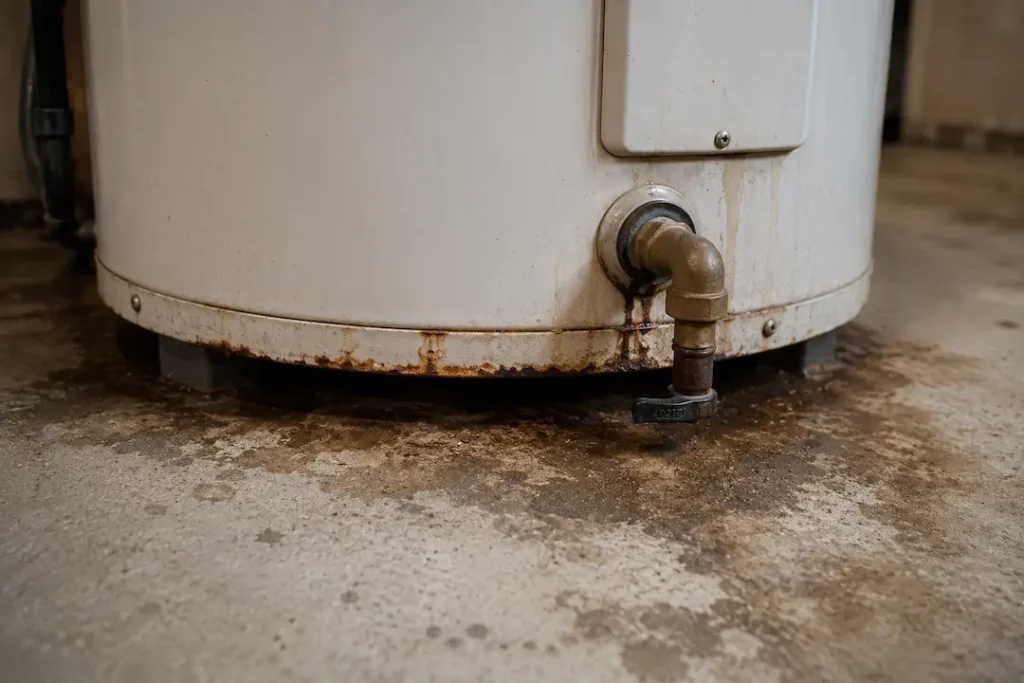
- Dampness, drips, or rust streaks anywhere around the base.
- Age. Most tank heaters give you 8 to 12 years. If yours is pushing past that and getting loud, it is not being dramatic — it is being honest.
We had a customer near Martha Lake who kept babying a 14-year-old tank because it still worked. It worked right up until it did not — on a Sunday, across a finished basement floor. Sometimes the rumble is the warning you actually get to act on.
Is a Noisy Water Heater Dangerous — Could It Burst?
A standard tank does not go from popping to exploding out of nowhere. The real danger scenario is a failed or blocked T&P relief valve combined with runaway pressure — and that valve exists specifically to prevent the worst. Rumbling alone will not burst a healthy tank.
That said, treat these as stop-now signals: a relief valve that is constantly hissing or dribbling, aggressive banging paired with very hot water, or any pooling water and corrosion at the base. If you see those, shut off the power or gas to the unit and call a licensed plumber. Not later. That day.
Frequently Asked Questions
Why is my water heater making noise at night or in the early morning?
Usually because the house is quiet and you can finally hear it — and because the tank often kicks on overnight to recover heat lost while everyone slept. The sound was probably there all along.
My water heater sounds like a tea kettle. Is that bad?
A whistle or kettle-like sound points to restricted flow or pressure — sometimes a partly closed valve, sometimes scale narrowing a line. It is worth checking rather than ignoring, especially if it is new.
Why does it make noise even when no one is using hot water?
Tanks reheat on their own to hold temperature, so they cycle even when the house is still. Sediment popping during those off-peak heat cycles is the usual answer.
Do tankless water heaters make noise too?
They can — a faint hum or fan sound is normal, but clicking, buzzing, or a burning smell is not. Tankless units have their own quirks, and a quick diagnostic sorts out normal from not.
Still Hearing It? Let Us Take a Look.
If your tank has been auditioning for a percussion section and a flush did not quiet it down — or you spotted water where water should not be — we will come find out why. We have been doing this around Lynnwood and the rest of Snohomish County a long time, and most noise calls end with a straight answer and a fair fix, not a hard sell.
Text us a photo or a short video of the sound if you can. It genuinely helps us show up ready.
Danika Plumbing & Electric
11015 Airport Road, Everett, WA 98204
Phone: (425) 374-1557
Email: office@danikaplumbing.com
Washington License # DANIKPL839PF