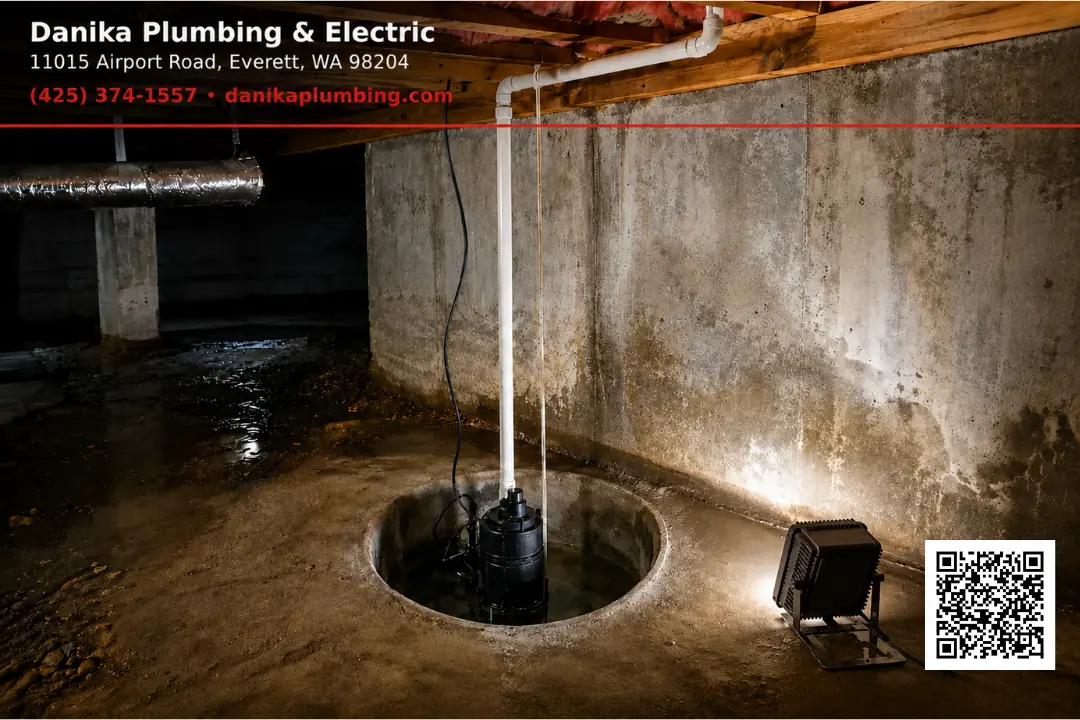
If you own a home in Marysville, there’s a decent chance a sump pump is quietly working in your crawl space right now — and an even better chance you haven’t looked at it since you moved in. We get it. Nobody buys a house and thinks, “Can’t wait to check on the pump in the dirt hole.”
But here’s the thing. Marysville sits on some of the flattest, wettest ground in Snohomish County. Between the Snohomish River delta to the south, Ebey Slough, and soil that holds water like a sponge, a lot of homes here depend on that one little pump more than their owners realize. So the question we hear all the time — usually in January, usually at 9 PM — is: how long do these things actually last?
Short answer: about 7 to 10 years. Longer answer below, including the warning signs we wish more people knew about.
Before you dig in — related reading
- Our Marysville plumbing team — service in your neighborhood, from downtown to Whiskey Ridge
- Professional sump pump work — repair, replacement, and new installs
- French drain design and install — the other half of a dry crawl space
- How to design a french drain system — if you like doing the homework yourself
- Redirecting water runoff away from your home — gutters, swales, and grading basics
- Why drains back up after heavy rain — a Pacific Northwest classic
The 30-Second Answer
A typical submersible sump pump lasts 7 to 10 years. Pedestal pumps can stretch to 15 or more because the motor sits up out of the water. In Marysville, where pumps in low-lying neighborhoods can run hard from October through March, we’d plan on the shorter end of that range. If your pump is past year seven and you don’t know when it was installed — assume it’s on borrowed time and test it before the next atmospheric river shows up.
How Long Does a Sump Pump Last, Really?
Manufacturers love to quote lifespan under ideal conditions. Marysville is not ideal conditions.
Our area gets somewhere in the neighborhood of 35 to 40 inches of rain a year, and most of it arrives in one long, soggy stretch. A pump in a high-water-table neighborhood — parts of the older grid near Comeford Park, homes down toward the slough, anything built on the flats — might cycle thousands of times each winter. The same pump in a hillside house in Whiskey Ridge might barely wake up. Run time, not age, is what wears a pump out.
The other lifespan killers we see: sediment chewing up the impeller (our glacial till soil is great at producing fine silt), a float switch that jams against the pit wall, and pumps that were undersized from day one and run flat-out instead of in comfortable cycles.
We pulled a pump out of a crawl space off 4th Street a couple winters back that was 14 years old. The homeowner was proud of it — right up until we showed him the inside. The impeller looked like it had been gargling gravel. It wasn’t pumping water so much as gesturing at it.
How Often Should a Sump Pump Run?
There’s no magic number — it depends entirely on what the water table under your home is doing. During a dry August, your pump might not run for weeks. During a stacked run of winter storms, every few minutes can be perfectly normal for low-lying Marysville properties.
What’s not normal: a pump that runs constantly even in dry weather (often a stuck float switch or a check valve problem letting the same water fall back in), or a pump that short-cycles — kicking on and off every few seconds. Both will burn the motor out years ahead of schedule, and both are usually cheap fixes if you catch them early.
What Are the Signs Your Sump Pump Is Failing?
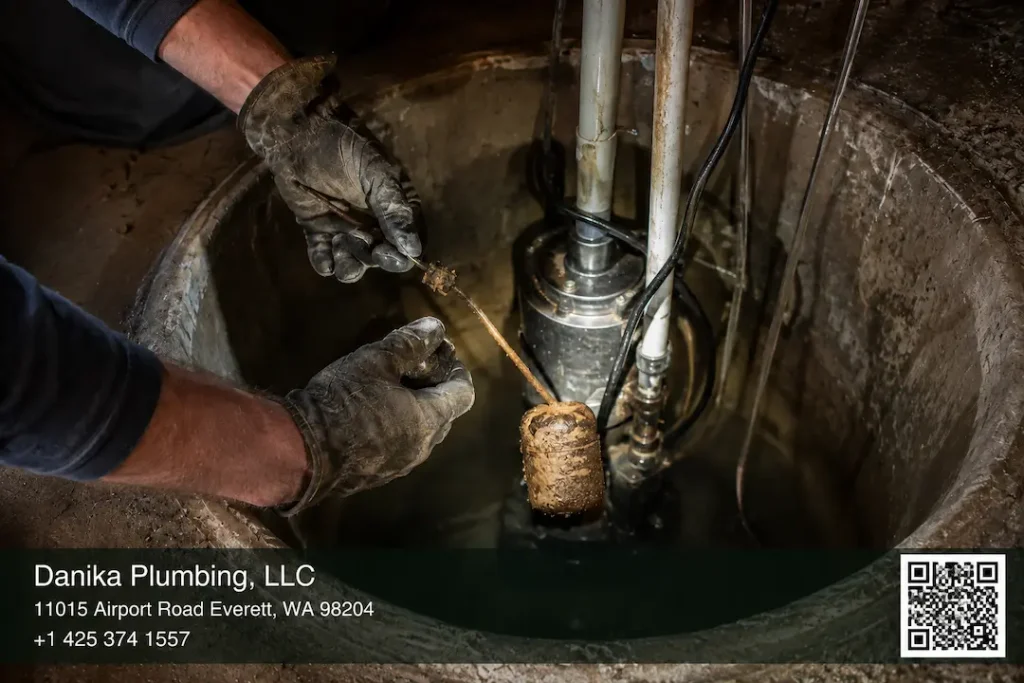
Pumps rarely die quietly. They complain first. Worth a listen:
- New noises. Grinding, rattling, or a hum with no water movement. A healthy pump has a steady, boring sound.
- Constant or random cycling that doesn’t match the weather.
- Visible rust or a stuck float when you lift the pit lid (yes, it’s worth lifting the lid).
- Water that drains slowly or a pit that refills immediately after pumping.
- Age. Past seven years, every winter is a coin flip.
One more that surprises people: a musty crawl space smell upstairs. Often that’s the first hint the pump’s been losing the battle for a while.
Do I Need a Battery Backup Sump Pump?
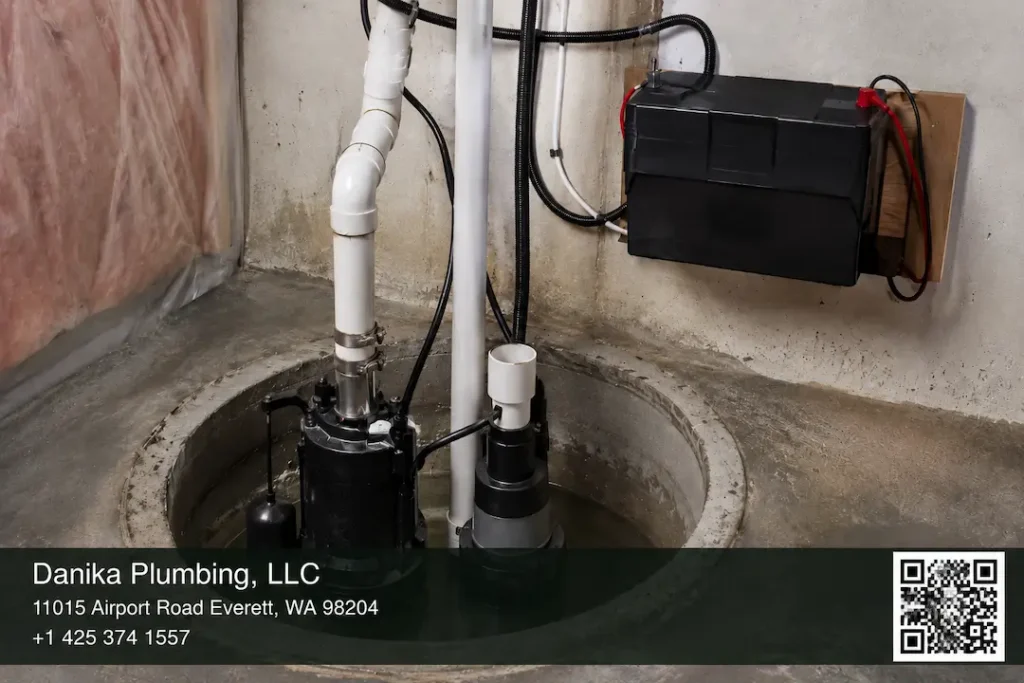
In Marysville? We’d say it’s one of the better insurance policies you can buy for the house.
Think about when your pump matters most — the middle of a November windstorm, rain hammering sideways, ground already saturated. That’s exactly when the power likes to go out around here. A primary pump with no backup during an outage is just a decorative object in a hole filling with water.
A battery backup unit sits next to your main pump and takes over automatically, typically giving you several hours of pumping — usually enough to ride out an outage. Water-powered backups exist too, though they depend on your municipal water pressure and aren’t right for every home. If your crawl space or basement has ever flooded, or you’re in one of the flatter neighborhoods near the delta, we’d put a backup near the top of the list.
Where Does Sump Pump Water Go?
Good question, and one with a right and a wrong answer.
The discharge pipe should carry water well away from your foundation — ideally to a spot where the ground slopes away from the house, a dry well, or an approved storm drainage connection. What it should never do is dump into your sewer line. Sending groundwater into the sanitary sewer can overload the system and, in most jurisdictions, isn’t allowed.
Rules on where sump discharge can legally go vary by city, and Marysville has its own stormwater requirements — so before re-routing a discharge line, it’s worth a quick call to the city or to us, and we’ll point you the right way. We also see plenty of discharge lines that simply dump water three feet from the foundation, where it soaks right back down and gets pumped again. The pump runs twice as much, lasts half as long, and the crawl space never really dries out. If that sounds like your setup, fixing the discharge path is one of the cheapest lifespan upgrades there is.
How Much Does It Cost to Replace a Sump Pump?
Ballpark — and we mean ballpark, every pit is different: a straightforward swap of a failed submersible pump typically lands somewhere in the $400 to $1,200 range installed, depending on the pump quality, pit condition, and how the discharge is plumbed. Adding a battery backup system usually runs another $600 to $1,500. A brand-new pit and pump where none existed is its own project, with crawl space access being the biggest variable.
Compare that to what a flooded crawl space costs once you factor in insulation, ductwork, and mold remediation — water damage claims regularly run into five figures — and the math gets pretty easy.
Frequently Asked Questions
How do I test my sump pump?
Pour a five-gallon bucket of water slowly into the pit. The float should rise, the pump should kick on, the water should leave, and the pump should shut off. Whole test takes two minutes. We’d do it every fall before the rain arrives — early October is perfect timing in Snohomish County.
Can I replace a sump pump myself?
A handy homeowner can swap a like-for-like pump, sure. Where it goes sideways is sizing, check valves, and discharge plumbing — the details that decide whether the new pump lasts ten years or three. If your old pump failed young, something killed it, and it’s worth finding out what before feeding it a replacement.
What size sump pump do I need?
Most Marysville homes do fine with a 1/3 or 1/2 horsepower pump, but the honest answer depends on your water table, pit size, and discharge height. Oversizing causes short-cycling; undersizing causes burnout. It’s a Goldilocks situation, and a quick assessment beats guessing.
Does a sump pump need maintenance?
A little, and it pays off. Once a year: clear the pit of debris, check the float moves freely, test with a bucket of water, and make sure the discharge outlet isn’t blocked or buried. Ten minutes, tops. Most of the dead pumps we replace died of neglect, not old age.
Want a Dry Crawl Space Before the Rain Comes Back?
We’ve been keeping Marysville crawl spaces dry for years — from the older homes near downtown to the newer builds up north. If your pump is past its seventh birthday, making strange noises, or you honestly have no idea what’s down there, give us a call and we’ll take a look. No drama, no scare tactics, just a straight answer about what you’ve got and what it needs.
Danika Plumbing & Electric
11015 Airport Road, Everett, WA 98204
Phone: (425) 374-1557
Email: office@danikaplumbing.com
License # DANIKPL839PF