One clog is a Tuesday. Two clogs in a week is a pattern. And by the third time you’re standing there with the plunger, wondering what you did to deserve this, the question stops being “how do I fix it” and becomes “why does my toilet keep clogging?”
We get this call all over Everett — from the older bungalows in the north-end blocks to the newer places out past Silver Lake. A toilet that clogs once is usually bad luck. A toilet that clogs again and again is trying to tell you something. The good news: it’s a short list of culprits, and most are fixable.
Before you dig in — related reading
- Our toilet repair team
- How to unclog a toilet without a plunger
- What to do when a toilet keeps running
- Whether drain cleaners belong in a toilet
- How tree roots sneak into a sewer line
- Everett’s local plumbing team
The 30-Second Answer
Why does your toilet keep clogging? It usually comes down to one of three things: too much going down (too much paper, or stuff that should never be flushed), not enough push (a weak flush from an old low-flow bowl or a half-full tank), or a blockage further down the line that no plunger is going to reach.
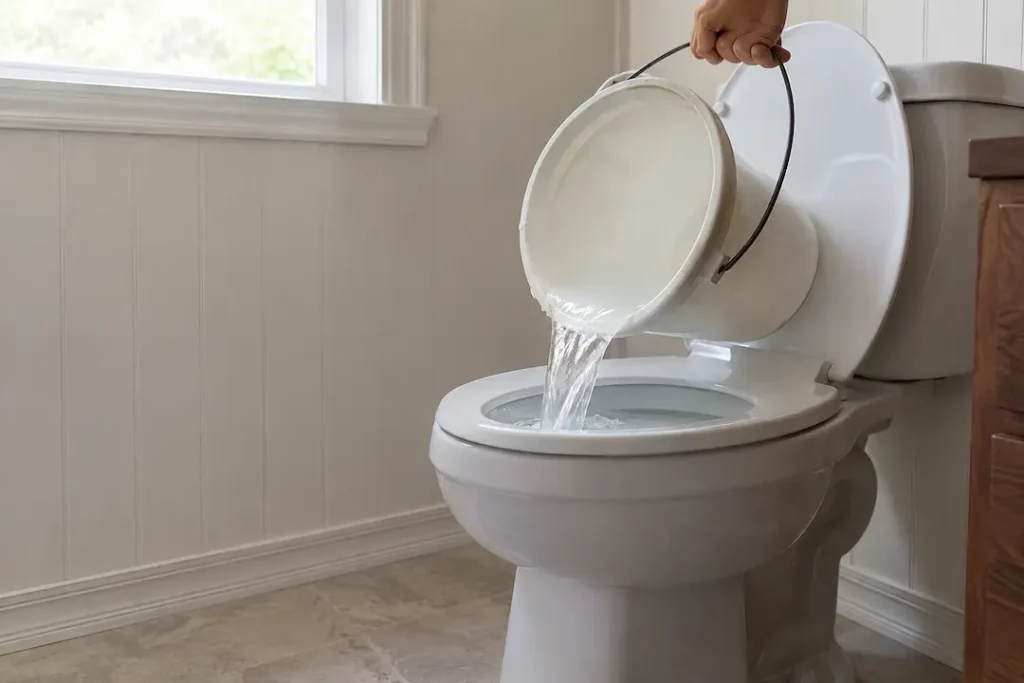
Here’s the quick test that tells you which camp you’re in. Pour a five-gallon bucket of water straight into the bowl — fast. If it whooshes down clean, the bowl and the drain are fine, and your weak flush is the problem (tank or toilet). If even a bucket struggles, the clog is past the toilet, and you’re looking at the drain or the sewer line.
And one local note worth knowing: Everett’s tap water comes off Spada Lake and runs soft. So the hard-water mineral scale that chokes flush jets in a lot of the country is rarely the main villain here — which means, around town, we’re usually chasing flow, flushing habits, or roots instead. If the fixture itself turns out to be the weak link rather than the line, that’s exactly what our toilet repair team handles.
Why Does My Toilet Get Blocked So Easily?
Some toilets really are clog magnets, and it’s not always your fault. A few of the usual reasons we run into:
- An old low-flow toilet. The first-generation 1.6-gallon models from the early-to-mid ’90s are notorious — the federal switch to low-flow happened before the engineering caught up, so those early bowls don’t have the punch to clear a normal load. If your toilet’s pushing 30 years old, the design may be the problem.
- Too much paper, or the wrong paper. A thick, quilted roll breaks down slowly. Pile up a big wad and even a healthy flush struggles.
- Things that aren’t toilet paper. “Flushable” wipes are the big one — they don’t break down, full stop. Same with paper towels, cotton rounds, and dental floss. They snag on anything and start building a net.
- A weak flush. If the tank water sits too low or the flapper closes early, you only get part of the flush. Half the water, half the power. If your tank’s been acting up on its own, it’s worth ruling out a toilet that keeps running at the same time — a weak fill and a weak flush often go together.
- A partial blockage already in there. Sometimes a kid’s bath toy is wedged in the trap, quietly grabbing everything that passes. Drains fine for water, catches solids — classic.
We pulled a toy dinosaur out of a trap once that had caused “random” clogs for months. The homeowner had no idea — their four-year-old, it turned out, had a whole story about it.
What Are the Signs of a More Serious Clog?
Most of the time a repeat clog is just the one toilet. But sometimes the toilet is the messenger, and the real trouble is downstream in the main line. Here’s how to tell the difference.
If it’s only that toilet and the rest of the house drains fine, it’s a local problem. But start watching for these, because they point past the bowl:
- More than one drain is slow or backing up at the same time.
- The toilet gurgles, or the bowl level rises, when you run the shower, sink, or washer.
- A sewer smell drifts up from the lowest drains in the house.
- Water shows up where it shouldn’t when you flush — the tub, a floor drain.
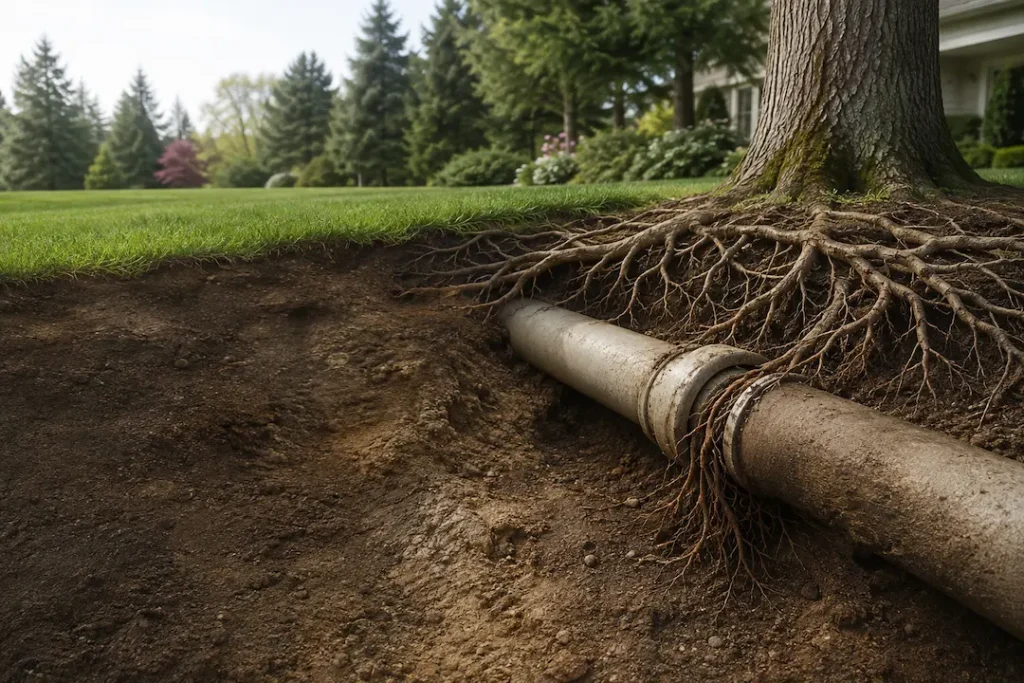
In a lot of older Everett neighborhoods, that bigger problem is tree roots. Firs and maples send hair-fine roots toward the moisture in an aging clay or cast-iron sewer lateral, slip in through a hairline crack at a joint, and fan into a mesh that snags everything. It starts as a faint gurgle or a once-a-month clog, then one wet weekend the line gives up. Our soggy ground feeds those roots toward your pipe most of the year, which is why we see so much of it here. If you want the mechanics of it, we’ve broken down exactly how tree roots find their way into a sewer line and what the early warning signs look like.
A multi-fixture clog is the cheapest warning you’ll get. Catch a root intrusion while it’s still “the toilet acts up sometimes” and it’s a cleaning and a camera look. Wait for the backup and it can mean digging.
How Do You Fix a Toilet That Keeps Clogging?
If the bucket test said it’s a flush problem and the rest of the house drains fine, work through these before you call anyone:
- Plunge it right. Use a flange plunger (the kind with the rubber sleeve that folds out into the drain), get a real seal, and work it firmly a dozen times. A flat cup plunger barely does anything on a toilet. No plunger on hand? Here’s what to try in the meantime.
- Check the tank water level. Lift the lid. The water should sit about an inch below the top of the overflow tube. If it’s low, adjust the float up so the tank fills fuller — you’ll get a stronger flush instantly.
- Watch the flapper. If it slaps shut before the tank empties, the flush gets cut short. A worn flapper is a cheap part and a five-minute swap.
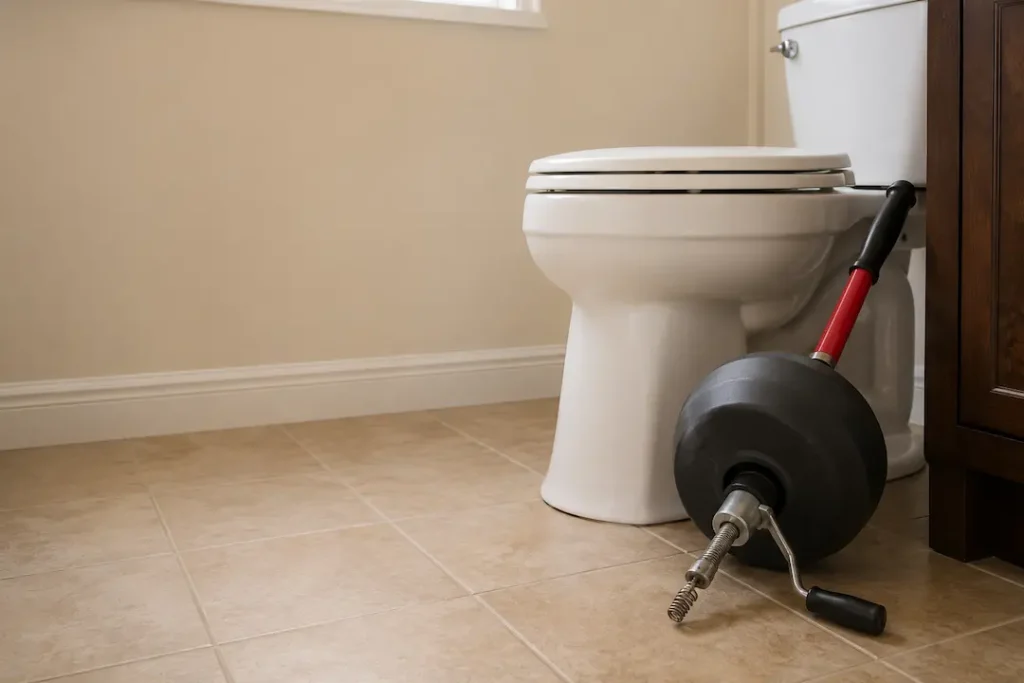
- Try a toilet auger for a stubborn bowl clog. A closet auger reaches into the trap where a plunger can’t. It’s the right tool when something’s wedged.
- Skip the chemical drain cleaner. It rarely clears a real toilet blockage, and it can sit in the line corroding pipe and turning the eventual hands-on fix into a hazmat job for whoever opens it.
What you can’t fix from the bathroom is a main-line clog, a root intrusion, or a septic backup. Those need a drain snake, a hydro-jetter, or a camera — sometimes all three. No shame in that; a lot of this lives below the floor.
What Can I Put in My Toilet to Keep It From Clogging?
Honestly, the answer is mostly “less, and only the right things.” But a few habits genuinely cut down on repeat clogs:
- Use less paper per flush, and for a big load, flush twice rather than sending one giant wad.
- Switch to a paper that breaks down faster. On a septic system, look for a septic-safe roll — it dissolves quicker.
- Keep a small trash can by the toilet so wipes, cotton, and floss have somewhere else to go. This one change ends a lot of mystery clogs.
- For a sluggish bowl, dish soap and a bucket of hot — not boiling — water can help things slide. (Boiling water can crack porcelain; tap-hot is plenty.)
Do I Need a New Toilet if It Keeps Clogging?
Sometimes, yes — and it can be the cheaper road in the long run.
If you’ve ruled out the drain (the bucket flushes clean), the tank’s set right, and nothing’s wedged in the trap, but an old low-flow bowl still clogs more than once a week, the toilet itself is probably the weak link. A modern toilet — even a current 1.28-gallon model — flushes far better than those early ’90s attempts, because the bowl and trap geometry finally caught up with the lower water volume.
Rule of thumb: if a decades-old toilet clogs weekly for no clear reason, replacing it usually beats plunging it forever. If it’s a newer toilet acting up, the cause is almost always elsewhere — the line, the vent, or what’s going into it.
Frequently Asked Questions
Can Dawn dish soap actually unclog a toilet?
For a soft, minor clog it can help. A good squirt of dish soap followed by a bucket of hot (not boiling) water sometimes lubricates things enough to let the clog slide free. Give it 15–20 minutes. It does nothing for a wedged object, a main-line clog, or roots, so don’t lean on it for a toilet that clogs over and over.
What can you pour down a toilet to unclog it?
Hot water and dish soap is the safe home try. Some folks use a baking-soda-and-vinegar pour for a slow bowl. Avoid commercial chemical drain cleaners in a toilet — they’re hard on the porcelain and the pipes and rarely clear an actual blockage. When a pour doesn’t work, the answer is a plunger, an auger, or a call. See whether drain cleaners belong in a toilet before you reach for the bottle.
Why is my toilet clogged when there’s nothing in it?
That usually means the blockage isn’t in the bowl at all — it’s downstream, or it’s a venting problem. A partially blocked drain or a plugged roof vent can make a toilet drain slow and “clog” on a normal flush even though you didn’t put much in. If the bucket test struggles, look past the toilet.
Why does my toilet keep clogging after I unclog it?
Because the plunge only cleared the easy part. If a clog keeps coming back within days, there’s usually a partial obstruction still in the line — grease buildup, a wedged object, or roots — that’s catching everything new. That’s the point to get a camera on it instead of plunging on repeat.
Tired of the Plunger? Let’s Find the Real Reason
If your toilet’s turned plunging into a weekly chore — and the tank’s set right, nothing’s stuck, and it still won’t behave — there’s a reason, and we’ll find it. We’ve been clearing lines around Everett, WA and the rest of Snohomish County for a long time, and most repeat-clog calls end with a straight answer and a fair fix, not a sales pitch.
Snap a quick photo or short video of what’s happening — and tell us whether other drains act up too — and send it our way. It helps us show up ready for the actual problem.
Danika Plumbing & Electric
11015 Airport Road, Everett, WA 98204
Phone: (425) 374-1557
Email: office@danikaplumbing.com
Washington License # DANIKPL839PF