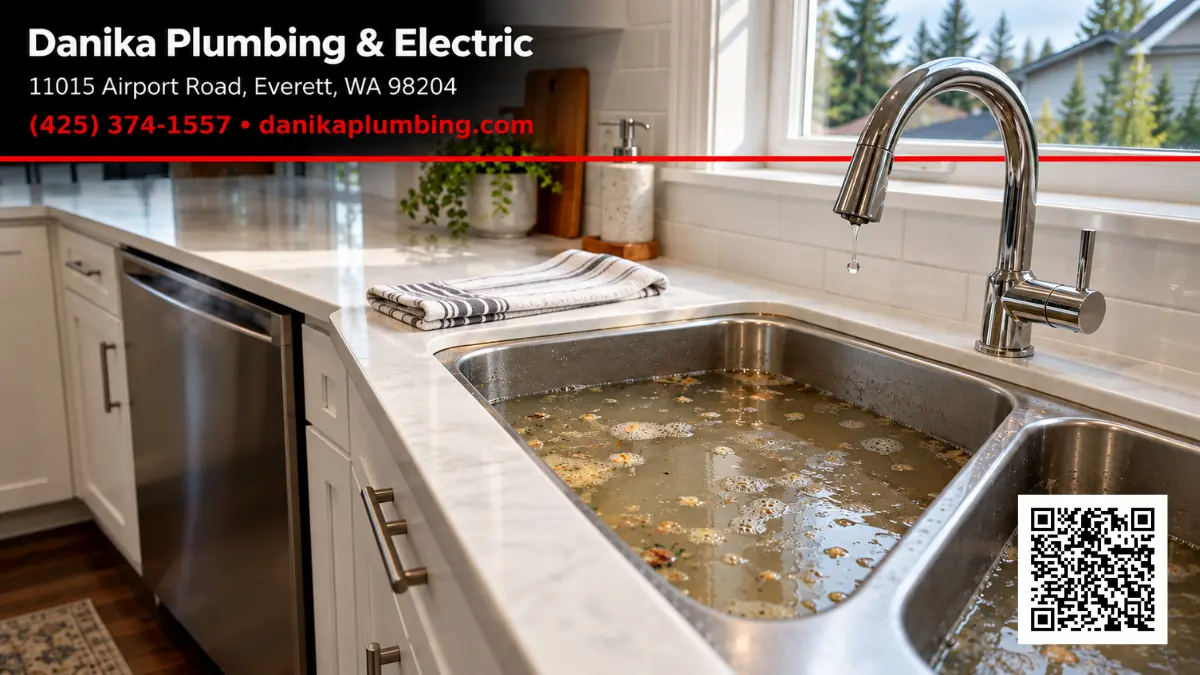

Short version, since you’re probably here for a number: how often should you get your drains cleaned? For most Everett households, a light DIY flush once a month plus a professional drain cleaning every year or two keeps things moving. A busy house with a garbage disposal getting a workout might want it more often. A quiet two-person place with newer pipes can stretch it out. The honest answer is that “how often” depends more on your house than on a calendar.
We get asked this a lot — usually right after a kitchen sink has backed up for the second time in a month. So let’s break down what drives the schedule, what you can handle yourself, and when a drain is telling you something you shouldn’t ignore.
Why there’s no single schedule to clean drains
Two homes on the same street can need drain cleaning on completely different timelines. What goes down the pipes is the biggest factor — a household that cooks a lot, runs the disposal hard, and has three people showering every morning is loading grease, food, and hair into the system far faster than a couple who eats out most nights.
Then there’s the plumbing itself. Older north-end Everett homes often still have original cast-iron or clay drain lines, and the inside of an aging cast-iron pipe gets rough and scaly over the years. Gunk grabs onto that texture faster than it would in smooth modern PVC. So the “right” frequency is really a mix of how hard you use your drains and what shape your pipes are in.
So how often should you get your drains cleaned?
Here’s the rule of thumb we give people, keeping in mind these are starting points, not gospel:
- Every week or so: a quick DIY flush on the drains you use most — hot water down the kitchen sink after cooking, a hair pull-out from the shower.
- Every month or two: a slightly deeper home treatment (more on what we’d actually use below) on kitchen and bathroom drains to keep buildup from settling in.
- Every year or two: a professional cleaning for a typical household, sooner if you’ve got a big family, a hard-working disposal, or you already know your lines run slow.
That “year or two” number surprises people who expected either “never unless it clogs” or “every few months.” Both extremes cause trouble. Wait for a full clog and you’re dealing with a harder, pricier mess. Clean obsessively with harsh stuff and you do more harm than good. Somewhere in between is the sweet spot for most Everett homes.
Kitchen, bathroom, and the main drain line don’t age at the same rate
It helps to stop thinking of “the drains” as one thing. The kitchen sink handles grease and food, so it gums up fastest — that’s the one we clear most on service calls. Bathroom sinks and showers are mostly hair and soap scum, which build slower but knot up in the trap. Then there’s the main sewer line carrying everything out to the street or your septic.
The main line is a different animal. You don’t clean it on a monthly whim — it’s more as-needed, with the occasional checkup. If you’ve got mature trees and older laterals (very common in Everett’s established neighborhoods), roots working into the joints are the thing to watch. A professional camera inspection every few years, or at the first sign of repeated whole-house backups, tells you far more than guessing. Recurring gurgles, several slow fixtures at once, or that unmistakable sewer whiff usually point downstream to the main rather than to any one sink.
What happens if you don’t clean drains regularly?
Skipping drain maintenance entirely doesn’t cause a dramatic problem overnight. It’s slow. Buildup narrows the pipe a little at a time, so water drains a bit lazier each month until one day it doesn’t drain at all — usually at the worst moment, like when you’ve got people over.
Left long enough, that buildup does more than clog. It feeds smells and, in the kitchen, the occasional fruit-fly party. A fully clogged line also puts pressure on your pipes, and in an older cast-iron system that’s how a small annoyance turns into a leak, and real water damage, inside a wall. Not a reason to panic monthly — just why a little routine maintenance beats the emergency call.
What we pour down our own drain pipes to keep them clean
People expect plumbers to recommend some secret product. We mostly don’t. The stuff we lean on at home is boring on purpose.
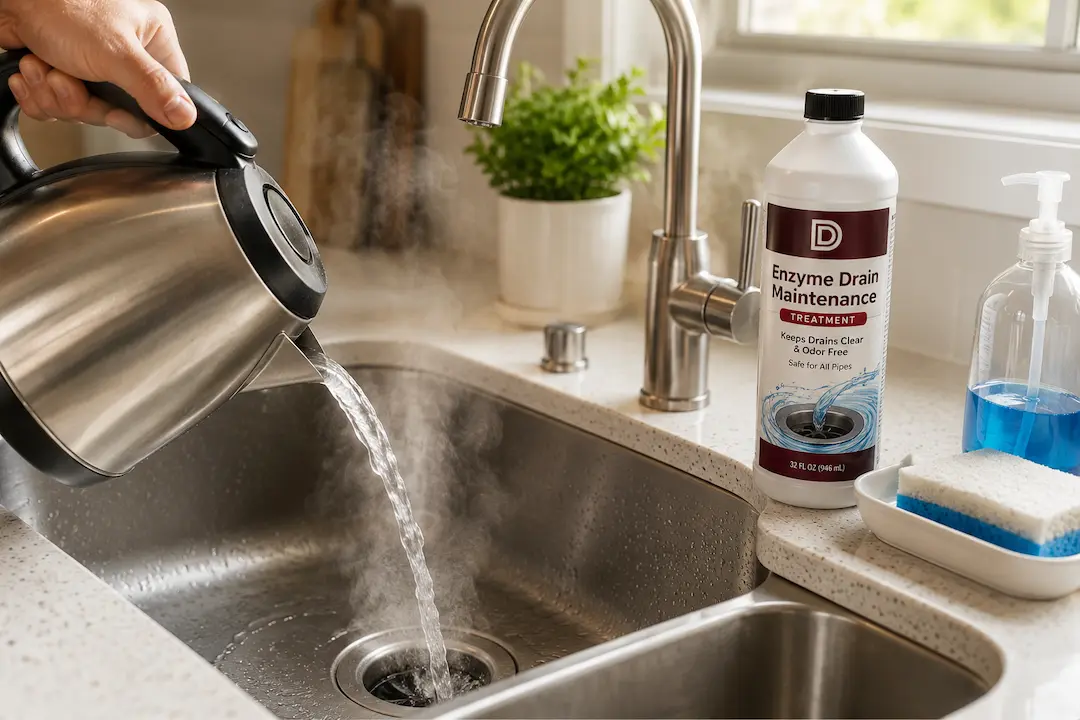
For the kitchen, plain hot water and a squirt of dish soap after you cook does a lot — it keeps grease moving before it congeals on the pipe walls. Once a month or so, an enzyme or bacterial treatment (the kind that eats organic gunk rather than burning through it) is our go-to for routine maintenance. It works slower than the harsh stuff, but it’s kind to your pipes and keeps them clean over time. For showers, the best “product” is your hand and a drain tool — pulling hair out before it plugs beats anything you can pour.
What we don’t do is reach for a jug of caustic drain cleaner as routine maintenance. Which brings us to the question we probably get most.
Is it bad to clean drains with liquid drain cleaners?
As an occasional bail-out on a stubborn clog? It happens. As your regular method? We’d steer you off it. Harsh chemical cleaners work by generating heat and eating away at whatever’s in the pipe — and they don’t know the difference between the clog and your plumbing. Repeated use can corrode metal pipes and soften older PVC at the joints. We’ve cut out sections of pipe that were as much a victim of what got poured down them as of the clog itself.
Those cleaners are also meant to sit for a set window — usually a short one — then get flushed. Leaving them far longer, on the theory that more time means more clog-busting, mostly just gives the chemicals extra time to attack the pipe. If a clog doesn’t clear on one reasonable attempt, that’s your cue to stop pouring and call someone, not to double the dose.
A few Everett quirks that make drains harder to keep clean
Our water here comes largely from the Spada Lake reservoir and runs on the soft side, which is a small blessing — soft water leaves less scale than the hard water plenty of other regions fight. That’s not a free pass, though. Grease, hair, and food don’t care how soft the water is, and the older housing stock does most of the work against you.
A lot of the homes we visit north of downtown still have decades-old drain and sewer lines. Add the big established trees around here, and root intrusion into aging laterals is one of the more common reasons a whole-house drain problem keeps coming back no matter how many times you snake the kitchen sink. With our long wet stretch from roughly October into March, the saturated ground can nudge groundwater and roots toward any pipe with a weak joint. If your slow drains flare up seasonally, that’s a hint the issue may be outside, not under the sink.
How to tell your drains need cleaning now
Most drains don’t fail all at once. They warn you first, and learning to read those warnings is the difference between a quick drain cleaning and an emergency call.
The clearest sign is a drain that runs slow. Water pooling in the sink or shower means the drain is clogged and buildup is narrowing the pipe. One slow drain usually points to a local clog in that fixture’s pipe. Several slow drains at once, though, hint that the problem sits deeper in your home’s plumbing, closer to the main sewer line.
Gurgling is another tell. When a drain glugs or the toilet burbles as a nearby sink empties, air is struggling past a partial blockage. Add a musty, sewer-like smell drifting up from the drain and you’ve got organic buildup feeding odor inside the pipe. Repeated clogs and slow drains in the same spot, month after month, are the loudest signal of all: a quick plunge clears the surface, but the buildup in the pipe keeps rebuilding until a real drain cleaning removes it.
If several of these signs show up together, or a clog keeps coming back, that’s your cue to schedule a professional drain cleaning rather than reaching for another bottle of drain cleaner. A plumber can tell in minutes whether it’s a simple clog or something further down the line.
What a professional drain cleaning actually involves
People picture drain cleaning as a plumber pouring something magic down the sink. The reality is more methodical, and it’s why professional drain cleaning clears what store-bought drain cleaners can’t.
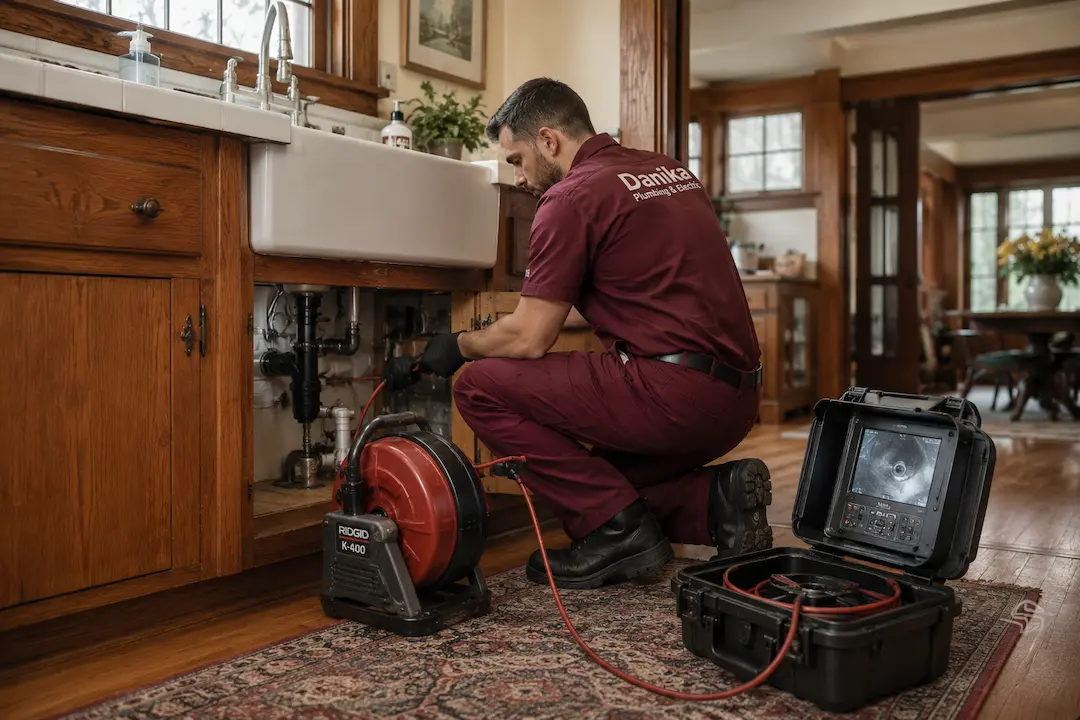
It usually starts with a look. On a stubborn or recurring clog, a plumber may run a drain camera, a waterproof video scope fed into the pipe, so the drain inspection shows exactly where the buildup, grease, or root is sitting. That drain inspect step matters, because clearing a clog you can’t see is guesswork.
From there, the method depends on what the pipes need. For most kitchen and bathroom drains, a motorized drain snake or auger breaks through the clog and pulls the buildup back out. For heavier buildup in older pipes, or a main sewer line packed with grease and roots, hydro jetting scours the pipe walls with high-pressure water. Either way, the goal of a professional cleaning is to clean the pipe, not just poke a hole through the clog so it reopens in a month.
Good drain cleaning services finish by confirming the drain runs clear and, when a camera was used, showing you the before and after. That’s the part DIY can’t match: the experts see inside your plumbing and clean it properly, so the drains stay clear longer.
Snaking vs. hydro jetting: matching the method to your pipes
Not every clog needs the same tool, and matching the drain cleaning method to your pipes is how a plumber protects them.
Snaking, or cabling, sends a flexible metal line into the drain to punch through or hook out a clog. It’s the right first move for a single clogged sink, a hair-jammed shower drain, or a slow toilet line. It’s fast, gentle on sound pipes, and often all a drain needs.
Hydro jetting is the heavier option. A hose delivers water at high pressure through the pipe, scrubbing grease, scale, and roots off the pipe walls and flushing them away. For a main sewer line with years of buildup, or a drain that clogs again weeks after snaking, hydro jetting gives a deeper, longer-lasting clean. Because it’s powerful, a careful plumber inspects the pipe first, since jetting a cracked or badly corroded pipe can turn a routine cleaning into a repair.
For most homes, the honest answer is that snaking handles routine clogs and hydro jetting is reserved for stubborn drains and sewer lines. A plumber who offers both won’t upsell you into jetting a drain that a simple snake would clear.
What drain cleaning costs in Everett, and what moves the price
We won’t post a flat price, because honest drain cleaning cost depends on the job. But we can tell you what moves the number.
A simple, accessible clog in one of your drains, one slow bathroom sink cleared with a snake, is the low end. Costs climb with access (a drain buried behind tile or under a slab), with method (hydro jetting a main sewer line runs more than snaking a kitchen drain), and with whatever the cleaning uncovers. If a camera finds a cracked pipe or a root-invaded sewer line, you’re now weighing a pipe repair on top of the drain cleaning, and that’s a bigger conversation.
Two things keep drain cleaning costs down for Everett homeowners. First, catching it early: a slow drain cleared today is a routine drain cleaning service, while a fully clogged main sewer line on a holiday weekend is an emergency. Second, regular maintenance: homes on a steady drain cleaning rhythm rarely face the expensive, dug-up-the-yard repairs. A professional will always give you an upfront estimate for our drain cleaning services before any work starts, and flag any needed pipe or sewer repair separately, so you’re never surprised by the bill.
A year-round drain maintenance rhythm
The best drain cleaning is the one you never need, because your maintenance kept the drains clear. Here’s the rhythm we suggest for an Everett home.
Roughly once a week, give your busiest drains a simple flush: hot water down the kitchen drain after you cook, and a quick hair pull from the shower. Every month or two, run an enzyme treatment through the kitchen and bathroom drains, boring, low-effort maintenance that keeps buildup from taking hold. Think of it as regular cleaning that costs you almost nothing and keeps the pipes clean between visits.
Once or twice a year, step back and look at the bigger picture. Book a professional cleaning if the drains have been slow, and if you’ve got mature trees over an older sewer line, ask about a camera check on the main. A yearly drain inspection catches root intrusion before it becomes a clog that backs up the whole home.
None of this is complicated, and none of it takes long. A little maintenance spread across the year keeps your pipes clear, your drains fast, and professional drain cleaning down to an occasional tune-up instead of an emergency repair.
When a clog is really a sewer line problem
Sometimes the drain isn’t the problem, the sewer line is. Knowing the difference saves you from snaking the same sink over and over.
The tell is scale. When several drains slow down together, when the lowest fixtures in the home back up first, or when you hear gurgling across the house, the trouble is usually downstream in the main sewer line, not in any one drain. In Everett’s established neighborhoods, the cause is often tree roots working into the joints of an older sewer line, or a pipe that has sagged or cracked with age, the kind of damage that quietly gets worse.
No amount of drain cleaner or snaking a single sink fixes that. It takes a camera inspection of the sewer line to find the break or root mass, and then the right sewer repair, whether that’s clearing and relining the pipe or a spot repair on a collapsed section. This is the point where a drain cleaning stops and sewer repair begins.
If your drains keep backing up as a group, don’t keep paying to clean one fixture. Have a plumber camera the main sewer line once, before a hidden clog does real damage to your home, and you’ll know whether you’re facing routine maintenance or a sewer repair, and can plan the fix accordingly.
Drain cleaning as part of your home’s plumbing upkeep
A drain rarely misbehaves in isolation. It’s one part of your home’s plumbing, and the way you care for your drains says a lot about the health of the whole plumbing system.
Think about it this way: the same buildup that clogs a kitchen drain is working on every horizontal run in your plumbing, and the same roots that crack a sewer line threaten any aging pipe in the ground. That’s why we treat drain cleaning as routine plumbing maintenance, not a one-off. A plumber who clears your drains is also watching for the early plumbing problems, a weeping joint, a corroded pipe, a sewer line starting to sag, that turn into a repair if nobody catches them.
It’s also why it helps to work with a full-service plumbing company rather than a drain-only outfit. When one team handles drain cleaning, pipe repair, sewer repair, and general plumbing services, a slow drain that turns out to need a bigger plumbing repair doesn’t mean starting over with a new contractor. The plumber who cleaned your drains already knows your home’s plumbing, has the camera footage, and can move straight from cleaning to repair when the drains call for it.
For an Everett homeowner, the takeaway is simple: fold drain cleaning into your regular plumbing maintenance, lean on a licensed plumber who offers the full range of plumbing services, and small drain problems stay small instead of growing into plumbing repairs. Whether your drains just need a routine cleaning or the sewer line needs a real repair, one call to the same plumbing team covers it.
When a cleaning isn’t enough: from drain repair to repiping
Sometimes a cleaning buys time but the real fix is a repair. If a camera shows a drain pipe that’s cracked, bellied, or root-invaded, no cleaning keeps those drains clear for long, and the honest call is a drain repair rather than another cleaning service.
Repairs range widely. A single bad section of drain pipe might be a quick spot repair. Drains that clog because the pipes have corroded nearly shut across the house point to a bigger job, sometimes repiping those old drain pipes entirely. A root-crushed sewer line is its own repair, often a dig or a trenchless reline. Each is a different repair, and each starts with knowing which drains and pipes are actually failing.
The reason we camera a stubborn, repeatedly clogged drain before quoting anything is to tell cleaning from repair honestly. If a routine drain cleaning service will keep your drains clear, that’s what we recommend, no upsell to a repair you don’t need. If the drain pipes are past saving and keep clogging no matter how often they’re cleaned, we’ll show you the footage and price the repair, so you’re choosing between real options. Either way, the drains, the pipes, and any repair are handled by one plumbing team, and our drain cleaning services and repair work are quoted upfront.
Odds and ends people ask us about keeping your drains clean
Will dish soap really move a slow drain?
For a greasy kitchen drain, sometimes — a good squirt of dish soap chased with a kettle of hot (not boiling, if you’ve got PVC or an older toilet nearby) water can loosen a soft grease clog. It’s worth a five-minute try before anything harsher. It won’t touch a solid blockage or a root problem, so if it doesn’t help after a couple of goes, don’t keep at it.
What about pouring salt down the drain at night?
It’s a popular home remedy, and salt followed by hot water can help scour a little loose residue. But salt on its own isn’t doing much heavy lifting — it’s really the hot water flush carrying stuff along. Treat it as light upkeep, not a fix for an actual clog.
How long can drain cleaners sit before they eat your pipes?
Follow the label window, which is usually on the order of minutes, not hours. The idea that letting it soak overnight will power through a tough clog is exactly how people end up with damaged pipes and cleaner that then has to be dealt with safely. If the recommended time doesn’t do it, stop there.
Is a slow drain the same thing as a clog?
Think of a slow drain as an early clog. The pipe’s partly narrowed but water’s still getting past. That’s actually the ideal time to deal with it — a slow drain clears far more easily than a fully packed one, so it’s a nudge to act rather than wait.
How much does professional drain cleaning cost?
It depends on the clog and the method. A simple snaked sink drain is a modest, routine service; hydro jetting a main sewer line or clearing a root-packed pipe costs more. A professional will give you an upfront estimate before any drain cleaning starts and flag any separate repair, so catching a slow drain early almost always keeps the cost down.
How do I know if a clog is a sewer line problem?
One slow drain is usually a local clog in that fixture. Several drains slowing together, low fixtures backing up first, or gurgling across the home point to the main sewer line instead. A camera inspection of the sewer line confirms it, and tells you whether you need a drain cleaning or a sewer repair.
A couple of drain cleaning pages worth a look
If you want to go deeper, our complete drain cleaning service page covers how we handle everything from a lazy sink to a stubborn line. For recurring buildup in older pipes, we sometimes reach for high-pressure hydro jet service that scours the walls clean rather than just poking a hole through. When the trouble keeps coming back to the main, that’s usually a job for our sewer repair team. And if you’d like a local set of eyes on any of it, we’re the plumber serving Everett and Snohomish County.
When you’d rather let a pro clean your drains
DIY upkeep goes a long way, but there’s a point where guessing costs more than a professional service call, usually when the same drain keeps backing up or more than one fixture acts up at once. That’s the moment to let us look. Snap a photo or quick video and text or call us; half the time we can tell you over the phone whether it’s a five-minute fix or a drain cleaning worth scheduling.
Danika Plumbing & Electric
11015 Airport Road, Everett, WA 98204
Phone: (425) 374-1557 |
office@danikaplumbing.com
Licensed in Washington (DANIKPL839PF)