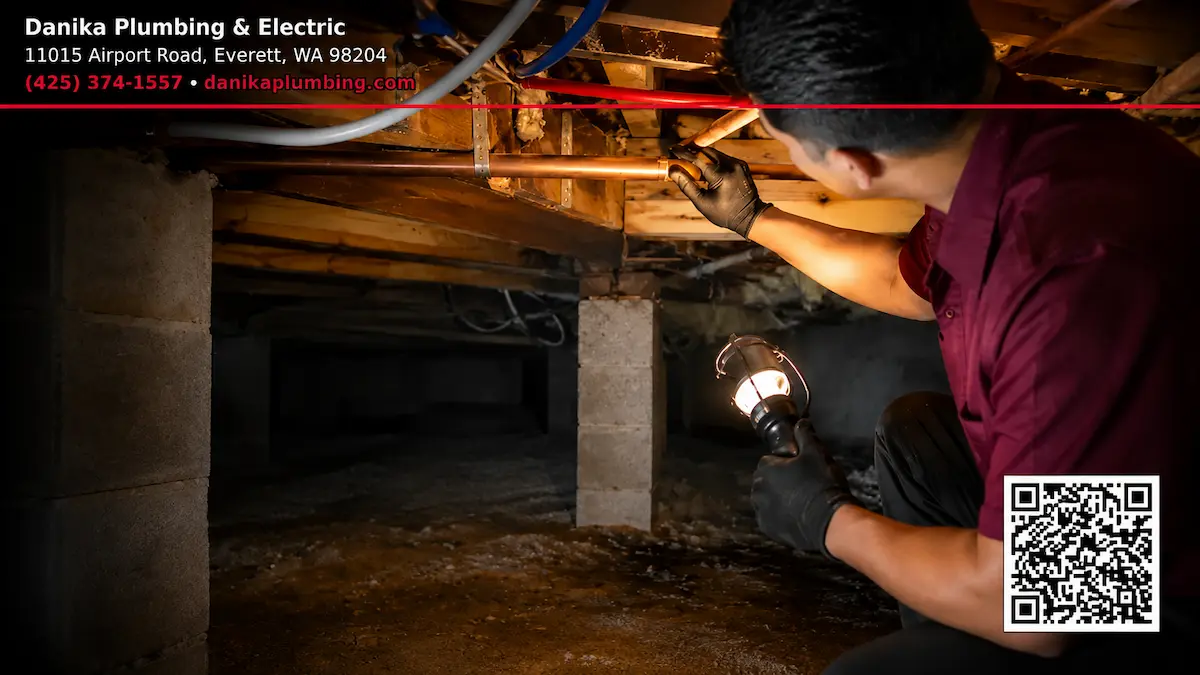
Why do pipes make a banging noise? For most Everett homes, it’s one of three things: water hammer when a fast-closing valve slams shut, a loose pipe rattling against framing while water runs, or thermal expansion ticking as hot water moves through the line. A newer, well-strapped system might only bang occasionally. An older galvanized system running high pressure can bang every time the dishwasher fills. Here’s what moves that answer around, and when a bang is telling you something bigger.
We get asked this a lot, usually right after someone hears a bang loud enough to wake the house at 2 a.m. So let’s break down what’s actually happening and what you can handle yourself.
There’s no single cause, and here’s why
Two houses on the same street can have completely different answers. What’s happening inside the walls when a fixture shuts off or a hot tap runs is the biggest factor: a house with fast-closing solenoid valves on the washer, dishwasher, and ice maker is generating far more pressure spikes than a house that still fills fixtures the old, slow way.
Then there’s the plumbing itself. Older north-end and Riverside homes often still carry original galvanized supply line, and the inside of an aging galvanized pipe narrows as corrosion builds up over the decades. A narrower pipe moves water faster for the same demand, which turns an ordinary valve slam into a harder hit. That’s the situation where repeated hammer eventually finds a weak solder joint or a worn washer, and where our pipe repair team usually gets the call. So the real answer is a mix of what’s closing fast in your house and what shape the pipe itself is in, which is why pipes make a banging noise on some schedules and not others even a few doors apart.
So what’s actually causing your pipes to bang?
Here’s the rule of thumb we give people, keeping in mind these are starting points, not gospel:
- A single loud bang right as water shuts off: that’s classic water hammer, and it’s the one most worth fixing.
- A rattle or chatter while the water is running: a pipe that isn’t strapped down properly, vibrating against framing.
- A slow tick-tick-knock that follows the hot water around: thermal expansion, as copper grows when it heats up and binds against a tight joist hole.
Same complaint, three different fixes, which is why the first thing we ask on the phone isn’t “how loud” but “what were you doing when it happened.” The thermal expansion piece often traces back to the water heater’s expansion tank doing its job, or not doing it, which is worth a look from the water heating system experts if the knocking only ever follows hot water.
Weekly checks and quick fixes you can do yourself
Run one fixture at a time and listen for when the bang happens; that alone usually tells you which of the three you’ve got. If it’s water hammer on a specific appliance, recharging the air chambers costs nothing: shut off the main, open every faucet starting at the highest one and working down, let it all drain, then reopen the main slowly. Slowly matters, since cranking it wide open produces its own bang. Neither of these requires a tool beyond your own hands.
When to call in a professional
Push toward calling sooner if a pressure gauge reads well above the mid-40s to 60 psi range that’s comfortable for most homes, if the house still runs original galvanized supply line, or if the air-chamber recharge trick stops holding after a week or two. Anything involving cutting into supply line, or dropping pressure on tired old pipe, is a job you want somebody standing there for, since a pressure drop can occasionally reveal a leak the pressure was quietly holding closed.
How we fix pipes that keep banging
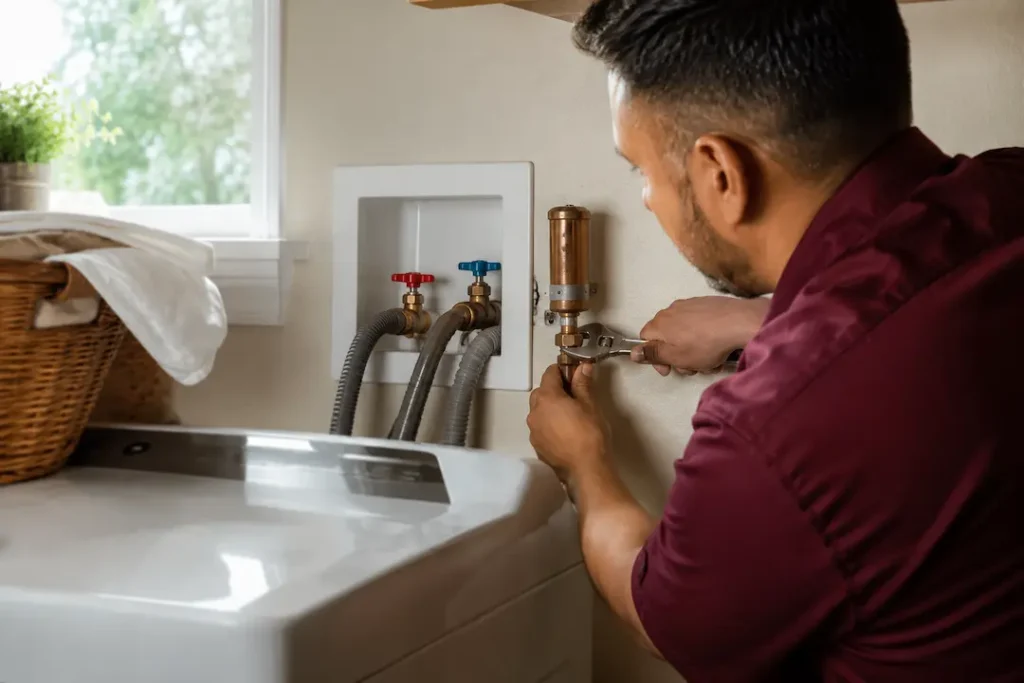
Fixing a banging pipe doesn’t mean one fixed procedure. For classic water hammer at a fast-closing valve, a mechanical arrestor at the washing machine or dishwasher supply usually solves it outright, absorbing the shock with a spring or piston instead of a pocket of air that eventually waterlogs. For a loose, rattling pipe, a cushioned clamp or a strap with rubber behind it stops the vibration, without clamping copper down bone-tight, since it still needs a little room to expand. For pressure-driven hammer across the whole house, the fix is at the pressure-reducing valve itself, either adjusting one that’s drifted or replacing one that’s given up.
That last distinction is the one worth holding onto. An arrestor or a strap is maintenance. A repair is what you do once repeated hammer has already found a weak joint. If we suspect a connection has already started weeping from years of hammer, we check for a hidden leak before quoting anything, because a fix aimed only at the noise would leave a slow leak to keep working behind the wall, which is exactly the kind of thing our leak detection team is equipped to find early.
Water hammer, loose pipe, and thermal expansion don’t sound the same
It helps to stop thinking of “banging pipes” as one thing. Water hammer is sharp and single, right at shutoff, and it’s the one that does the most cumulative damage to joints and fittings over time. A loose pipe is a rattle or chatter that runs the whole time water is flowing, and it’s mostly cosmetic noise rather than a mechanical hazard. Thermal expansion is the slow tick-tick-knock that trails hot water by a minute or two in each direction, and it’s a function of the pipe material and how tightly it’s boxed into framing.
They also point to different long-term paths. Water hammer and thermal expansion are usually solvable with hardware: an arrestor, a cushioned clamp, a pressure adjustment. But if the underlying pipe is old, narrowed galvanized that’s already had one or two repairs, no amount of arrestors and strapping actually fixes the cause, and that’s a conversation for complete home repiping rather than another round of hardware.
Signs your pipes are asking for help
You don’t have to guess if your pipes are already telling you. Any of these is worth acting on:
- A bang that’s gotten louder or more frequent over the past few months.
- Banging that started the same week the utility did work down the street.
- A joint, valve, or appliance connector that feels damp or shows a green ring.
- Rusty or discolored water on the first draw of the morning.
- Pressure that drops noticeably when a second fixture runs.
- Banging that started right after a remodel or new appliance install.
The first two usually point to pressure or the street supply rather than any one fixture. The middle two are pointing at the pipe itself, not just the noise. A single appliance banging on shutoff is a Saturday-afternoon fix. Rusty water, dropping pressure, and a damp joint together is not.
What happens if you just… don’t?
Ignoring a banging pipe doesn’t cause a dramatic problem overnight. It’s slow. Every bang is one more small pressure spike hitting a solder joint or a threaded fitting, so the damage adds up a little at a time until one day a joint that’s been getting hammered twice a day for years finally gives, usually behind a wall where you can’t see it starting. That’s exactly the kind of hidden failure our leak detection team is equipped to find before it becomes a bigger repair.
Not a reason to panic over one occasional bang. But if your pipes make a banging noise every single time a fixture runs, treat that as the maintenance item it is instead of background noise.
What we’d check on our own pipes
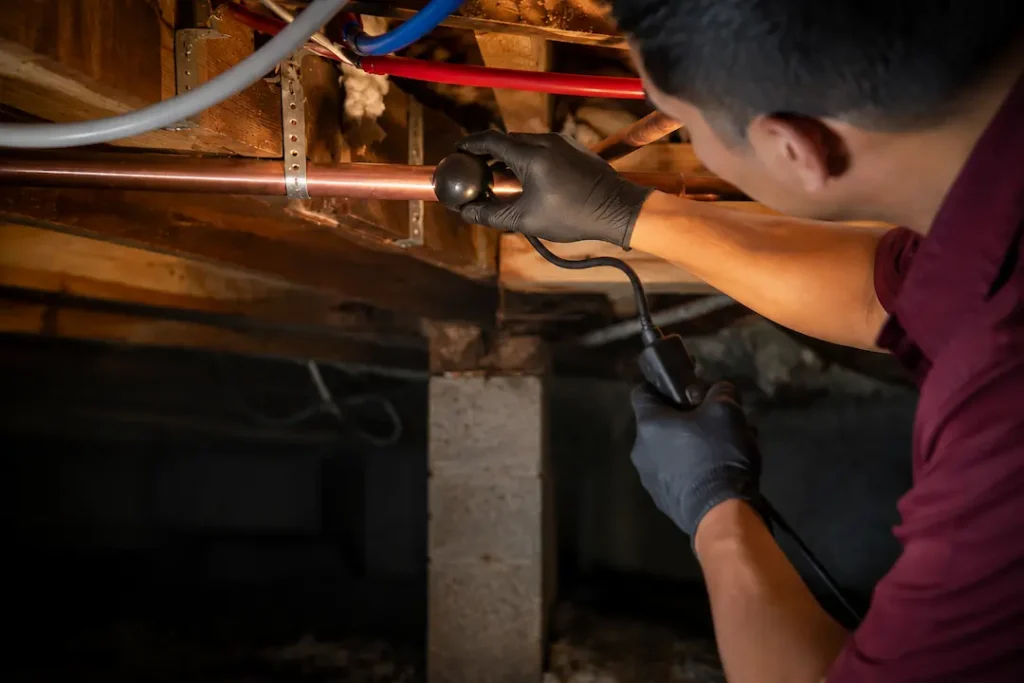
People expect a plumbing company to have some secret trick. We mostly don’t. What we’d actually do at home is boring on purpose: put a pressure gauge on an outside hose bib once a year and see where the needle sits, walk the crawl space occasionally and give accessible pipe a gentle tug to check for anything loose, and pull garden hoses off the bibs before the first hard freeze so a trapped, frozen sillcock doesn’t turn into its own kind of bang. None of that requires a special tool beyond a cheap gauge.
Is it bad to just keep re-draining the system to quiet it down?
As an occasional reset? It’s fine, and it’s the first thing we’d try too. As your only long-term plan? We’d steer you off it. Draining and refilling the system recharges the air chambers, but that air dissolves back into the water over weeks or months, and the banging returns right on schedule. Relying on it forever just means doing the same chore every few weeks instead of fixing the actual cause once.
The same goes for over-tightening a clamp on a rattling pipe. It’s tempting to crank it down until the pipe can’t move at all, but copper still needs a little room to expand with heat. Clamp it bone-tight and you’ve usually just traded one noise, the rattle, for another, a knock, the next time hot water runs through it.
A few things about Everett homes that change the math
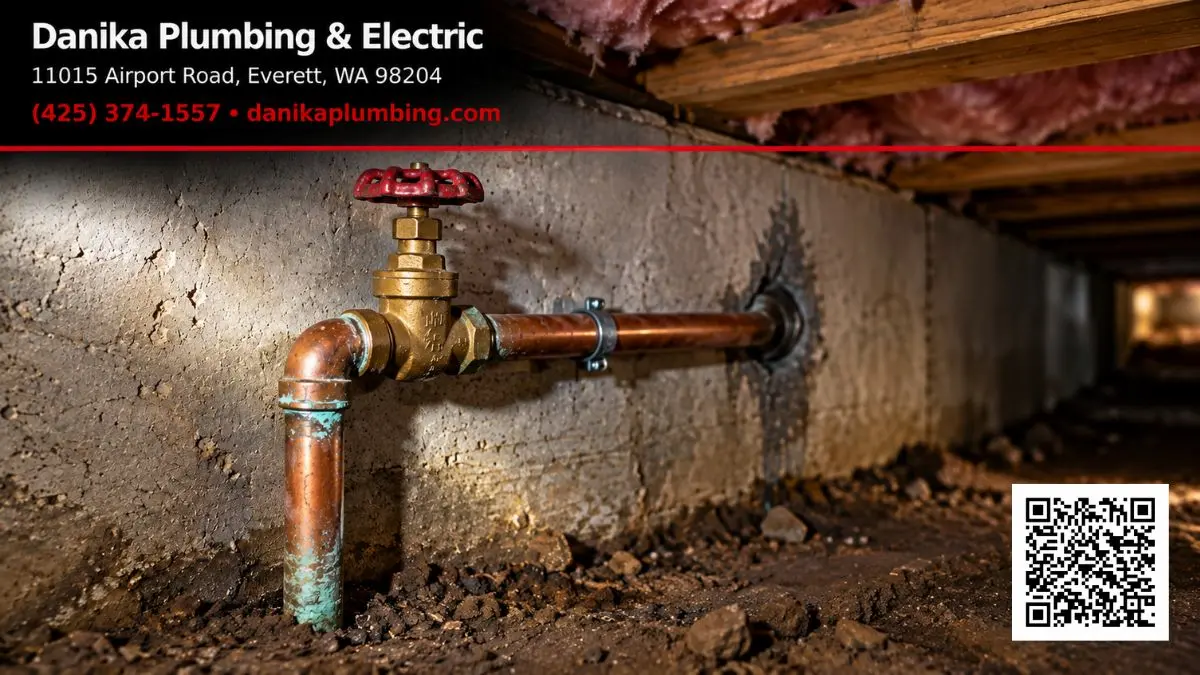
Crawl spaces instead of full basements mean a lot of supply line runs strapped to the underside of floor joists, in a hollow, unfinished cavity that acts like a drum. The exact same pressure spike that would be a muffled thud in a finished basement is a proper bang under a Silver Lake rambler.
Our water here comes from the Spada Reservoir in the Sultan Basin, and it runs on the soft side, which the City of Everett documents in its annual water quality report. That rules out mineral scale as a factor, which is the culprit behind a lot of noisy plumbing in harder-water parts of the country. Around Snohomish County it’s nearly always pressure, strapping, or expansion instead.
And the noise doesn’t always start with your house. We’ve had customers whose pipes began banging the same week the utility did work down the street, since pressure in the neighborhood shifts and a system that was quietly coping suddenly isn’t. If that’s the pattern you’re seeing, it’s worth a call to your plumber serving Everett and Snohomish County before a single bang turns into a leak, and before pipes make a banging noise loud enough to notice from the next room over.
Odds and ends people ask about banging pipes
Should I worry about banging pipes?
A rattle from a loose pipe or a tick from hot-water expansion is a nuisance rather than a hazard. Water hammer deserves more attention, because each bang sends a pressure spike through solder joints, threaded fittings, and appliance connectors, and repeated spikes work at those weak points over the years.
Will water hammer go away on its own?
Not permanently. Older homes rely on air chambers, capped pipe stubs holding a pocket of air, to cushion the shock, and draining and refilling the system restores that air. The chambers waterlog again over time, so the quiet is temporary unless the underlying pressure or support problem is corrected.
How do you stop pipes from banging?
Identify the fixture that triggers it, then drain and refill the system to recharge the air chambers, check static pressure with a hose-bib gauge, secure any loose pipe with cushioned clamps, and fit mechanical water hammer arrestors at fast-closing valves such as the washing machine and dishwasher. If pressure reads high, the pressure-reducing valve needs adjustment or replacement.
Why do my pipes bang louder at night?
A quiet house makes the noise more noticeable, but overnight is also when ice makers cycle and neighborhood water demand drops, which can nudge supply pressure upward. The bang itself is the same; the conditions and the acoustics both work against you. Noise that starts right when the water turns on, rather than off, usually points to loose pipe or trapped air instead of classic hammer, and running each fixture for a few minutes after any plumbing work often clears the air out of the lines.
Can banging pipes burst a pipe?
A single pressure spike is very unlikely to burst sound pipe. Long-term repeated hammer can fail a connection point: an aging solder joint, a threaded fitting, or a brittle flexible appliance connector, which is where most hammer-related leaks we find actually occur.
When you’d rather just hand it off
DIY checks go a long way, but there’s a point where guessing costs more than booking a visit, usually when your pipes make a banging noise daily or a pressure gauge is reading high. That’s the moment to let us look. Tell us when the bang happens, at shutoff, while running, or trailing hot water, and half the time we can tell you over the phone whether it’s a five-minute fix or worth scheduling.
Danika Plumbing & Electric
11015 Airport Road, Everett, WA 98204
Phone: (425) 374-1557 |
office@danikaplumbing.com
Licensed in Washington (DANIKPL839PF)