
11015 Airport Road Everett, WA 98204
Home » Duvall Plumbing Services
Most towns grew where they were planted. Duvall got picked up and moved. In 1909 the railroads wanted the ground the old Cherry Valley townsite stood on, so over the following year the houses and shops were hauled south and up the hill — which suited everybody, because the valley floor flooded most winters anyway.
That decision is still in your plumbing. The city centre now sits at 404 feet, spread over two and a half square miles of hillside, and every drop that reaches a tap up there has to be pushed uphill and then throttled back down again. The city runs four pressure zones, three pressure relief stations and twelve pressure-reducing stations to do it. Twelve. In a town this size.
Which means the first question we ask on a Duvall job is not what broke. It is which zone you are on, and when anyone last looked at the valve on your side of the meter.
Danika Plumbing & Electric has worked out of Everett since 2009, across Snohomish County and north King County. Duvall is the far side of that run, over the ridge and down into the Snoqualmie Valley — and we would rather tell you on the phone what we think is happening than guess at it in your driveway. One number, any hour: (425) 374-1557.
Duvall does not own a drop of what comes out of your tap. The city buys it wholesale from Seattle Public Utilities through two supply connections, then moves it around on 46 miles of main, two reservoirs holding 2.5 million gallons between them, and a single pump station. Roughly 2,978 connections drink from that. The retail service area is about 3.5 square miles — bigger than the city itself, so some of our visits out here are on city water at an address that is not technically in town.
Sewer is the city’s own: about 2,900 accounts, 38 miles of collection pipe, five lift stations, and a membrane bioreactor treatment plant that sends finished water to the Snoqualmie River. Storm is the city’s too — 37 miles of pipe and ditch, 170 treatment facilities, better than 2,500 catch basins. y
Here is the line most people out here have never read. Duvall Municipal Code 9.02.020(C)(1)(a) says every metered service shall include a pressure-reducing valve that is “privately owned and maintained by the property owner” and shall provide pressure control to all fixtures.
Read that twice. The city built twelve stations to manage pressure in the street. The last one, the one standing between all of that and your fixtures, is yours. Nobody inspects it on a schedule. No plumber knocks to tell you it has stopped working, and no letter arrives when the water behind it climbs.
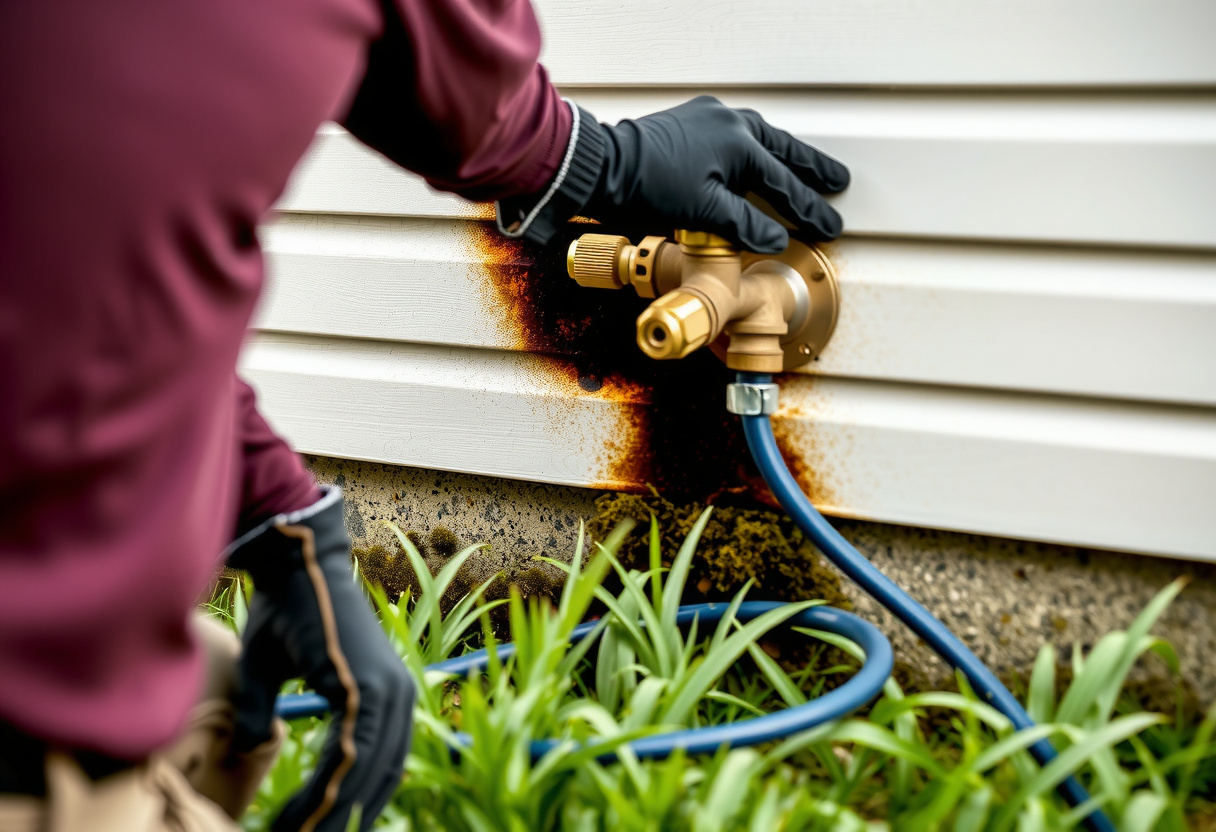
And they do stop. A PRV is a spring and a diaphragm doing the same job a few hundred thousand times a year, and when it gives up it rarely fails politely — it fails open, and street pressure walks straight into the house. The kind of job we see goes like this: a toilet that will not stop refilling, a washing-machine hose that lets go on a Tuesday, a shower that could strip paint, and three fixtures dripping that were fine last spring. Four plumbing symptoms, one cause, forty dollars of parts.
So we gauge it. Static reading at a hose bib, then again under flow, and a look at what the valve is actually holding versus what it is set to. If the number is where it should be, you have saved the cost of chasing four separate repair bills. If it is not, a pressure-reducing valve installation is a morning’s work and it stops the rest of the list happening. Worth reading too: why water pressure drops suddenly, low pressure at one sink, and what banging pipes are telling you.
A tank is the one pressure vessel in your plumbing with a heating element in it. Feed it steady, sane pressure and it lasts its warranty out. Feed it whatever the street feels like sending and it ages in dog years.
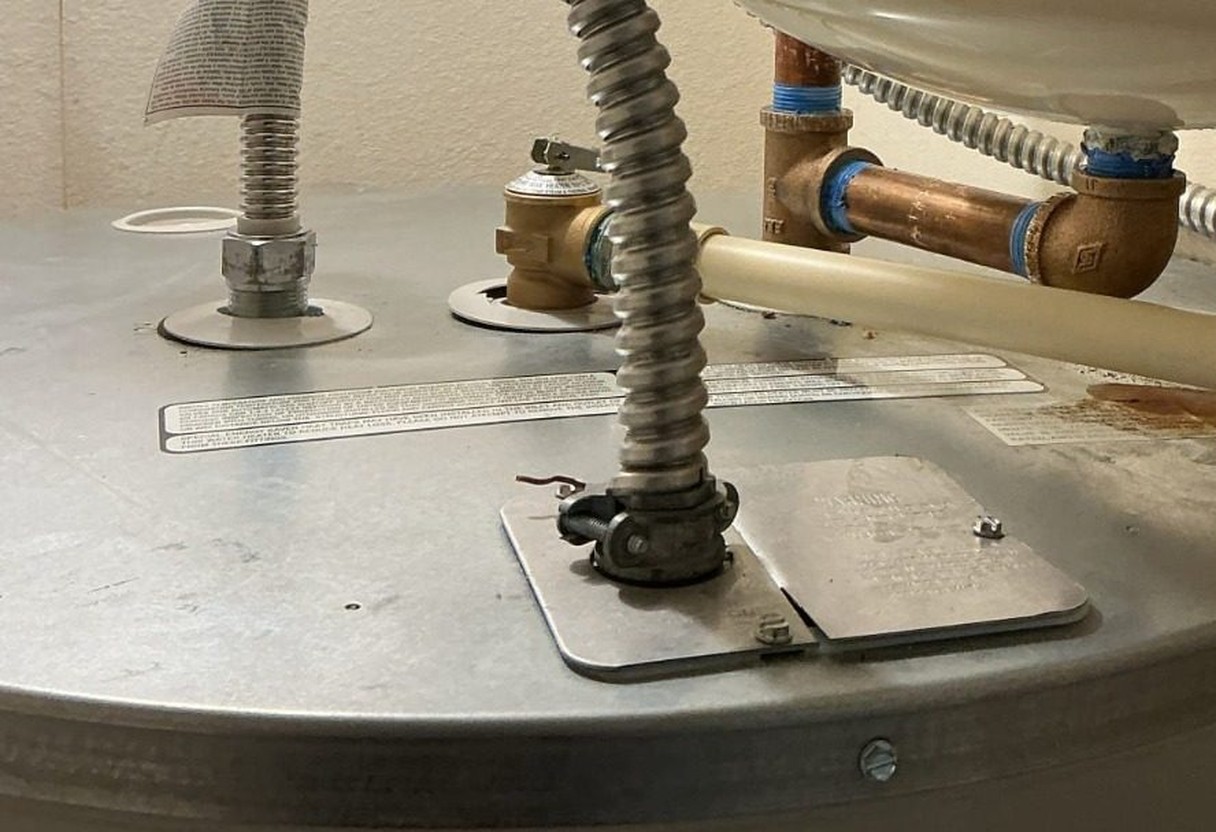
The tell is the little discharge pipe off the temperature-and-pressure valve. If it weeps, drips after a shower, or has left a rust trail down the side, the tank is being asked to hold more than it should — usually because the PRV upstream has quit, and sometimes because there is nowhere for heated water to expand to. People replace the T&P valve, the weeping stops for a month, and it comes back. It was never the valve.
We would rather fix the cause and keep the tank than sell you a water heater you did not need. When a tank genuinely is finished — rumbling, rusty hot water, or simply old — a water heater installation here is a straightforward morning — tank installation or tankless installation, your call.
Background worth having: repair versus replace, the signs a tank is done, our water heater work, tankless units, and what the rumbling means, and gas versus electric water heaters.
Duvall plumbing rules run the opposite way to most cities around here, and this one is worth knowing before you dig. Under DMC 9.04.050(E), no permit is required for routine maintenance or repair carried out entirely within your property lines — provided the work does not change the location, alignment or configuration of the line. Generous, by local standards.
But read the next clause. Owners or their contractors “must provide advance notice to the City Engineer or designee before commencing” that very work. No permit, still a phone call. Miss it and a job that was entirely legal becomes a conversation you did not want.
Step a foot into the right-of-way and the rules change again: 9.04.050(F) requires a city permit for any work on the buried run out there, with traffic control and restoration to match. And 9.04.050(D) is blunt about whose problem the line is in the first place — the owner’s, kept free of obstructions, leaks and defects, at the owner’s cost under 9.04.050(J).
Two more that catch remodels. If you are reusing an old lateral for new construction or a change of use, 9.04.050(I) says it only goes back into service after inspection, testing and written approval — and the city can require it replaced instead. And under 9.04.020(B) every dwelling unit, accessory dwelling units included, needs its own independent connection; sell the ADU off separately and it needs its own line and its own permit. We scope first and tell you which of those you are in. See how we handle buried line repair and what roots do to an old lateral.
Most towns treat sewage in big open basins that shrug off a bad week. Duvall runs a membrane bioreactor, which is a wall of fine membranes doing the filtering, and membranes are fussier about what arrives. That is why the plumbing code here is specific rather than vague.
DMC 9.04.070(E) puts a hard ceiling of 100 parts per million by weight on fat, oil and grease, and any food service or processing operation over that line has to fit grease interception sized to the plumbing code adopted under Title 10. It also bars anything above 150°F, anything below pH 5.5 or above 9.0, and ground waste coarser than half an inch.
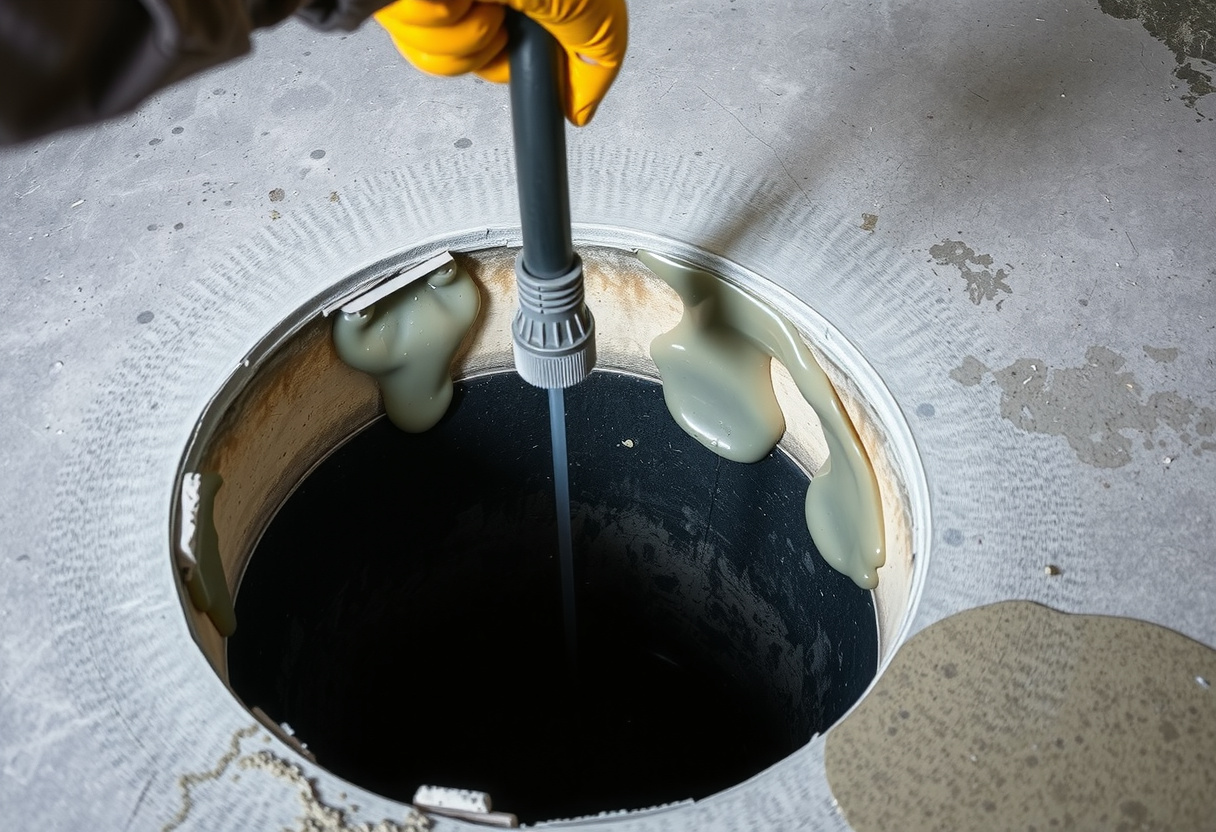
Half an inch. That last one quietly rules out a lot of what people put down a disposal. For restaurants on Main Street NE it means the interceptor is a compliance item, not a suggestion; for houses it is the reason drain cleaning out here so often turns up a grease plug rather than roots. We jet it, scope it, and tell you whether it will come back. Useful reading: drain cleaning, hydro jetting, jetting versus snaking, and how often drains want cleaning.
There is money in DMC 9.01.020(G) that most people never claim. The city may adjust a bill for extra usage caused by a leak between the building and the meter — once per account in three years, in writing, with proof the repair was done properly. Excess usage gets re-rated to the wholesale rate plus ten per cent.
Once in three years. So you want the leak found properly the first time, and you want the paperwork to survive the finance director reading it.
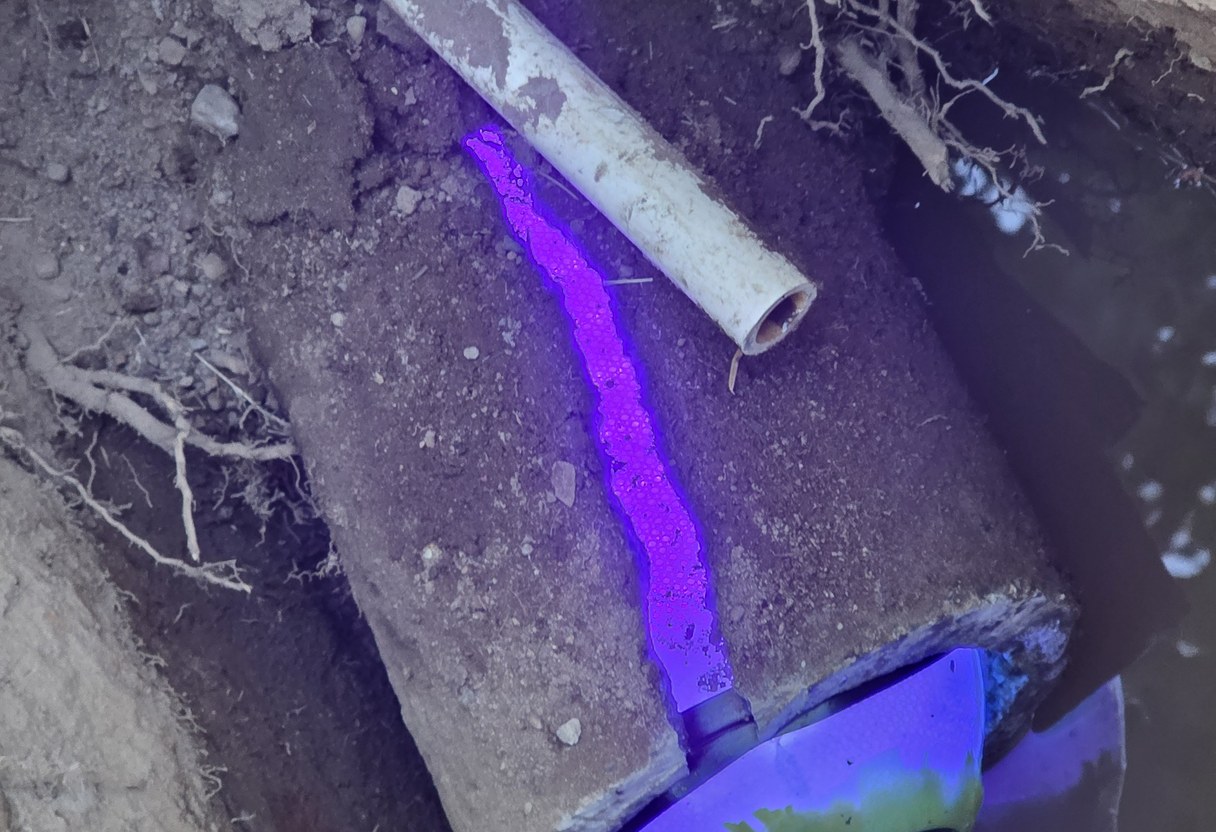
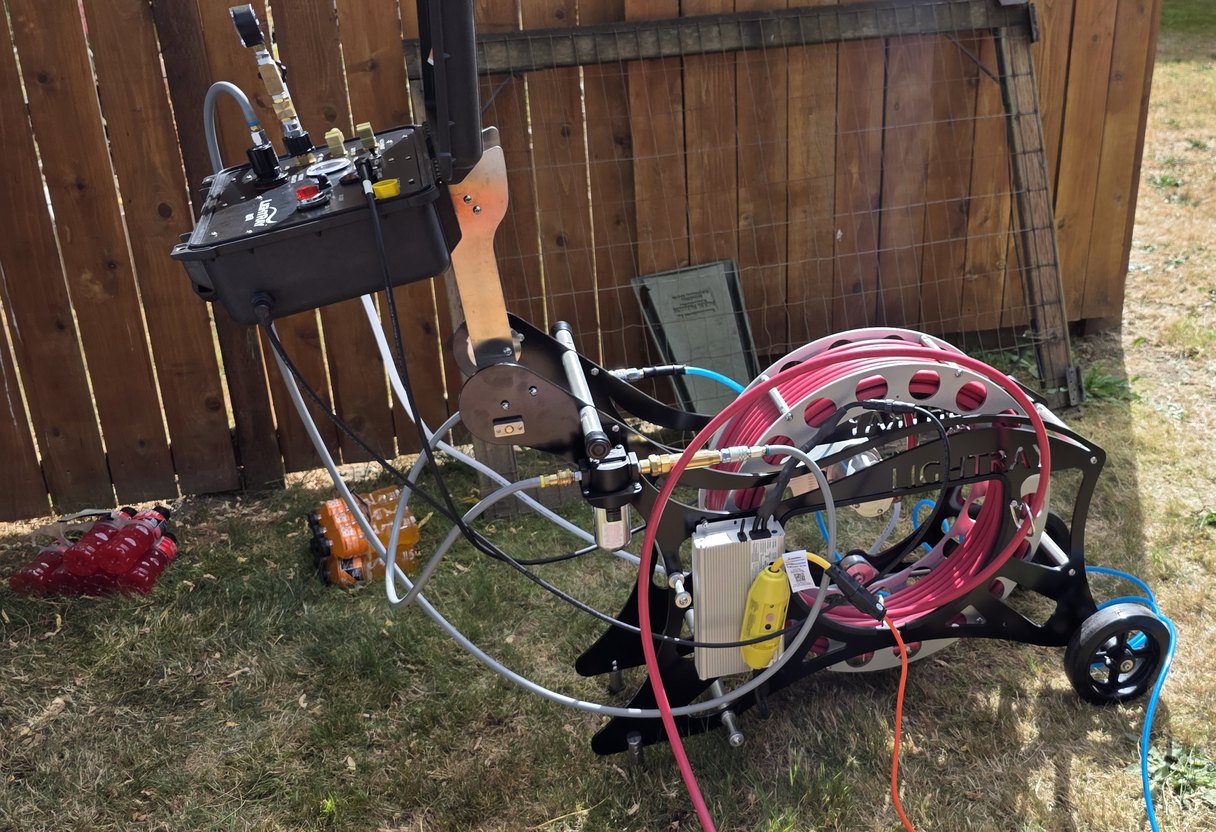
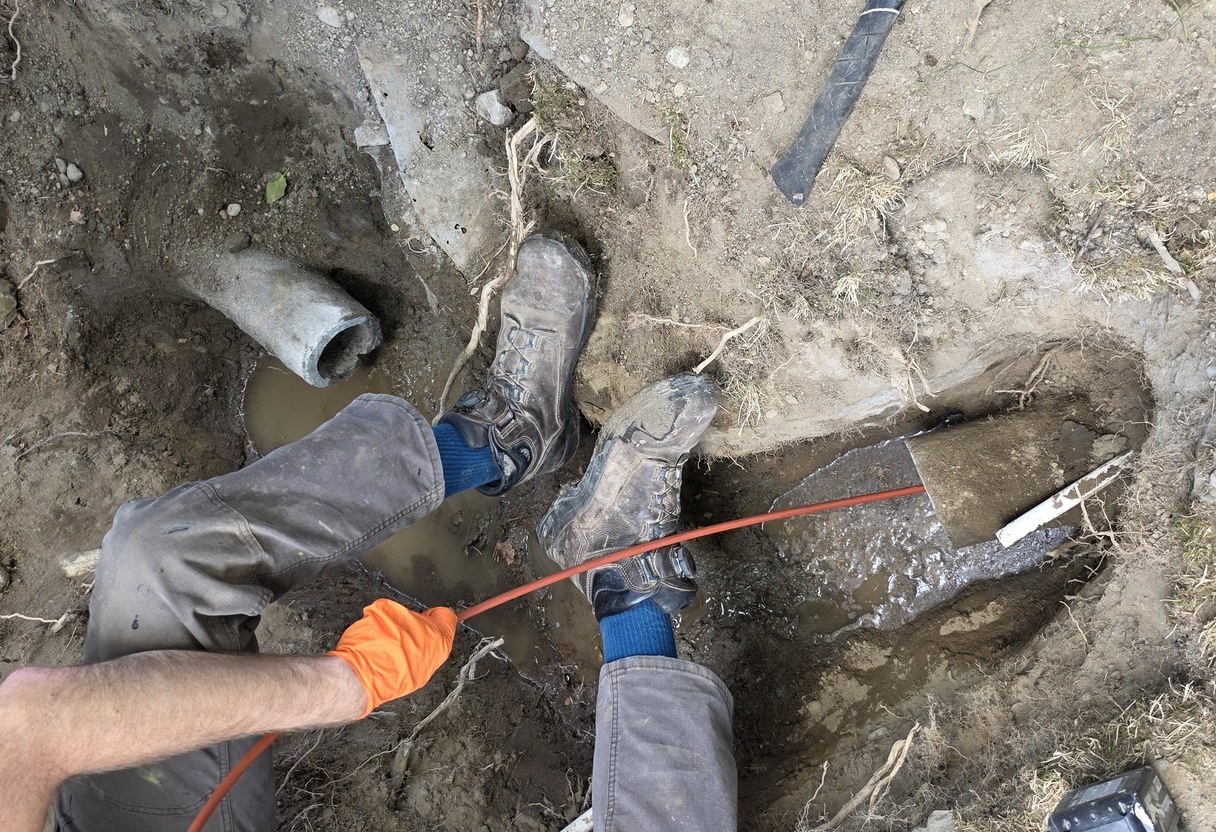
A buried supply line on a hillside rarely announces itself. No puddle, because the water runs downslope and away. The signs are a meter that will not settle with every fixture shut, a bill that stepped up and stayed there, and occasionally a patch of lawn that stays green through August. We locate it with gear rather than a shovel, open one hole instead of four, and hand you an invoice the city will accept.
Also here: leak detection, signs of a buried leak, a leaking main line, a bill that jumped, and where your shut-off valve hides. Fixture installation, sump pump installation and whole-house repipe installation follows the same principle — find the cause, then price the fix.
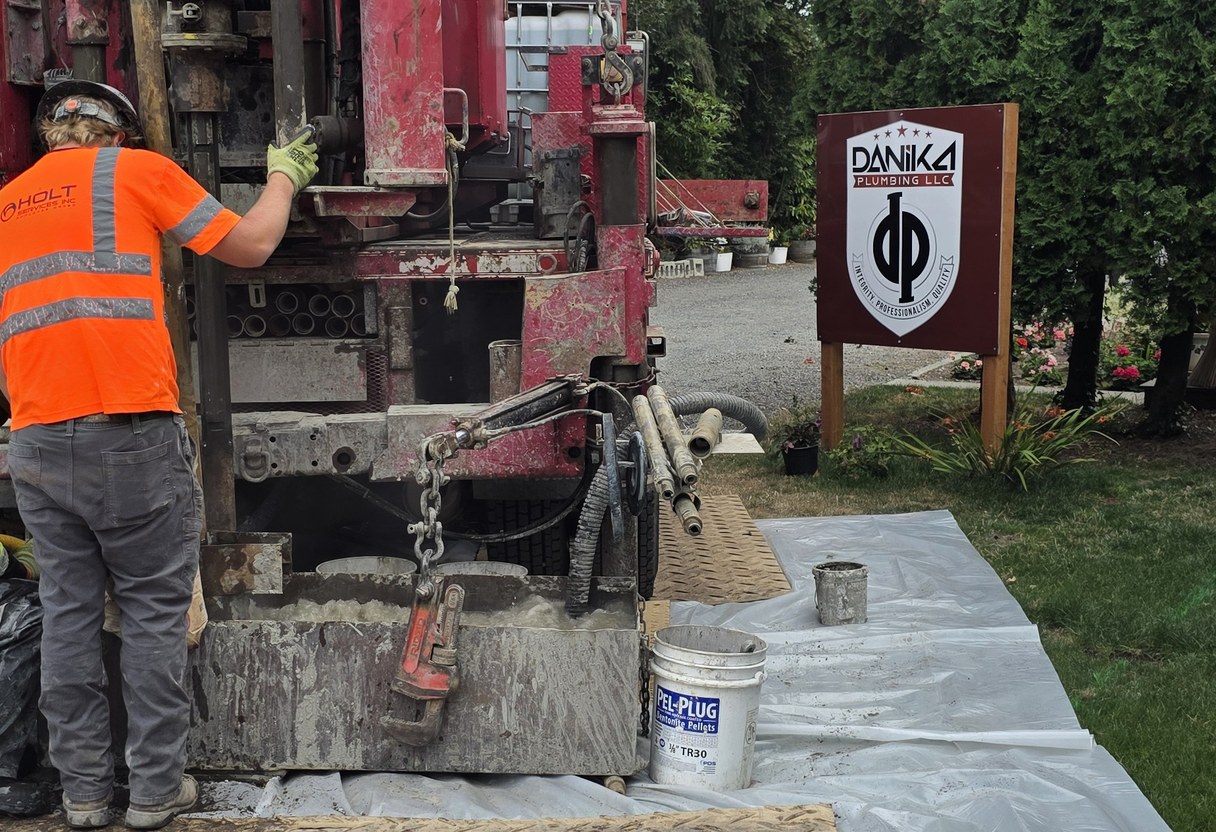

The city’s side of this is genuinely well run. Five lift stations, a modern plant, crews on call. None of it moves an inch when the plumbing fault is on your side of the meter at two in the morning, and out here that is where the problem usually is.
We are on call 24 hours a day. Shut-off first — if you do not know where yours is, find it tonight rather than in the dark — then stop the water, then work out what happened. Emergency work, frozen pipe repairs, pipe repairs and the usual suspects are all here. No arrival promises on this page, because we will not make one we cannot keep.
Two and a half square miles, and the plumbing changes character across it. Duvall plumbing is really two jobs. Old Town down by Main Street NE is the moved town — the oldest pipework in the city. The newer developments climbing the hill are a different animal: 1990s and 2000s stock, which went from 729 people in 1980 to 8,034 by 2020, all coming due at roughly the same time.
We cover the rest of the valley and the ridge either side of it too — north up SR 203 to Monroe, and west over the hill to Woodinville. The full list is on our service area page, and Everett is where we started. Recent work is on our projects page.
On your own side of the plumbing, often yes. DMC 9.04.050(E) requires no permit for routine maintenance or repair carried out entirely inside your property lines, as long as you are not changing the location, alignment or configuration of the line — but the same section still requires advance notice to the City Engineer before you start. Step into the right-of-way and 9.04.050(F) requires a permit. And where a permit is issued, 9.04.030(D)(1) requires proof of a valid Washington State contractor’s licence before the city will hand it over.
You do. DMC 9.02.020(C)(1)(a) requires one on every metered service and states plainly that it is privately owned and maintained by the property owner, and that it must provide pressure control to all fixtures. z
Seattle. The city buys it wholesale from Seattle Public Utilities through two supply connections and distributes it over 46 miles of main, two reservoirs totalling 2.5 million gallons, one pump station and four pressure zones.
Ninety days. DMC 9.04.020(A) requires the owner of an occupied building to connect, at their own cost, when a public sewer runs within one hundred feet of the property line, and to finish within ninety days of official notice. The code allows the city to prohibit occupancy and cut off water service until you comply, and any septic system on site has to be properly abandoned, disinfected and filled.
For sewer, yes — 9.04.020(B) requires a separate and independent connection for every dwelling unit, accessory units included, with exceptions only where the City Engineer finds separate connections impracticable. Water is more relaxed: 9.02.020(B)(2) lets an ADU share the primary dwelling’s service while both sit on one parcel under common ownership — but sell it off separately and it needs its own connection and meter.
Possibly. DMC 9.01.020(G) lets the finance director adjust charges for extra usage from a leak between the building and the meter, limited to one adjustment per account in three years, on written request with proof of an adequate repair. Excess usage is re-rated to the wholesale rate plus ten per cent. Find it and fix it properly first, because you only get the one.
If something out here is dripping, backing up or reading wrong on the meter, tell us which zone you are on and what the water is doing. Our plumber will tell you what we think before we come out. No arrival windows, no invented numbers — just a look at the plumbing, a written price, and the work.
Danika Plumbing & Electric — Everett, WA. Licensed & bonded, WA State L&I registered and insured. Established 2009. One-year parts and labor warranty. 4.7 out of 5 from 673 Google reviews. About us · Contact · All plumbing services