Finding the main water shut-off valve in an Everett home starts with knowing where the water comes in. A lot of the houses we work in are built over a crawl space, and in those houses the water comes in low, through the front foundation wall, on the side of the property that faces the street. That is not a rule of thumb somebody handed us. It is just what happens when a service line is trenched in from the main and nobody wants to dig any further than they have to.
So when somebody calls us on a Saturday and can’t find their shut-off, the first thing we ask is what the house sits on. Crawl space, basement, or slab. That one answer narrows it down more than anything else you could tell us.
The short version: your main water shut-off valve is almost always within arm’s reach of the spot where the water line enters the house, on the street side, and it will be the first valve on that pipe before anything branches off it.
Start at the wall where the water pipe comes in
Work the problem in this order and you’ll find it faster than wandering the house with a flashlight.
- Stand outside, facing the street. Note which wall is closest to the road. That’s the wall the service line almost certainly came through.
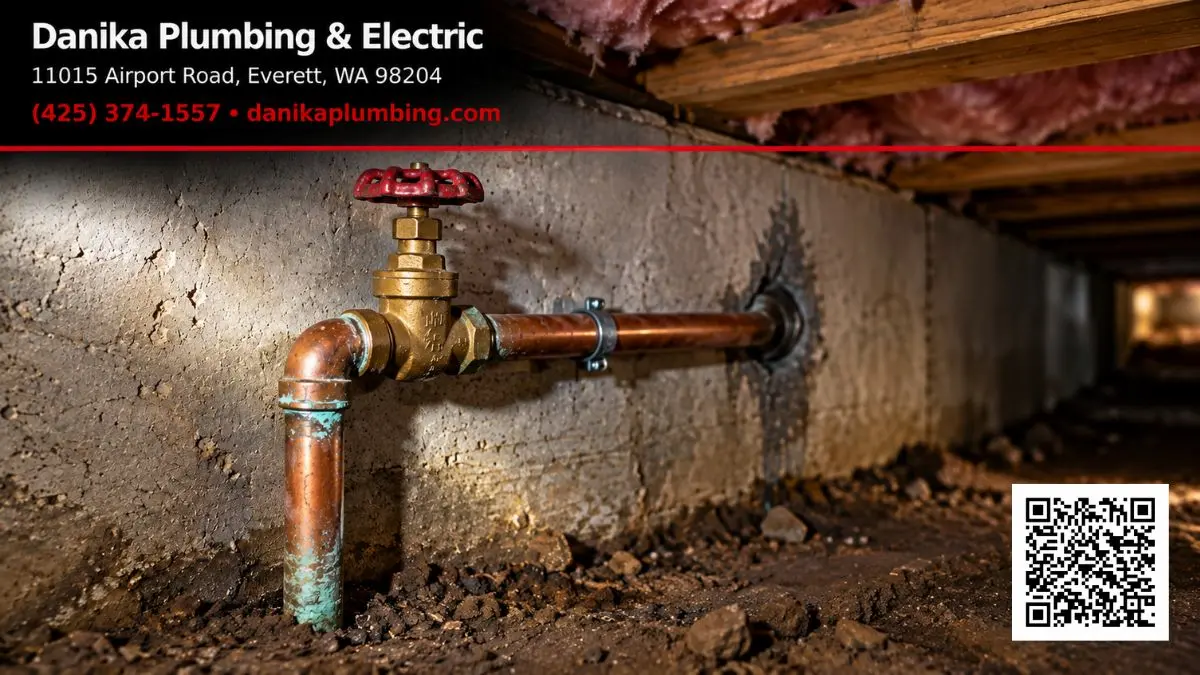
- Go to the inside of that wall. That means the crawl space hatch, the basement stairs, or the garage. Look low. The pipe comes up out of the dirt or through the concrete, and the valve is the first thing on it.
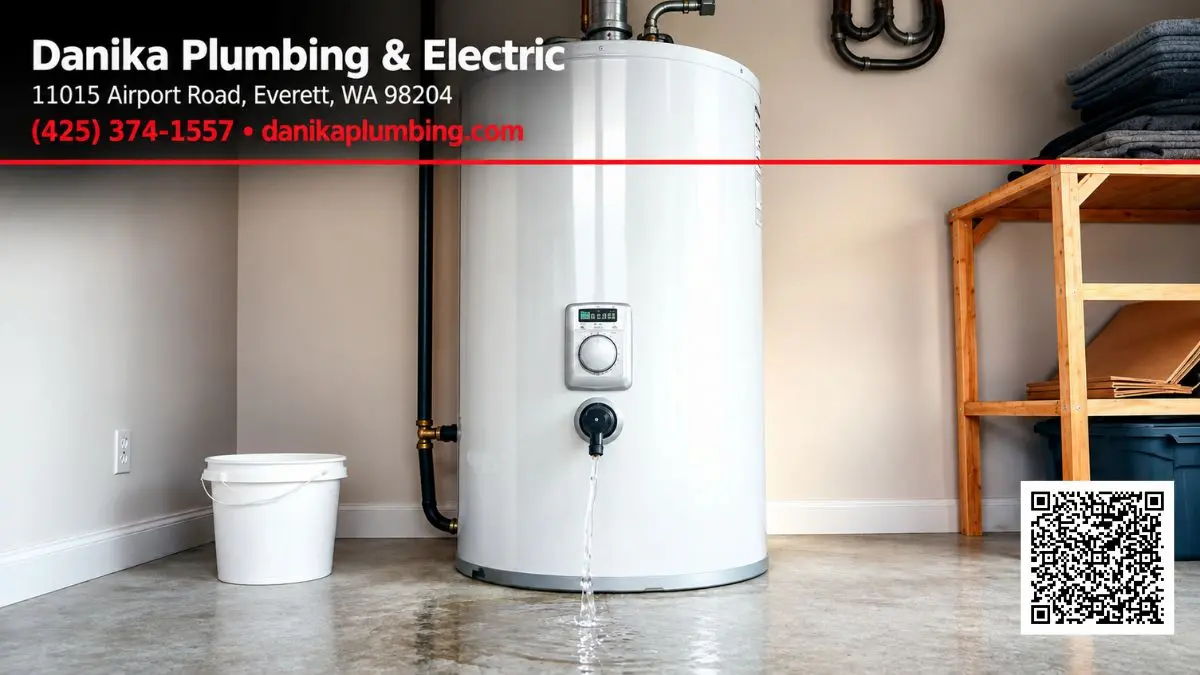
- If that comes up empty, follow the water heater backward. Cold supply goes into the top of the tank. Trace that pipe away from the heater and it leads you toward the entry point eventually. Slow, but it works.
- Check the laundry area and any utility closet. On a lot of newer builds around here the main sits in the same cupboard as the washer hookups. Convenient, right up until somebody stacks storage bins in front of it.
- Last, go out to the meter box near the curb. More on that one below, because it isn’t really yours.
And look up, not just down. We’ve found more than one main valve tucked into a joist bay above head height in a converted basement, painted the same color as the ceiling by a previous owner who clearly wanted it gone.
What a main water shut-off valve looks like down there
It won’t be labeled. It won’t be red with a sign on it. In a house it’s usually one of two shapes:
- A lever. A straight handle, often about the length of your hand, sitting on a fat brass body. That’s a ball valve, and it’s the one you want to have. Quarter turn and the water stops.
- A round wheel. Looks like a small hose faucet handle or a miniature steering wheel. That’s a gate valve, and it’s what most older Everett houses came with. Multiple turns to close, and it’s the type that gives people trouble.
Either way, the giveaway is that nothing branches off the pipe ahead of it. If you can see a tee splitting off above the valve you’re looking at, you’ve found a branch shut-off. Useful, but it won’t stop water reaching the rest of the house.
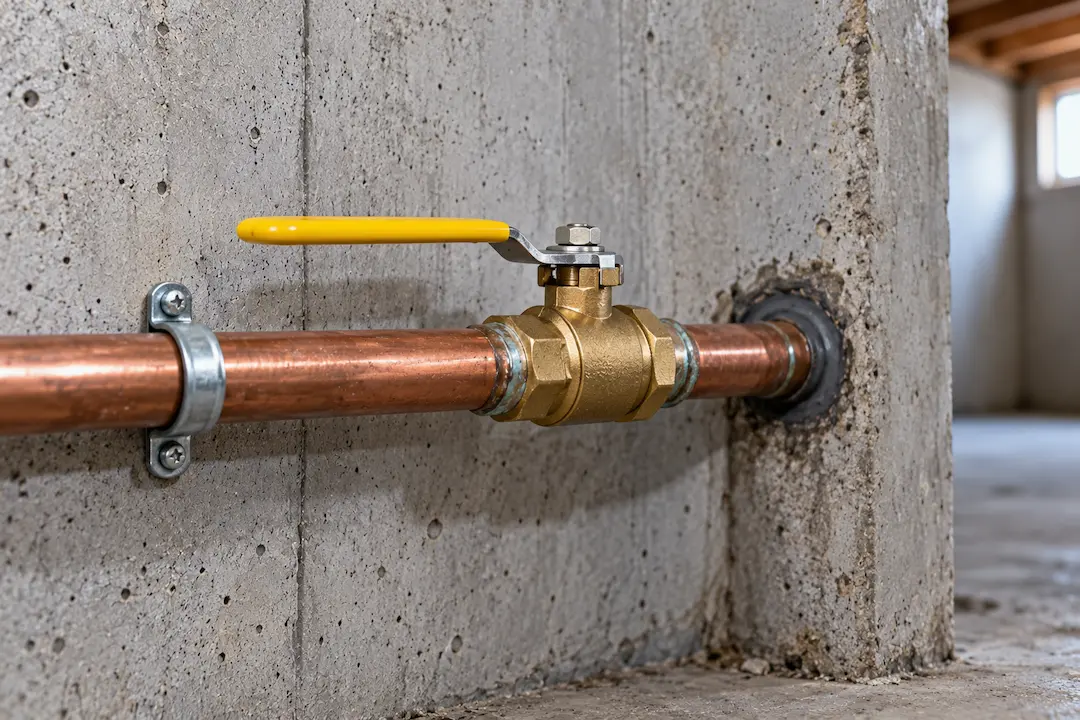
Which way does the shut-off valve turn, and how far?
On a wheel valve, clockwise closes. It’s the one piece of plumbing trivia worth memorizing tonight.
On a lever valve, don’t worry about direction; watch the handle’s position instead. Closed is when the handle sits across the pipe rather than along it. Handle in line with the pipe means open; handle sideways means shut. You can read it from across the room once you know, which is genuinely useful in a hurry.
On a wheel valve, keep turning clockwise until it stops, then stop. Don’t lean on it. Forcing an old gate valve is how a small problem becomes a flooded crawl space with nothing left to close.
Then go open a tap on the lowest floor and confirm the water actually quit. A valve that turns is not the same as a valve that seals.
Why there are two of them, and which one is yours
Most properties have a valve at the house and another out by the meter, and people reasonably assume they’re interchangeable. They aren’t.
The one at the house belongs to you. Turn it whenever you like: changing a faucet, leaving town, a supply line letting go under the sink.
The one in the meter box is the curb stop, and it belongs to the water utility. It usually needs a long key rather than a hand, the lid can seize shut with dirt and moss after a Snohomish County winter or two, and utilities would generally rather their customers left it alone. In a real emergency nobody is going to scold you for using it. But it’s a backup. If you’re reaching for it on a routine repair, the actual problem is the valve in the house.
Old brass valves that fail quietly
Here’s the part homeowners never see coming. The main water shut-off valve is the one piece of plumbing in your house that gets used almost never, and things that sit still for decades do not stay in working order.
What we run into, roughly in order of how often:
- It turns, but the water keeps running. The gate inside an old wheel valve corrodes away from the stem. The handle spins beautifully and does nothing at all.
- It won’t budge. Mineral scale and corrosion have welded the works together. This is the one that tempts people into a pipe wrench.
- It weeps from the stem once you move it. The packing behind the handle dried out years ago and only holds because nothing has disturbed it. Turning the valve disturbs it.
- The handle snaps off. Brass gets brittle. This happens, and it happens at the worst possible moment, and it is a genuinely miserable thing to be holding.
The fix on all four is the same: put a modern ball valve in. Quicker than people expect, a planned appointment rather than an emergency one, and it turns your shut-off from a hope into a thing that works.
Where the main water shut-off valve ends up in an Everett home
The housing stock around here sorts fairly neatly, and it’s the best shortcut we know.
Crawl-space houses are a lot of the mid-century ramblers around the middle of town and out toward Silver Lake. The valve is in the crawl, on the street-facing foundation wall, usually within sight of the hatch. Bring knee pads and a real flashlight, not a phone.
Basement and daylight-basement houses are common on the slopes north and west of downtown. Front wall, where the line comes through the concrete, usually behind whatever the basement is being used for now. We have moved a lot of Christmas decorations to reach one.
Slab-on-grade and newer construction puts it on a garage wall, or sometimes behind a small access panel in a closet or laundry room. Tidier, easier to reach, and much likelier to have a lever handle already.
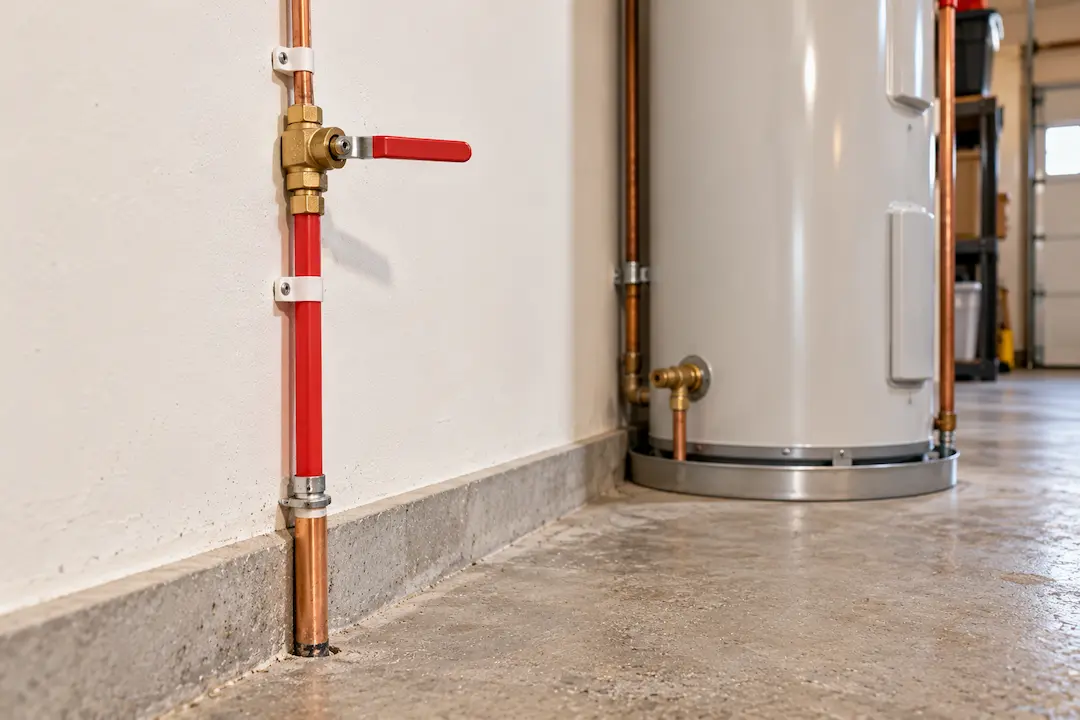
Split-levels catch people out. The utility side is frequently on the lower level at the front, but the stairs make homeowners think of that half as a different building, and they never look there.
Whichever you’ve got, do this: once you find the main water shut-off valve, put a label on it. A luggage tag and a marker is fine. Then tell whoever else lives in the house, because the person home when a line bursts is rarely the person who went looking for the valve.
If the pipe itself is the problem
If finding the valve turned up a bigger problem, these go further:
- Our emergency plumbing team
- Danika’s leak detection team
- Expert pipe work
- Professional water line work
- The plumbing team that covers Everett
What homeowners ask their plumber next
Does every house have a main water shut-off valve inside it?
Nearly every single-family home does. Condos and some apartments are the exception. You may only have valves at individual fixtures, with the building’s shut-off controlled by management. Worth confirming before you need it rather than after.
Should it be left open all the way, or backed off a turn to prevent seizing?
Open all the way. You’ll still hear the old advice to back a gate valve off a quarter turn so it can’t seize in the fully open position. It does no real harm, but it treats the symptom. A valve that sticks is a valve worth replacing, and a lever ball valve is built to sit fully open for years.
How many of these should a house have?
One main, plus small stop valves at each toilet, sink and appliance. The fixture stops are what you want for ordinary jobs, because there’s no reason to kill water to the whole house to swap a toilet fill valve. If your fixtures don’t have them, that’s a worthwhile afternoon of work and it makes every future repair easier.
Can I use the valve out by the meter instead?
In an emergency, yes. Routinely, no. It’s the utility’s valve, it often needs a key you don’t own, and the box lid is frequently packed with dirt. Treat it as the thing you fall back on when the house valve has let you down.
What if it snaps or starts weeping when I turn it?
Stop turning it and call somebody. A weeping stem sometimes settles if you leave it alone, and sometimes doesn’t. A snapped handle or a valve that won’t seal is an emergency in slow motion, because right now the thing that’s supposed to stop a flood can’t. That’s a same-day job, not a next-month one.
Want it found, labeled, and turning before you need it?
We’ll locate your main water shut-off valve, test that it actually seals, tell you honestly whether it has another decade in it, and swap it for a lever valve if it doesn’t. A quiet weekday appointment beats the alternative, which we have seen more times than we’d like.
Danika Plumbing & Electric
11015 Airport Road, Everett, WA 98204
Phone: (425) 374-1557 |
office@danikaplumbing.com
License # DANIKPL839PF