
11015 Airport Road Everett, WA 98204
Home » Plumber Mountlake Terrace, WA
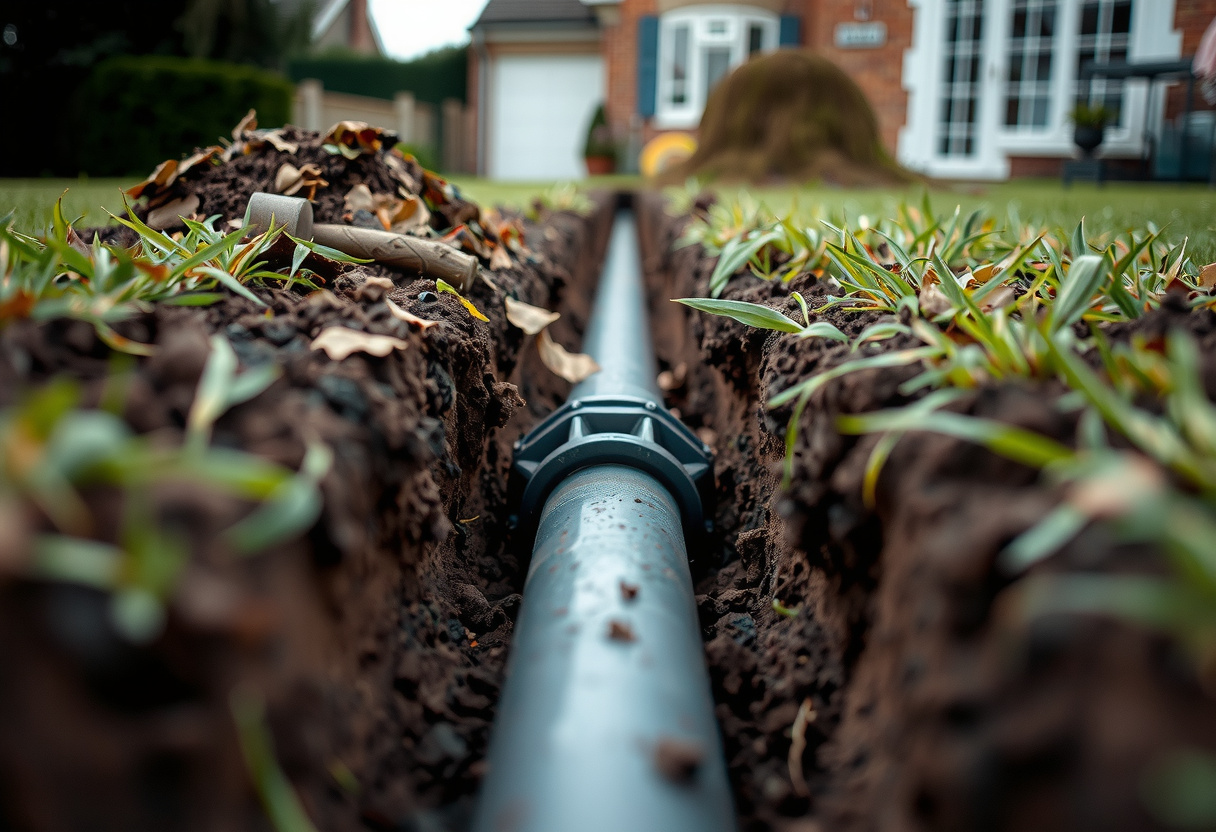
Most people assume the buried sewer line under the front lawn is somebody else’s problem until it backs up. Mountlake Terrace wrote down exactly whose problem it is, and the wording is unusually precise.
MLTMC 13.20.020(D) defines a side sewer as the pipe “which extends from the Right of Way to the point of connection to the plumbing from a building or residence, said point of connection to the plumbing not to exceed 30 inches from the foundation.” So the run you are liable for begins at the right-of-way line and ends a couple of feet off the house. And 13.20.080 makes owners responsible for keeping side sewers and laterals “unclogged and free-flowing at all times” at their own expense.
Then there is the part nobody mentions in a sales pitch. Under 13.20.090 no one may connect with, open or penetrate a public sewer, or “construct, repair, or perform maintenance on any service lateral or side sewer without first obtaining a permit.” Maintenance. Not just replacement — maintenance.
We read that chapter before we quote. It is the difference between a tidy job and a stop-work notice.
Danika has been doing plumbing work out of Everett since 2009, and Mountlake Terrace is eleven miles down I-5 from the shop. Slab houses, 1950s supply lines, side sewers under the planter strip — the local failure modes are specific, and after enough service calls in one town you stop guessing.
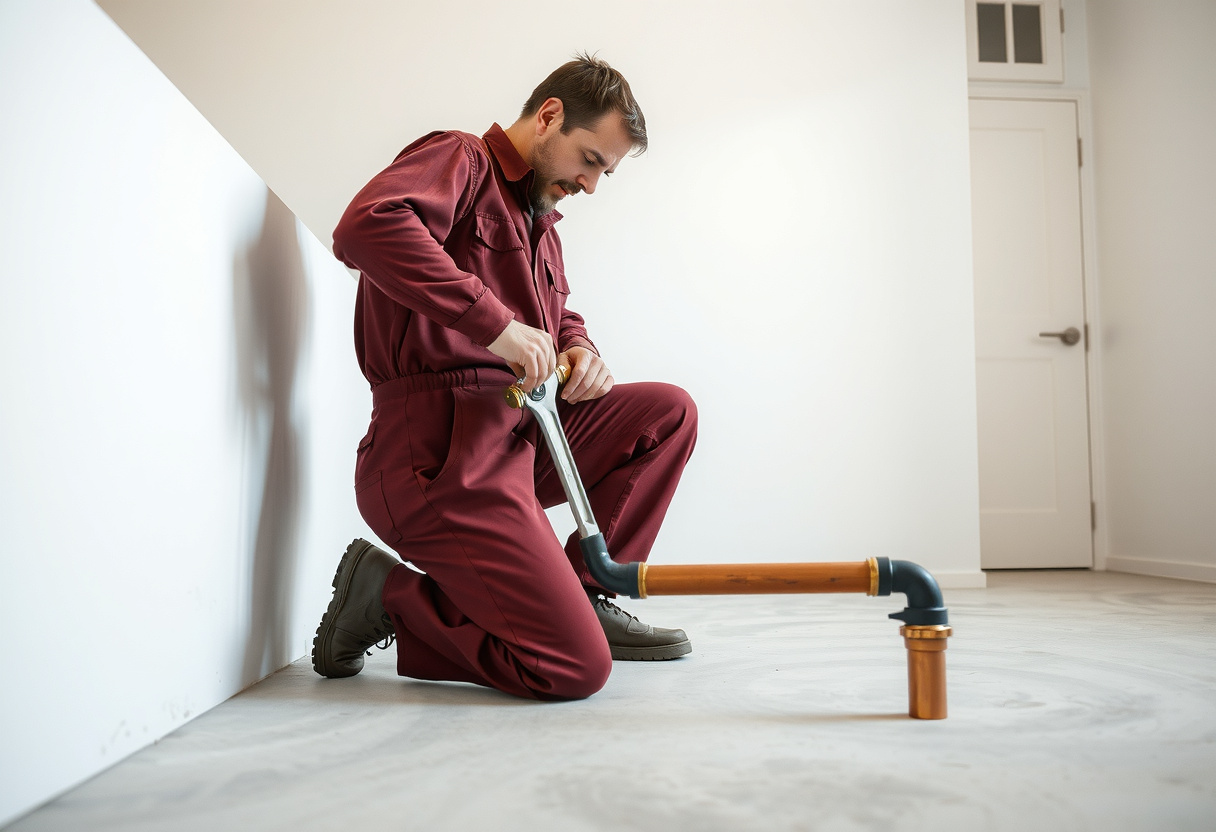
The plumbing services we bring to a Mountlake Terrace address cover the whole list: water heater repair and tank installation, drain cleaning, leak detection, side sewer work, repiping, sump pump installation, toilet, faucet and shower repair, gas line work, and emergency plumbing around the clock. Same licensed crew on a Tuesday morning as on a Sunday night.
Here is something that makes this town easier to work in than its neighbours. The City of Mountlake Terrace “provides water, sewer and storm water utilities within the city limits” — all three, one provider, one bimonthly bill.
Go a few miles in any direction and that stops being true. We spend a fair amount of time in other cities working out which district owns the water pipe and which one owns the sewer at the same address, because the answer changes who you call and who signs off. Not here. One utility runs the lot, and it supplies “nearly 2 million gallons per day of high quality drinking water to more than 6,000 homes and businesses.”
The water itself is bought in. It “comes from Spada Lake Reservoir, located about 30 miles east of Everett at the headwaters of the Sultan River,” purchased from the City of Everett and treated at Everett’s plant. Which is a slightly odd thing to be able to say as an Everett plumbing company: we work on the far end of the same water we drink at home.
What it means for the service you get is simple. One contractor, one truck, one set of permits, and one office to ring when the city needs to inspect something. We are not juggling two water districts and a sewer authority to get a repair signed off. That shows up as fewer days between the quote and the fix, which is usually what people actually care about.
Our plumbing work here runs the full range — routine maintenance, planned replacement, and the three-in-the-morning repair nobody budgeted for. Plumbing and electrical sit under one roof at Danika, so if a tank installation turns into a circuit problem, the same company finishes the job.
This town started as an airstrip. In 1949 the developer Albert LaPierre and his partner Jack Peterson bought the abandoned strip and began filling it with 640-square-foot cinder-block houses — 20 by 30 feet, two bedrooms, $4,999, aimed at World War II veterans with young families. By 1954 there were 5,104 people inside a square mile.
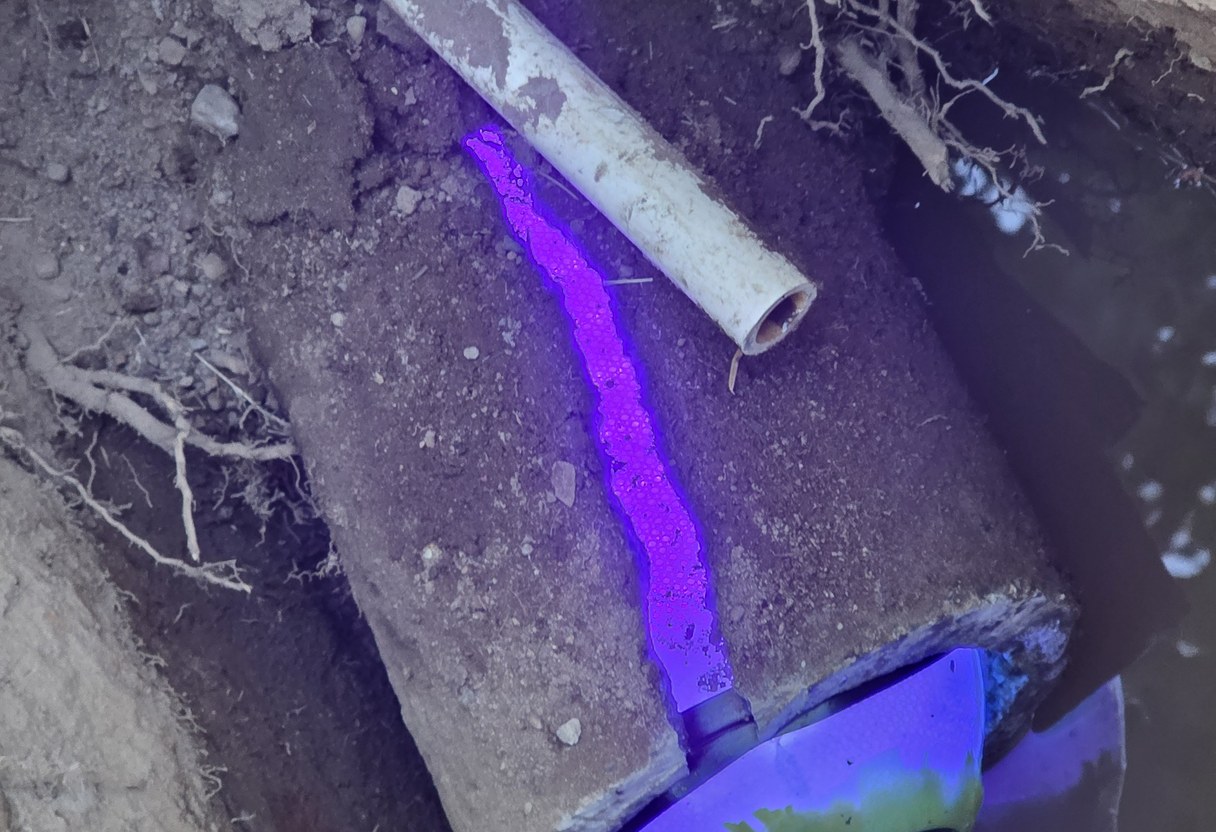
And those houses were “built on concrete slabs.” That one construction detail changes the whole job. No crawlspace to get under. Supply runs in or beneath the pour. A leak you cannot see, hear or reach.
So it tells you in other ways. A patch of floor that is warm underfoot in one spot. A water meter that keeps creeping with every tap shut. A bill that climbs for no reason anyone can name. Sometimes a faint hiss behind a wall at two in the morning.
We find it without opening the whole floor:
Acoustic and thermal leak detection
Pressure isolation to prove which side of the slab is losing water
Tracing and marking the line before any concrete is cut
Reading the early signs so the cut stays small
Finding the main shut-off while we are there, because on a slab house it is rarely where people expect
The city’s own water report says the “distribution system is lead free,” which is worth knowing: if something is wrong with the water at the tap in an older place here, the answer is almost always inside the house rather than out in the street. Which is where we work anyway.
It is also the reason we would rather send someone with a listening disc than someone with a jackhammer. Slab work rewards patience. The plumbing services that cost people the most money here are the ones that started with a guess about where the pipe ran.
Ask for a repipe in a house with a crawlspace and the answer is straightforward — you work underneath. On a slab there is no underneath. Chasing out old pipe buried in a 1950s pour is slow, loud and sometimes structurally daft.
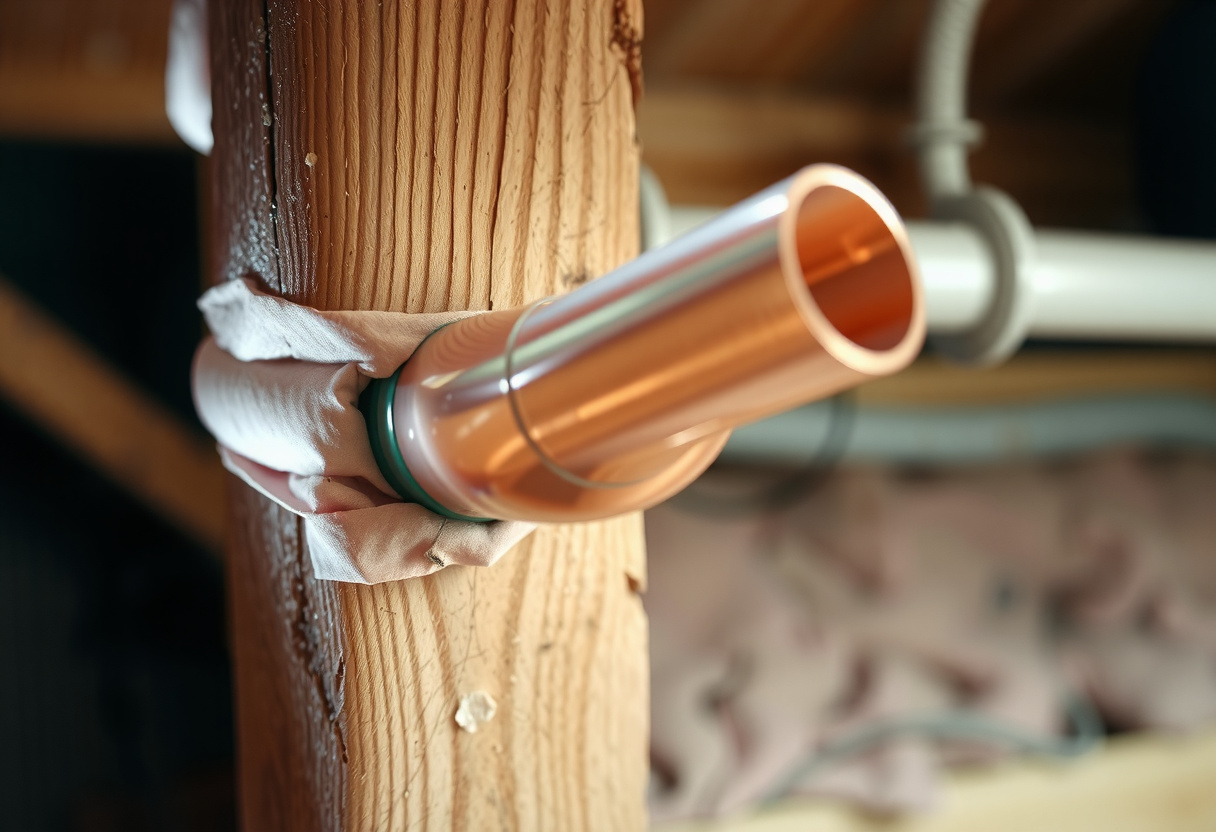
So the line gets abandoned in place and a new one goes overhead: up a wall, through the attic, back down to each fixture. Done properly you lose a few square feet of closet and gain a system with no buried joints at all.
What that looks like on a 20-by-30 original, or on one of the additions that got bolted onto them over seventy years:
Whole-house repiping routed overhead, not re-buried
Galvanized supply lines of that era swapped out rather than patched
What a repipe actually involves, start to finish
Pipe repair where a section is the whole problem
Drywall put back and finished, because half a job is not a job
We have had the conversation plenty of times where someone wants a single pinhole fixed and nothing else. Fair enough — sometimes that is the right call. But if the same wall has been opened twice already, the third repair is usually just an expensive way of putting off the replacement. We will tell you which one we think you are looking at, and we will tell you plainly.
Either way the plumbing work gets permitted where a permit is wanted, and the water goes back on the same day we turn it off. A repipe is disruptive by nature; it does not have to be chaotic. We stage it room by room so a household can keep functioning, and we leave the main shut-off labelled before we go.
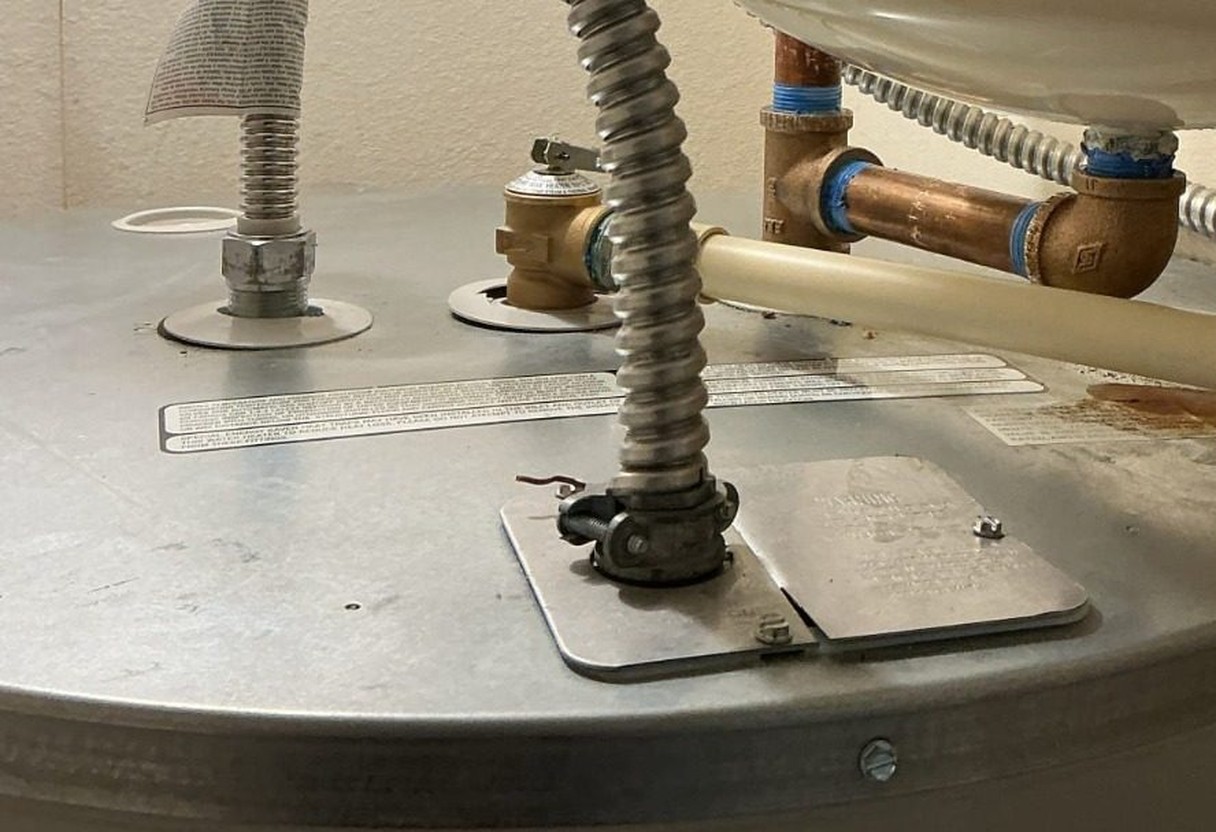
In a house built at 640 square feet there is no spare basement corner. The tank went into a hall cupboard, a kitchen alcove or the garage wall — somewhere you brush past daily. Which is handy, because you notice the rust streak early, and awkward, because a failure dumps forty gallons onto a slab floor with nowhere to drain.
So the job in this town is partly a question of access. We have pulled a tank out through a kitchen doorway with about an inch to spare more than once. Measuring first is not optional, and an installation that ignores the route in is one that stops halfway down the hall.
Signs we get called about here, in roughly the order they show up:
Rusty water at the hot tap only
Rumbling or popping from sediment
Hot water that runs out faster than it used to
Damp at the base of the tank
When it is past repair and replacement is the cheaper road
Water heater service and installation covers both: we fix what is worth fixing, and we are honest when it is not.
Tight houses are also where a tankless unit earns its keep, since it hangs on a wall and gives you the cupboard back. It needs a properly sized gas line and a vent route, and on an older slab place that is the part worth checking before anyone gets excited. We will look at it honestly — gas against electric is a real decision, not a sales step.
A bit of yearly maintenance buys a surprising amount of time either way: flush the sediment, test the relief valve, check the anode. Ten minutes of service that most people skip until the replacement quote lands. If you would rather we did it, we will tell you honestly whether the unit is worth another year or whether a replacement is the better spend.
The numbers give you a sense of what is under the streets: 69 miles of sewer main lines, 1,500 access holes and 5,500 sewer connection laterals. Seventy-odd years of growth sits on top of that, and so do seventy-odd years of trees.
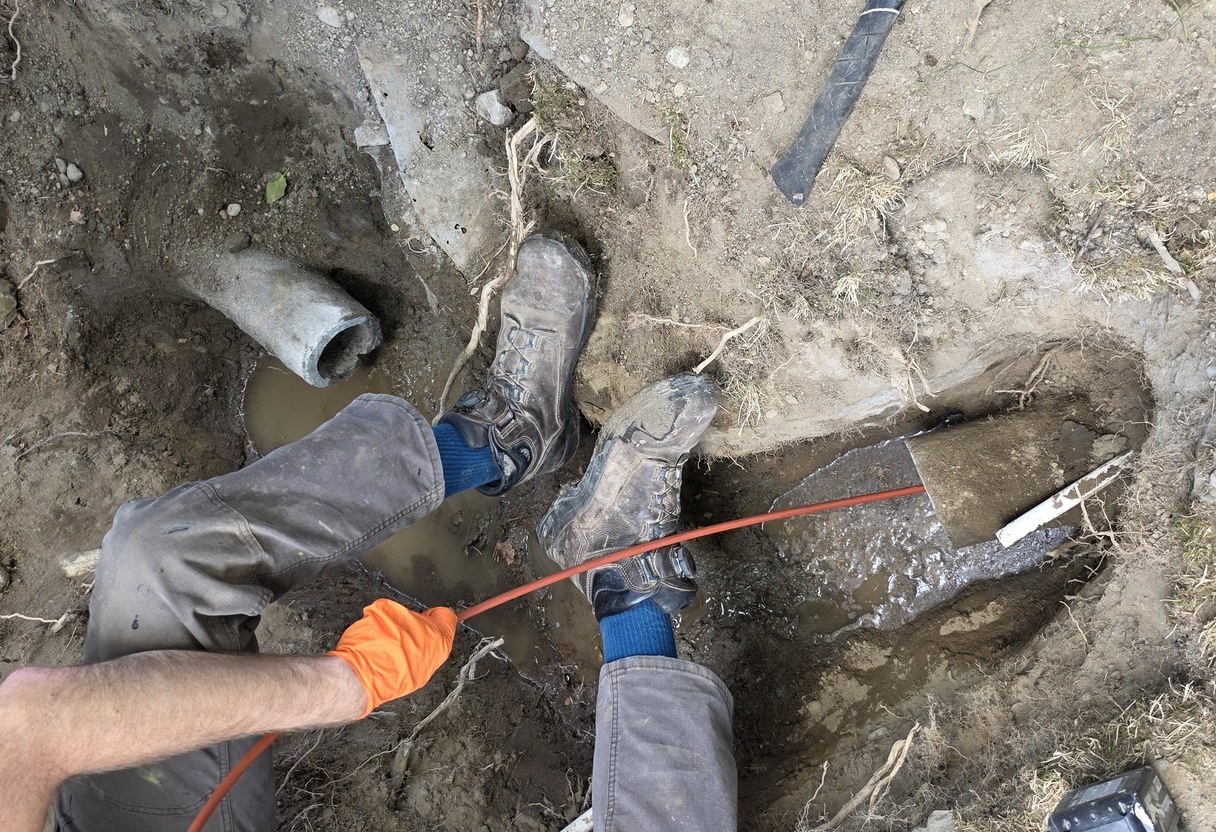
Chapter 13.20 even has a section headed “Removal of trees and shrubs” — 13.20.190 — which tells you the city has been arguing with roots for a long time. Any plumber who has run a camera down one of these lines has watched a root ball come into frame. On the owned length of a sewer line, roots find any joint that has shifted, and a clay or concrete sewer line from the slab era has joints every few feet.
How we work a slow or blocked line here:
Camera inspection along the whole owned sewer line, right out to the right-of-way
Root intrusion cut back and the entry point located
Drain cleaning that clears the line rather than poking a hole through it
Hydro jetting when scale and grease have narrowed the bore — jetting or snaking depends on what the camera shows
Side sewer repair and replacement, permitted and inspected per 13.20.090
A cleanout fitted where there should have been one in 1952
Worth knowing where it all goes, too: about 80% of the city’s wastewater is treated in Edmonds, and the other 20% travels through other cities to King County Metro’s Brightwater plant. Your kitchen sink drains across a county line.
A sewer repair here is rarely only a sewer repair. Once the camera is down the line we usually find the drain cleaning that was overdue, the joint that has moved, and the cleanout nobody fitted in the first place. We quote that plumbing work in one go rather than coming back three times, and the commercial units along the main corridors get the same treatment.
Inside the house the same slab era shows up in the fixtures. Cast-iron stacks that have scaled down to half bore, a shower drain that was never vented properly, a toilet on a flange sitting a fraction too low in the concrete. Our drain work and shower repair tend to arrive as one service call rather than two, because in a 640-square-foot house everything shares a wall.
Mountlake Terrace is not flat. The city runs “three sanitary sewer lift stations” that “pump sewage from the lower areas,” which is the city telling you, in its own words, that gravity does not get everything out of here on its own.
If the municipal network needs pumps to climb out of the low ground, a house sitting in the same low ground is working against the same slope. Down near Lake Ballinger, or anywhere the driveway runs downhill to the door, water goes where the grade sends it.
On a slab house that shows up as water tracking along the edge of the pour, a damp garage wall, or a drain that gurgles whenever it rains hard. Our usual kit for it:
Sump pump installation and repair, sized to the pit rather than to whatever fitted last time; pumps that short-cycle get replaced rather than nursed
How long a sump pump lasts and when to pre-empt it
French drains to intercept water before it reaches the slab
What standing water means in the places it collects
Discharge routed to the storm side — the same city runs it, which keeps that conversation short
A sump pump is one of the few bits of plumbing that fails silently. It sits in a pit doing nothing for eight months, then is asked to run for a week straight. Most pumps die quietly, and homeowners find out in a storm, so we check the float, the check valve and the discharge line as routine maintenance whenever we are in for something else — it costs you nothing and it is how a pump replacement becomes planned rather than urgent.
One caution. Chapter 13.20 has no prohibited-discharge section of its own, so we do not quote you a rule that is not written down. What we do instead is route a sump discharge to the storm utility rather than the sanitary side, which is standard good practice anywhere and keeps the question from arising.
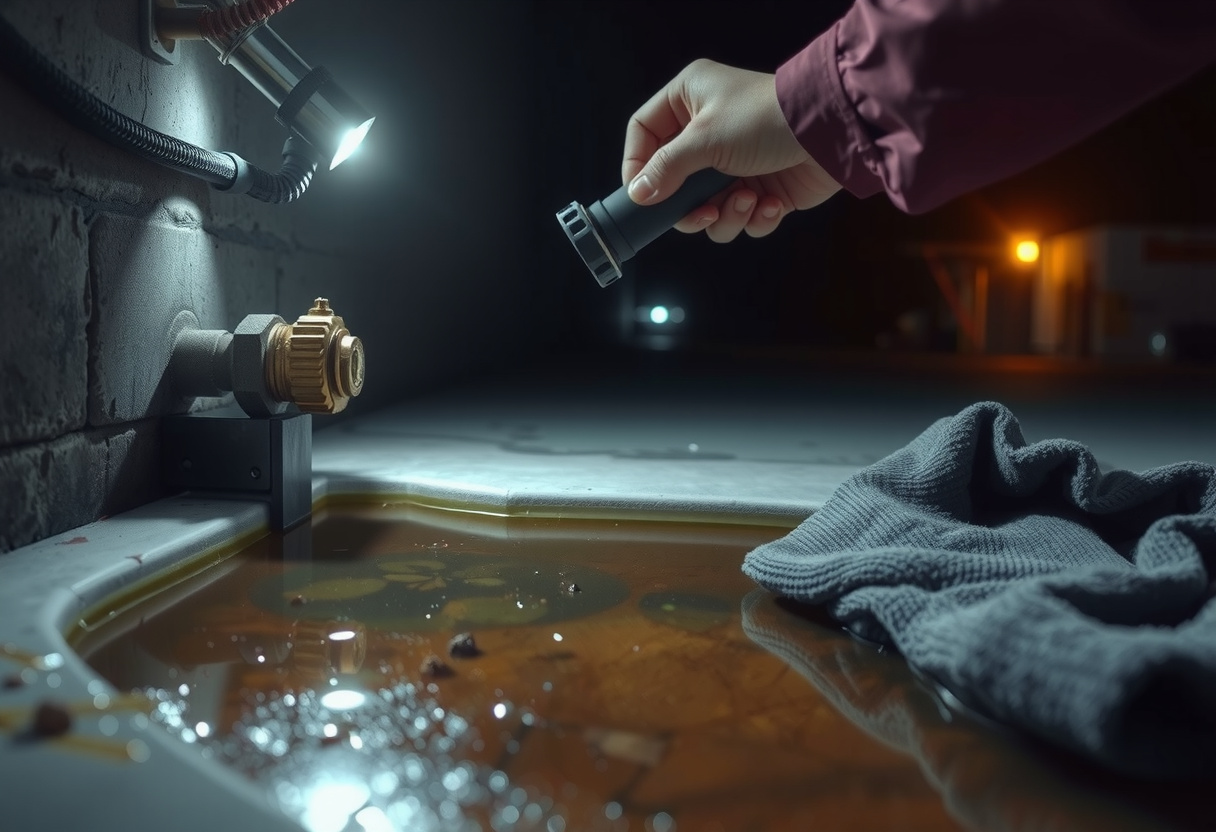
At two in the morning the thing that matters is how fast the water stops. In a house with a crawlspace you get under it and close a valve. On a slab you need to know where the main shut-off is before you need it — and in these houses it is often outside, at the meter, under a lid that has not been lifted in a decade.
Go and find yours this week. Lift the lid, check the valve turns, put it back. That five-minute job is the single most useful thing a slab-house owner can do.
When it has already let go, we are on call 24 hours. Burst supply line, failed heater, sewage backing up into a tub — I-5 and SR-104 put us on the street quickly, and we would rather take the call than read about it afterwards. Text a photo if that is easier than describing it.
What an emergency plumber can actually do at that hour: stop the water, make the thing safe, and get the house usable again. The permanent repair sometimes waits for daylight and a permit, and we will say so rather than rush a joint that the city has to inspect. Emergency plumbing is about containment first — the usual urgent calls are mostly a failed supply line, a water heater that let go, or a side sewer that finally blocked solid.
Keep the number somewhere you can find it wet-handed in the dark. An emergency plumber you already have on the fridge beats the first paid advert you can thumb at. Ours is (425) 374-1557.
It is a compact city and we cover all of it. The original square mile, the newer edges, the apartments going up around the transit centre — same crew, same rota. Residential plumbing services mostly, plus the lighter commercial work along the main corridors. Most homeowners here call us for drain cleaning, sewer repair and the small plumbing jobs that pile up over a winter.
I-5 and SR-104 get us in; after that it is side streets and cul-de-sacs. We work across the whole of our coverage area, which puts Edmonds just west of here, Lynnwood directly north and Brier over the eastern line on the same schedule. Everett is home base, eleven miles up the freeway, and the same plumbing services run from there across the whole patch. Not sure we reach your street? Ask us — it is a short answer.
You are, for a defined length. MLTMC 13.20.020(D) describes the side sewer as the pipe “which extends from the Right of Way to the point of connection to the plumbing from a building or residence, said point of connection to the plumbing not to exceed 30 inches from the foundation.” And 13.20.080 puts the duty of keeping side sewers and laterals “unclogged and free-flowing at all times” on the property owner, at their own expense.
Yes, and for maintenance as well. MLTMC 13.20.090 says no person shall “connect with or open or penetrate any public sewer, construct, repair, or perform maintenance on any service lateral or side sewer without first obtaining a permit.” The city issues Engineering Construction Permits for that kind of work, and 13.20.120 makes it subject to City Engineer approval. We pull the permit as part of the job.
Not until it has been looked at. MLTMC 13.20.130 requires inspection, 13.20.140 deals with filling or covering after that inspection, and 13.20.170 covers inspections of the side sewer or service lateral specifically. Covering a joint before the city has seen it is the fastest way to end up excavating the same hole twice.
Because the original houses were poured on grade. HistoryLink’s history of the city records that the 1949 development filled an abandoned airstrip with 640-square-foot cinder-block houses, 20 by 30 feet, “built on concrete slabs.” With no crawlspace, a failing supply line shows up as a warm patch of floor, a meter that will not settle or a rising bill rather than a visible drip. That is what leak detection equipment is for.
The water is purchased from the City of Everett — the city’s water quality report says it “comes from Spada Lake Reservoir, located about 30 miles east of Everett at the headwaters of the Sultan River.” The wastewater leaves in two directions: roughly 80% is treated in Edmonds and about 20% flows through other cities to King County Metro’s Brightwater Treatment Plant.
We do. Our plumbing services here cover water heater installation and repair, drain cleaning and hydro jetting, leak detection, repiping, sump pump work, toilet, faucet and shower repair, and gas line work. Plumbing and electrical sit under one roof here, so a job that turns out to need both does not need a second contractor. One call either way: (425) 374-1557.
Plenty of companies will give you a number over the phone for a side sewer in this city. Very few of them have read the chapter that governs it, and it shows up later — in the permit that was not pulled, or the trench that got filled before anyone inspected the joint.
We would rather scope the line, tell you what the camera shows, and quote the job that the code actually allows. Sometimes that is cheaper than what you were expecting. Sometimes it is not, and we will say so. Either way you will know why.
That goes for the smaller jobs as much as the buried ones. A dripping tap, a running toilet, a tank making a noise it did not make last year — the same licensed plumber turns up, and the same plumbing services price list applies whether the job takes an hour or three days.
Read what people say, have a look at some finished jobs, or just call and describe the noise. If it turns out to be an emergency we will treat it as one.
Licensed · Bonded · Insured · Washington State L&I registered · Plumbing and electrical under one roof · Serving Mountlake Terrace, Snohomish County and north King County · (425) 374-1557