
11015 Airport Road Everett, WA 98204
Home » Plumber Monroe, WA
The City is blunt about this on its own flood page. High water here “most commonly occur[s] from October through April,” and the trigger is “rainfall exceed[ing] about 4-inches in a 24-hour period paired with a saturated ground from prior rain events.” Then the line that should make any homeowner sit up: flooding “tends to occur in the same areas year after year.”
So the ground under half this town is already full by November. And the sewer code says not one drop of it belongs in the pipe that leaves your house.
MMC 13.08.070 bans discharging “any stormwater, surface water, groundwater, roof runoff, subsurface drainage” into any sanitary sewer. Every legal route for ground water on your lot runs away from that pipe. Get it wrong and the consequence is not a fine — we get to that below.
We cover the whole list in this valley: side sewers, sump pits and perimeter collection, water heater work, drain cleaning, leak detection and the everyday plumbing a house throws up. Plumbing services across both trades on one ticket, nothing subcontracted out.
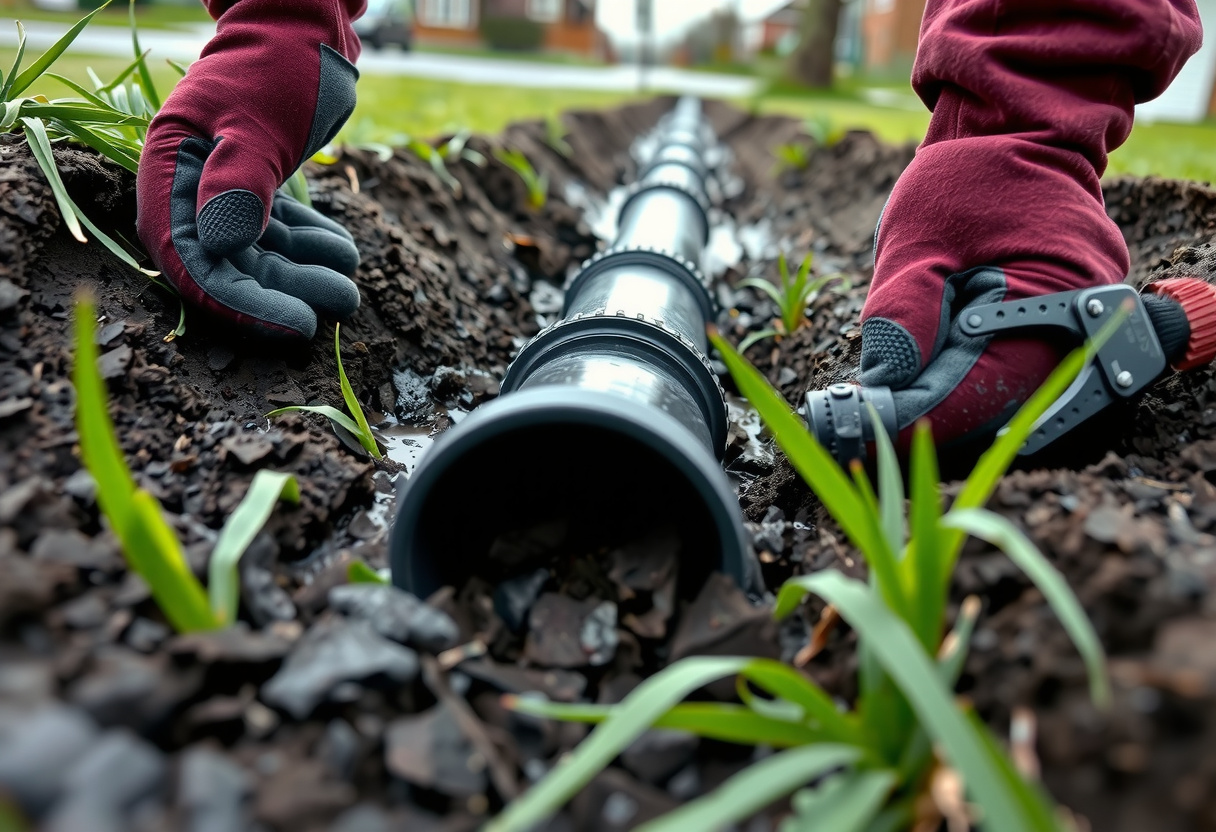
The question we field most from this valley: “is the wet crawlspace my problem or the city’s?” Usually yours, and further out than you would guess. Here is why.

We are an Everett outfit — Danika Plumbing & Electric, out of 11015 Airport Road. Established in 2009 and taken over by Frank Gaborik in 2016. Every plumber on the van works under the same registration.
Which matters more here than it sounds. The City’s own Drinking Water page says the supply “originates at the Spada Lake Reservoir along the foothills of the Cascade Mountains,” that “all water distributed by the City of Monroe is purchased from the City of Everett,” and that Everett staff run the treatment plant. Certified city operators then watch pressure and quality once it crosses the line.
So the stuff coming out of your tap was handled in our home town first. We have been working the Everett end of that same system since 2009. See what customers say.
Most cities split responsibility at the property line. This one does not. MMC 13.08.035 reads: “The city of Monroe shall be responsible for the maintenance of the main line sewer. The property owner(s) served by the lateral side sewer shall be responsible for the maintenance of the lateral side sewer from the connection with the main line sewer to the house or building.”
From the main. Not from the kerb. And the City’s Sanitary Sewer page spells out what that means in practice — the side sewer “often … will extend into the street to the point of connection with the main trunk line.”
Read that again if you own an older place downtown, because it changes the arithmetic on a failing lateral. The length you are liable for can run under the planter strip, the sidewalk and a lane of asphalt before it reaches anything the City maintains.
Which is exactly why we scope first and dig second:
Side sewer replacement and lining
Camera inspection along the whole owned length, not just the easy first twenty feet
Locating and marking the line before anyone breaks ground
Root intrusion cut back and the entry point found
Cleanouts added where the code wants one — including the proviso in MMC 13.08.020 that a shared run serving a rear building needs “a cleanout … constructed to the ground surface”
The job we see over and over out here: a slow gurgle in the lowest fixture, a yard that smells wrong after a storm, and a lateral that turns out to have been patched once in the eighties. The camera settles it in twenty minutes. Guessing costs a driveway.
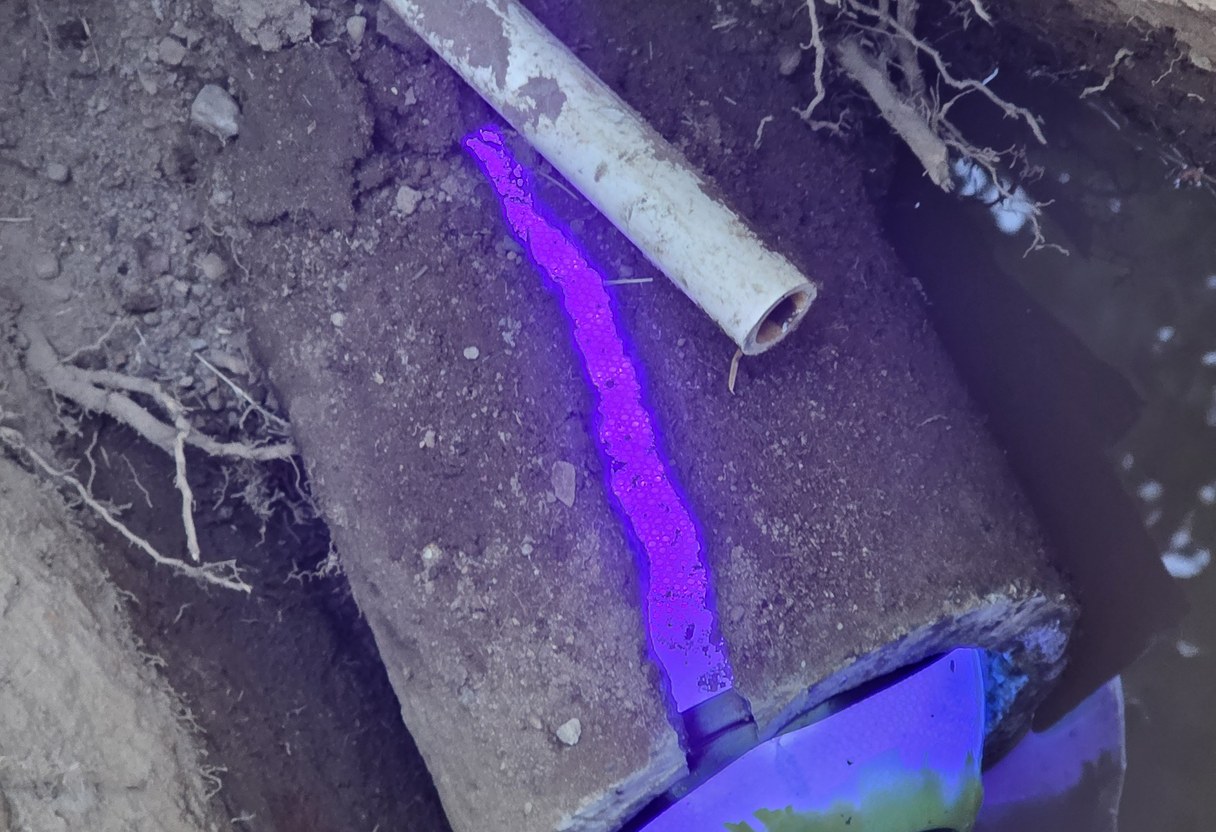
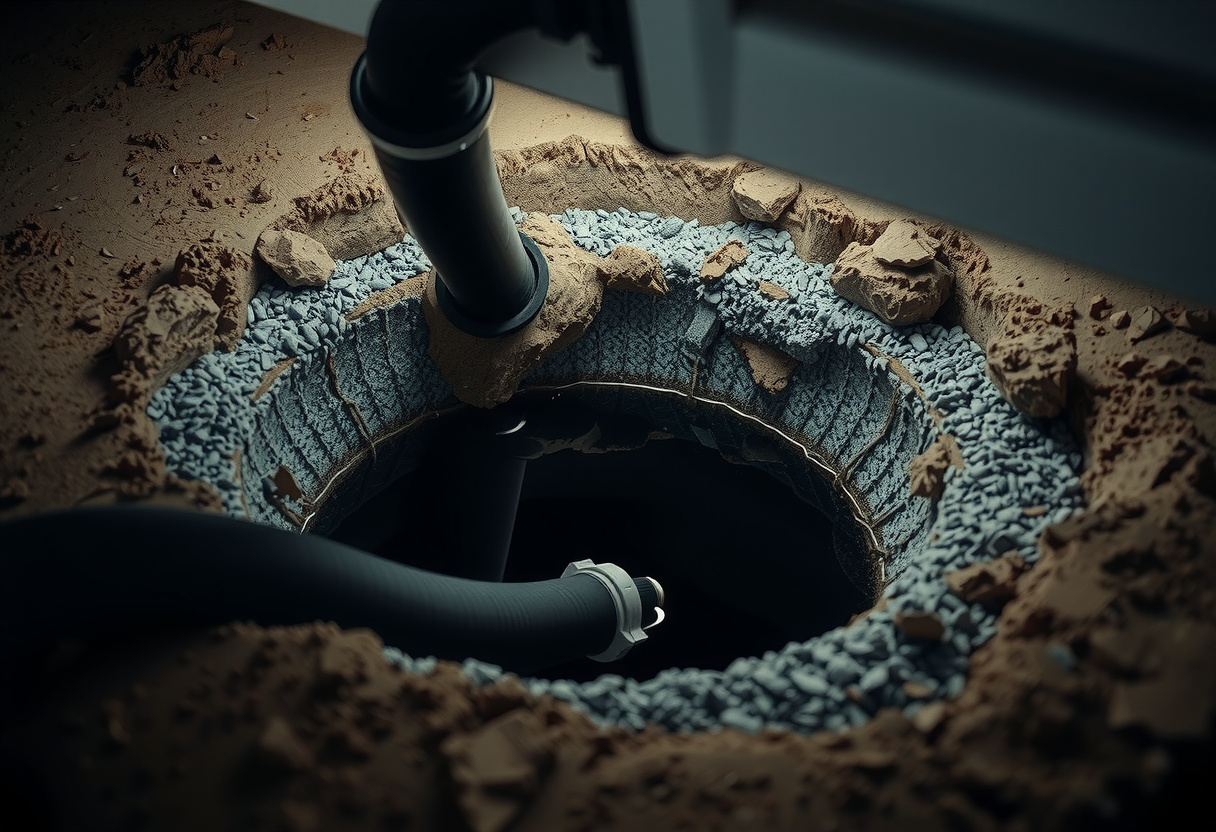
Here is the part nobody else writing about this town will tell you, and it is the single most useful thing on this page.
MMC 13.08.020(C) says that where there is “a direct connection from roof, foundation drains, or area drains to sanitary sewer,” the owner “is required to disconnect” it and must “take appropriate measures so as to permanently prevent further entry of stormwater, groundwater, or surface water.” If the owner does not comply in time, the code is explicit about what happens: “the city council shall direct that water service to the premises shall be discontinued until the proper compliance has been made.”
Not a penalty notice. Your tap, off. And all the remedial work is “inspected by and subject to the approval and acceptance of the city engineer,” so a quiet weekend fix does not close it out.
Sump pump repair and installation, sized to the pit and the ground water it actually sees in February
French drain work and perimeter collection that discharges somewhere lawful
Re-routing an old roof or footing connection off the sanitary lateral
Finding the illegal tie-in in the first place — usually with a camera and a dye test
Wet crawlspace diagnosis before the rot bill arrives
What we will not do is tie a fixture line into a storm run to save a trench. It is the mirror of the same mistake and it is just as illegal. We have also stopped mid-quote more than once to tell somebody their “new” sump discharge was feeding the wrong pipe — cheaper to hear it from us than from the city engineer. How long a sump pump lasts.
Because every gallon arrives here already treated in Everett and monitored for pressure by city operators, what shortens a water heater in this valley is rarely the supply itself. It is the install — undersized, badly vented, or sat in an unheated utility room on a floodplain lot.
So water heater repair here starts with where the thing is standing, not with the part number.
Water heater installation and replacement, sized to the household rather than to whatever fitted last time
Tankless water heater installation where the gas and venting genuinely support it
Thermostat, element, anode and valve work when a swap is not warranted
Raising a unit off a slab that has taken ground water before
Repair or replace — the honest arithmetic, not the upsell
Older houses near the river often have the water heater in the worst possible spot: low, cold, and first to get wet. We will say so, and we will price the pan and the platform with it. Signs yours is going.


This is not only a town of houses. The City’s own planning work names the Fryelands industrial area and North Kelsey — “a bustling hub with stores, entertainment options, restaurants, and hotels.” Both put a very different load down a pipe than a three-bedroom on Woods Creek does. Everything that goes down ends up at the city plant, which screens and treats “approximately 1.7 million gallons” a day.
Drain cleaning and drain repair for kitchen lines that have been grease-loaded for years
Hydro jetting when cabling only buys a fortnight — the difference between the two
Trap and gully work in restaurant kitchens and shop bays
Commercial plumbing for tenanted units in the industrial area
Camera work afterwards so you can see what actually changed
The split on the supply side follows the meter, and MMC 13.04.240 makes the owner answerable for a damaged meter into the bargain. Everything house-side of it is yours — including the run under the driveway nobody thinks about until the bill jumps.
Leak detection by acoustic and pressure method before anyone digs
Supply line replacement, trenched or bored
Repiping when a house is failing in more than one place at once
Pipe repair and freeze damage put right
Reading the signs of a buried leak before it undermines a slab
And the ordinary work, which is most of what we actually do: toilet repair, showers and tubs, faucets, shut-off valves that have seized open, and the fixtures a remodel leaves half-finished. Know where your main shut-off is — it is the one piece of homework that pays for itself.

The City describes its own geography by those two highways — West Monroe sits south of US 2 and north of SR 522, and the central part of town south of US 2 and east of SR 522. A tidy way of saying almost everything here is reachable off one of them, and we come in the same way.
We are on call 24 hours a day for emergency plumbing. A burst supply line at two in the morning, a lateral backing up into a downstairs shower, a heater that let go across a finished floor. Shut the main off if you can reach it, then ring us.
No arrival windows promised on a web page — you get told what is actually happening when we pick up.
Most of our residential plumbing here is unglamorous and close to home: a seized valve in a Historic Downtown apartment, a lateral scope on a Woods Creek lot, a heater swapped out in the Fryelands. The City names its own subareas, so we will use its names rather than invent catchment zones.
A plumbing service call in this town is mostly ordinary work done properly, and that is the point.
US 2 and SR 522 get us in; the rest is side streets. We work across the whole of our coverage in Snohomish County and the north end of King, which puts Woodinville down the 522 corridor and Marysville over to the west on the same rota. Everett is home base. Not sure we reach you? Ask — it is a short answer.
You are, and further than most people expect. MMC 13.08.035 makes the City responsible for the main line only; the owner maintains “the lateral side sewer from the connection with the main line sewer to the house or building.” The City’s utility page adds that the line “often … will extend into the street,” so the length you own can include the part under the pavement.
No. MMC 13.08.070 prohibits stormwater, surface water, groundwater, roof runoff and subsurface drainage from entering any sanitary sewer, and 13.08.020(C) requires an existing roof, foundation or area connection to be disconnected and permanently kept out. If it is not put right, the code directs that “water service to the premises shall be discontinued until the proper compliance has been made.” The fix is a lawful discharge point instead — that is work we do.
Not without annexation. MMC 13.08.240 says the City “will not extend sanitary sewer service or increase existing sewer capacity to properties located beyond the city limits unless and until such properties have been annexed to the city.” Outside the line you are on septic, and septic is regulated by the county health authority rather than by the City.
Under MMC 13.08.020, an owner inside the city must connect within ninety days of written notice from the city clerk, provided the public sewer is “within two hundred feet (sixty-one meters) of the property line.” Connections are “subject to the approval of the city engineer,” which is worth knowing before a contractor backfills anything.
From Everett. The City’s Drinking Water page states the supply “originates at the Spada Lake Reservoir along the foothills of the Cascade Mountains” and that “all water distributed by the City of Monroe is purchased from the City of Everett,” with Everett staff operating the treatment plant and certified city operators monitoring pressure and quality locally.
The City’s flood programme points at October through April, and at rain “exceed[ing] about 4-inches in a 24-hour period paired with a saturated ground.” It also notes flooding recurs in the same places year after year. Before the season: test the sump and its float, check the perimeter collection discharges somewhere legal, and scope the lateral if it has ever backed up. The city takes part in FEMA’s Community Rating System, which the City says “results in a 25% discount on flood insurance for property owners.”
One rule says the lateral is yours all the way to the main. Another says the ground water pressing on it may never go inside. A third says the pipe stops at the city limits. None of that is on a competitor’s page, and all of it changes what a quote should say.
An Everett plumbing company, same owner since 2016, one-year parts and labor warranty, and a camera in the van. Our plumbers have heard it before — ring us and describe the smell.
Licensed · Bonded · Insured · Washington State L&I registered · Plumbing and electrical under one roof · Serving Monroe, Snohomish County and north King County · (425) 374-1557