How often should you flush a water heater? Most of the advice about water heaters was written for places with hard, mineral-heavy water, and it travels badly. Water around Everett tends to run softer than in a lot of the country, which changes the conversation a little. It doesn’t make the question go away, though. It just makes “every six months, no exceptions” the wrong answer for most of us.
A few other pages on this site pair well with this one, if you’re the type who reads three tabs at a time:
- plumbers who work Everett every day
- water heater maintenance and replacement in Everett
- how to read an aging tank
- the repair-or-replace math
- if yours is a tankless unit
How often should you flush a water heater: where we land
So how often should you flush a water heater? For a standard tank, once a year is a sensible default, and every two years is the minimum we’d stand behind. Everett water lands on the soft side of the scale, so sediment builds slower in an Everett home than in a hard-water town. But slower isn’t never, and soft doesn’t mean mineral-free. Water heaters in this area still collect some, just on a longer clock. Soft water is easier on a water heater, but easier is not the same as free, and Everett water still leaves minerals behind.
A water heater that has never been flushed in your home isn’t a lost cause either. A few years in, a first flush on a water heater is low-drama maintenance. The caveat is a water heater that has gone a very long time untouched, with hot water still coming out of it like nothing is wrong. Disturbing a heavy sediment bed can unseat things, so if you don’t know the water heater’s history since installation, let a plumbing pro handle the first one.
What happens if you skip flushing a water heater
Minerals and grit in the water settle to the bottom of the water heater tank as sediment. A little is normal. A thick bed of mineral gunk takes up space that used to hold hot water, and the water heater has to work harder to heat the water it does hold, which wastes energy. That’s the quiet cost.
The louder cost is what you can hear and see. The honest answer to “how often should you flush a water heater” also depends on what your water heater is telling you, so here’s how we usually read the signs:
| What you notice | What it often points to |
|---|---|
| Popping or rumbling when the water heater runs | Sediment sitting at the bottom of the water heater |
| Hot water that runs out sooner than it used to | A sediment bed taking up room that used to hold hot water |
| Discolored water from the hot tap only | The water heater rather than the street supply, often gunk stirred up from the bottom of the tank |
| Rust-colored hot water | Possibly an expired anode rod and a water heater corroding from the inside; time for a closer look |
None of those proves anything on its own, and a flush fixes the most common cases of a noisy water heater. If you want help telling which you’ve got, we’ve written up why a water heater starts making noise on its own page, and the heater-not-heating post covers the no-hot-water side.
And if you never do it at all? The sediment bed keeps growing and keeps taking up hot water capacity. Flushing helps, but it won’t undo years of buildup, and an old drain valve sometimes refuses to seal again afterward, which can turn a heater flush into a repair job.
Flush or drain: there’s a difference
People use the two words interchangeably, and mostly that’s fine. Strictly, draining just empties the water heater. Flushing adds a step: once the water heater is empty, you briefly crack the cold water supply back open to stir up and rinse out the leftover grit, and you repeat until the water runs clear. That loop is the whole flushing process. Either way, the goal is the same: get the gunk out of the water heater and the water running clear.
Flushing a water heater nobody has touched in fifteen years
This is the question we hear most on the phone, in one form or another: “Should I flush a really old water heater?”
The annoying answer is that it depends on how that water heater has lived in the home. It’s the other half of “how often should you flush a water heater”: what to do when the real answer so far has been “never.” A drain valve that hasn’t moved in years may not seal again afterward, and flushing won’t undo years of buildup on a heavily scaled tank. Sometimes the quiet move is a new water heater.
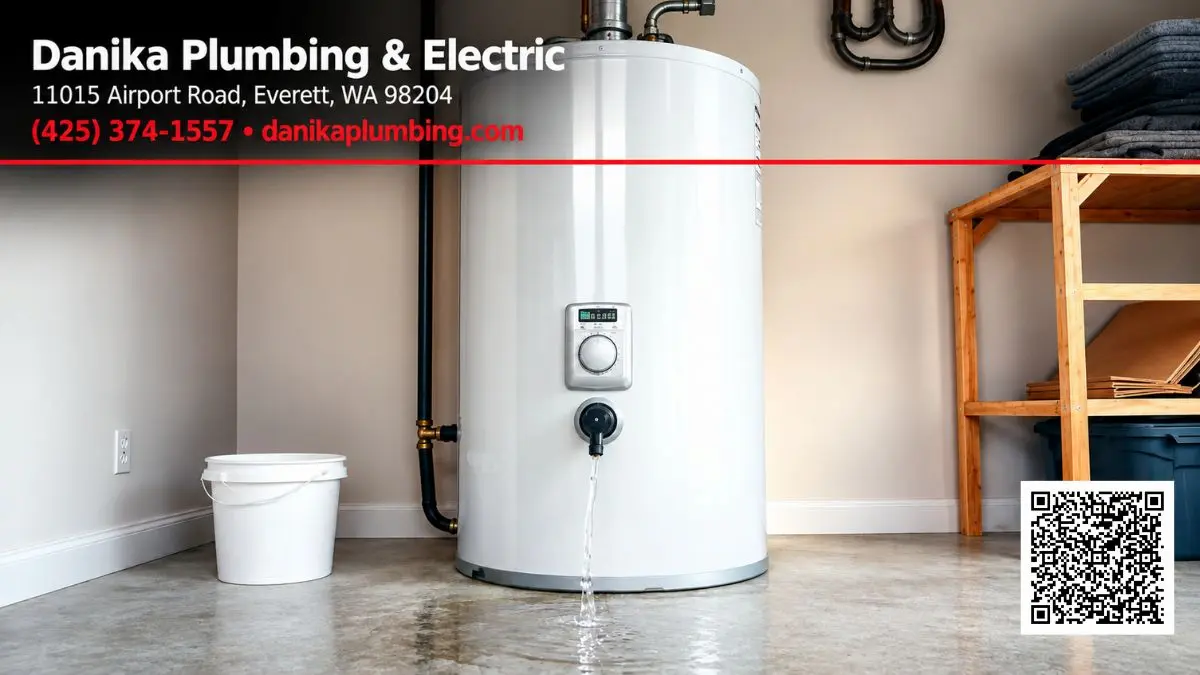
We’d rather look first. If the water heater is old, noisy and hasn’t been touched, in an Everett home the conversation is often “flush the tank, see how it behaves, and talk about replacement while it’s still your call.” And if water is pooling at the base of the water heater, that’s a plumbing problem, not a sediment problem: shut off the power or gas and call a licensed plumber.
What you need before you flush your water heater
Before you flush your water heater, get the gear together at home. You don’t need special plumbing tools. You need a garden hose long enough to reach a floor drain or the outdoors, somewhere downhill, because a garden hose that comes up short is the usual snag. Keep a bucket nearby for whatever drips when you connect the hose or remove it, and clear any storage away from the water heater so you can reach the tank drain without moving boxes.
Take a look at the existing drain valve before you commit. It’s the small valve near the bottom of the water heater, sometimes called a drain cock. If it’s already dripping, or the water heater has gone five or six years without a flush, the heater drain may refuse to seal afterward. That can turn a Saturday project into a plumbing repair, and it’s the main reason we say stop and call.
A few quick tips. Pick a day when nobody in the house needs a long hot water shower, because there’s no hot water while the water heater is empty and refilling. Connect the hose to the drain valve first, then open anything else. Make sure the hose reaches a spot that can take hot, gritty water. And know whether your water heater is electric or gas, since the shut-off is different: the power for electric, the gas valve set to pilot for gas. Think of it as one small job in your home’s plumbing system.
Flushing a water heater yourself: mostly yes, with a few buts
Whatever the answer to “how often should you flush a water heater” turns out to be for your tank, flushing it yourself is a reasonable Saturday job for a handy person at home, if you know the tank’s history. The steps are short, but each step matters, so do them in order:
- Turn off the water heater’s power (electric) or set the gas valve to pilot. Don’t skip this step.
- Shut the cold-water supply valve on the pipe at the top of the water heater. Turn the handle until the water stops.
- Connect a garden hose to the drain valve near the bottom of the water heater and run the hose to a floor drain or outside, somewhere downhill. Keep a bucket under the valve.
- Open a hot water faucet somewhere in the house to break the vacuum, then turn the drain valve open and let the water run through the hose.
- Once the water heater is empty, briefly turn the cold water supply back on to stir up and rinse out leftover grit. Repeat until the water coming out of the hose runs clear.
- Turn the drain closed and refill the water heater fully with cold water. The hot tap should sputter and then run steady. Only then turn the power back on or restore the gas.
- Remove the hose, empty the bucket, and make sure the drain and the pipe fittings above it aren’t dripping.
The buts: the water coming out is hot enough to scald, so take that seriously and keep the end of the hose where nobody is standing. And if you don’t know the water heater’s history, let someone else handle the first one on that water heater.
Tankless doesn’t flush, it descales
Tankless water heaters work differently. Ask “how often should you flush a water heater” about a tankless water heater and the answer changes, because there’s no tank to drain. What builds up is limescale inside the heat exchanger, and the fix is flushing the system with descaling solution. Our rule of thumb is every 12 to 18 months, and some manufacturers require annual descaling to keep the warranty intact, so check your paperwork. If your tankless water heater’s hot water has been coming out inconsistent or can turn cold partway through a shower, scale is one of the first places we’d look. It’s plumbing work that takes the right tools, so most people hand it off.
Maintenance, inspections and when to call a plumber
Clearing the tank is one piece of water heater maintenance. When we do water heater flushing and sediment removal as a service, it comes with a system inspection and performance testing: temperature accuracy, pressure levels and safety valve function. It’s better to catch a small issue with a water heater during a visit than during an emergency call, when the hot water is already gone.
Water heater inspections also go through the parts that wear out, such as the anode rod, the pressure relief valve, and the burner or elements, plus any rust or moisture around the water heater and its pipe fittings. If you’d rather have support the first time, or the drain won’t turn, that’s what our plumbing team is for. Danika Plumbing & Electric is a licensed plumbing contractor in Everett, and a service call costs less than water all over the floor at home.
Loose ends from the phone
How long does it take to flush a water heater?
Draining is the slow part. A 50-gallon water tank takes roughly 30 to 45 minutes to drain water through the standard drain valve, and then you repeat the rinse until the water runs clear. Plan a part of an afternoon rather than a few minutes.
What does a plumber charge to flush a water heater?
We don’t put a number in a blog post, because it depends on the water heater, how easy it is to reach, and whether the drain is in good shape. Call our plumbing office and we’ll talk through your home’s setup.
Does flushing make the water heater last longer?
It helps. Clearing sediment helps the water heater run efficiently and gives the elements an easier life. It’s not a guarantee, though. It won’t undo years of buildup, and water heaters fail for other reasons too, like an expired anode rod or simple age, so a flush is maintenance, not insurance.
If the drain valve won’t budge, stop there
A stuck or dripping valve is our cue, not yours. Call the office at (425) 374-1557 or email office@danikaplumbing.com and we’ll take a look. We can flush a healthy water heater, swap a bad drain valve, or tell you plainly that the water heater is past it.
Danika Plumbing & Electric
11015 Airport Road, Everett, WA 98204
Phone: (425) 374-1557 |
office@danikaplumbing.com
License # DANIKPL839PF