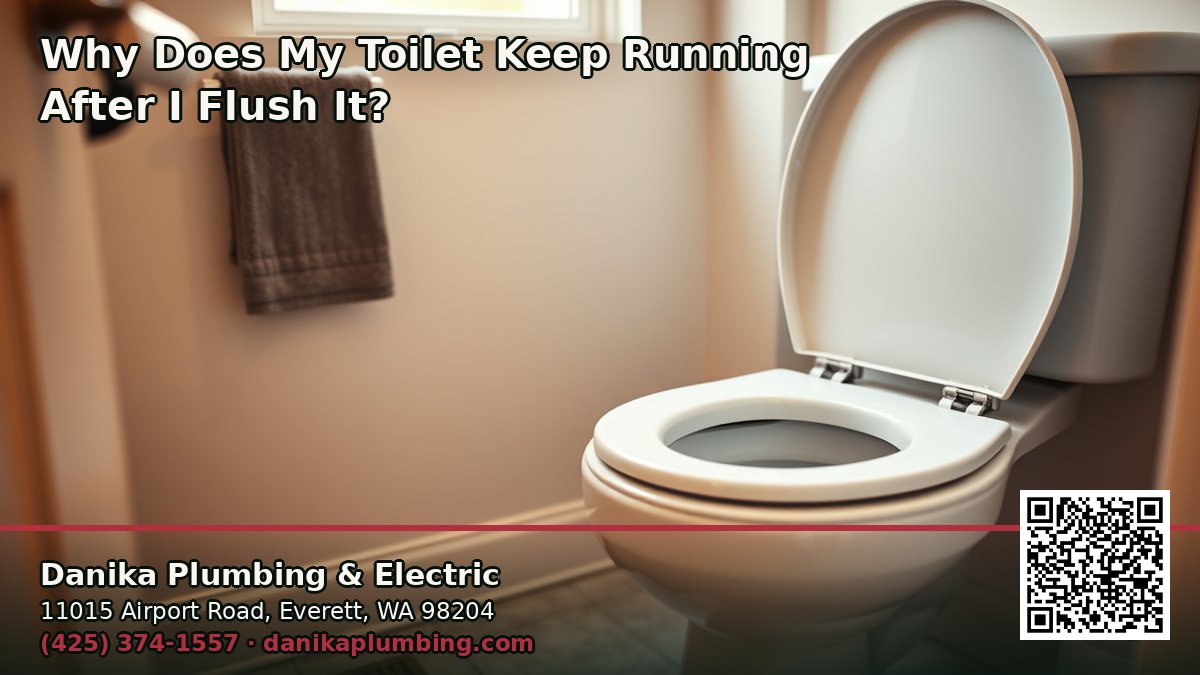
A toilet that runs all night is a small, steady leak with a flush handle on it. Most people tune it out. The hiss becomes part of the house, like the furnace kicking on, until the day somebody lifts the tank lid and wonders how long it has been going. If you are off 19th Ave SE in Everett, WA 98208 and you have been tuning out that hiss since spring, this is the walkthrough a plumber in Silver Lake would give you before touching a wrench. The answer is almost always one of a handful of worn or misadjusted parts inside the tank, and you can usually tell which one by watching the water level and listening.
Why toilets keep running in Silver Lake and Eastmont homes
Four parts do most of the damage: the rubber flapper that seals the bottom of the tank, the fill valve that refills it, the float that tells the fill valve when to stop, and the chain between the handle and the flapper. Rubber ages, grit gets into valves, floats drift out of adjustment. None of that is unique to this part of town.
What is local is the age of the hardware around those parts. A lot of the homes between Silver Lake Rd and 112th St SE went up decades ago, and the shutoff valve under the tank often has not been turned since the toilet went in. By the time anyone needs it, the nut, the rubber washer or the valve body can be worn or seized, which is how a five-minute flapper swap turns into something bigger. If the toilet itself is at that stage, our toilet repair and replacement page explains when we fix a part and when we replace the fixture.
The cost is not dramatic, but it is real. Water that runs through a toilet all day is billed like any other water in your home, and because the leak happens inside the porcelain there is no stain, no puddle, nothing to tell you the clock is running. The first sign is usually a utility bill a little higher than it used to be. We are not going to put a number on it, because it depends on how bad the leak is and what your rates look like.
What to check before you call anyone
Slide the tank lid off and set it somewhere it cannot fall, because porcelain does not forgive. Then watch. Is the water creeping up toward the tall open tube in the middle, or already spilling over it? Is there a steady trickle you can hear but not see near the bottom? Water pouring into the overflow tube means the fill side is overshooting. A hiss with a normal-looking level, and a bowl that keeps topping itself up, means the seal at the bottom is letting water slide through. Same noise, different part, which is why swapping parts at random gets expensive. Check in this order, least effort first:
- The chain. It needs a little slack. Too tight and it props the flapper open a hair; too loose and it slips under the flapper and keeps it from seating. Fix the length and listen. This one costs nothing.
- The flapper. The rubber seal at the bottom of the tank, and the part we replace more than any other. It warps, goes soft, picks up mineral film and stops sealing flat. Press on it gently with the tank half empty and see whether the running changes.
- The float. Set too high, the water keeps rising until it spills down the overflow tube. Sometimes it is an adjustment screw or a clip. Sometimes the float is stuck against the tank wall or waterlogged.
- The fill valve. The tall assembly that brings water in. Grit keeps it from closing fully, or the internal seal wears, and you get a hiss that never stops.
- The flush valve seat. If the flapper looks fine but the toilet still leaks into the bowl, the ring the flapper sits on can be pitted or crusty. At that point you are past a quick part swap.
One low-tech test that works: put a few drops of food coloring in the tank, do not flush, and come back a little later. Color in the bowl means the flapper or its seat is leaking. A clear bowl with a tank that keeps topping off into the overflow tube means the float or the fill valve.
If the toilet is still hissing after that, call Danika Plumbing & Electric at (425) 374-1557 or tell us what you are seeing here and we will bring the right part the first time.
When it is past DIY
Most running-toilet repairs are fair weekend projects. Shut off the supply, flush once to drain the tank, give the chain some slack, check the flapper sits flat, nudge the float down a notch, then turn the water back on and watch it fill. If you cannot get to it today, close the small shutoff behind the bowl and the running stops with it. Open it when someone needs the toilet, flush, close it again. It is a nuisance, but it beats paying for water all night.
The limit comes fast in older houses. If the shutoff will not actually stop the water, if the supply connection is corroded, if you have replaced two parts and it is still running, or if the toilet is old enough that all the tank hardware is brittle together, you are past what a home repair should ask of you. That is where a plumber serving Eastmont homes earns the call, because a visit looks at the shutoff, the supply connection and the tank parts together, so you are not left with one fixed part and three tired ones. A plumber for 98208 homes sees the same handful of parts fail over and over, and the order of checking never changes.
Replacement is the exception, not the rule. It comes up when the toilet itself is the problem: a cracked bowl, a leak through the porcelain, or a fixture that needs another repair every few months. If anything in there looks crusty or feels like it will snap, stop and call a plumber who works the Silver Lake and Eastmont side of town every day. Danika Plumbing & Electric would rather look at the whole toilet than watch you make a third trip to the hardware store. And if the toilet checks out but the water bill still does not, that is when it is worth having someone track down a silent leak somewhere else in the house.
Toilet keeps running after flush: FAQ
How long should a toilet run after you flush it?
Just long enough to refill the tank, then it should go quiet and stay quiet. A flush followed by a short burst of filling is normal. If you can still hear water moving a good while later, or the fill valve starts up on its own, something in the tank is letting water slip into the bowl.
Can I replace just the float, or does the whole fill valve go?
On most modern toilets the float is built into the fill valve, so replacing one means replacing the other, and the assembly is inexpensive and made to come out as one piece. Older setups with a ball on an arm let you adjust or swap just the float.
Do I need a plumber to replace a toilet fill valve?
Not necessarily. It is a tank-side job: shut off the supply, empty the tank, swap the part, reconnect the line. It becomes a plumber’s job when the shutoff under the tank will not hold, a connection is corroded or seized, or the toilet is old enough that other parts are right behind the one you are fixing.
Leave the tank quiet
Danika Plumbing & Electric, 11015 Airport Rd, Everett, WA 98204. We diagnose before we replace anything, and we serve Silver Lake, Lowell and Mill Creek homes from the Paine Field side of town, from Thornton A. Sullivan Park down past Hauge Homestead Park and Green Lantern Park. Call (425) 374-1557 or schedule a visit online and we will swap the part, test the shutoff and leave the tank quiet.