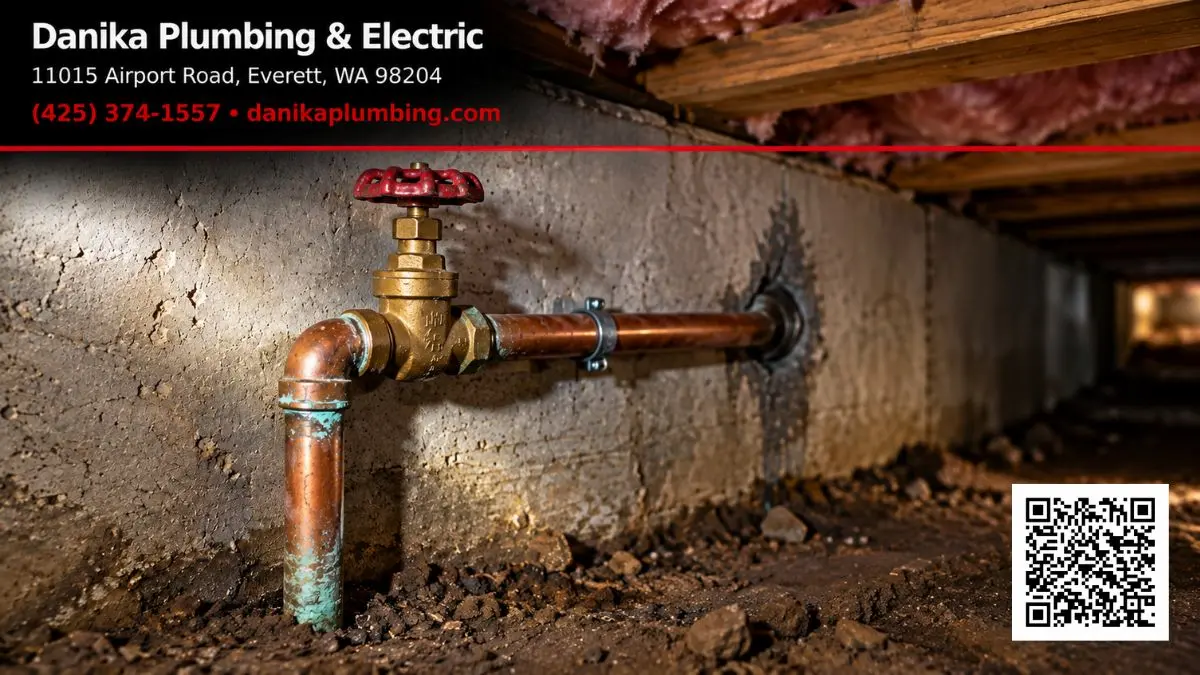
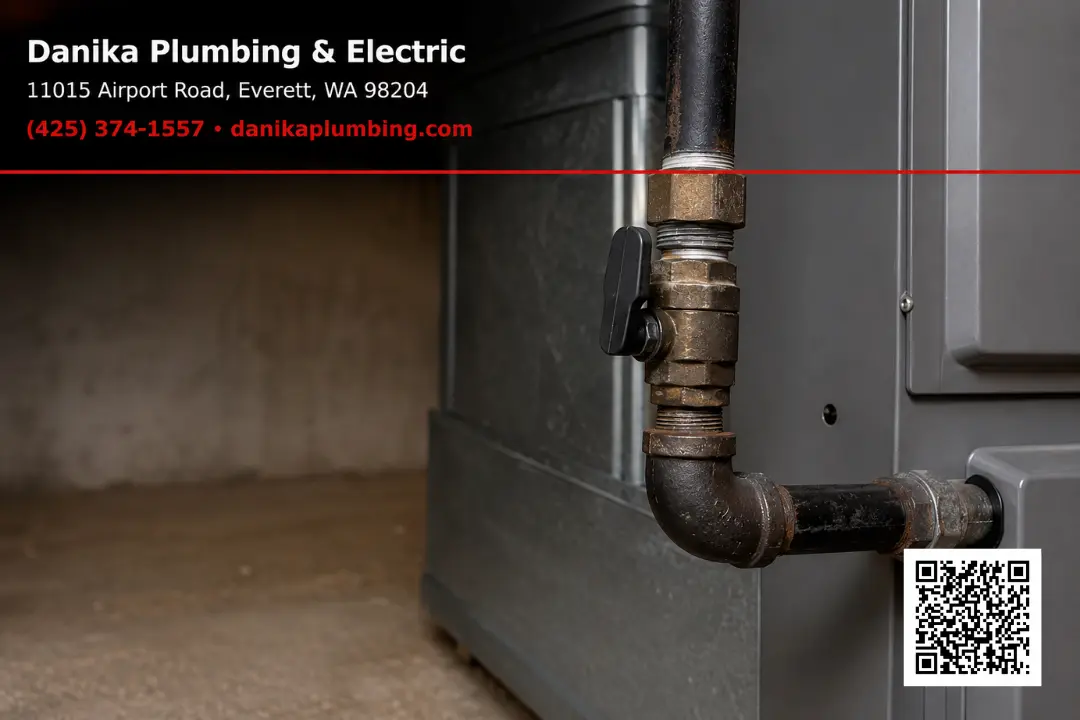
Most of the gas appliances we run into around Everett came with the house. A furnace in the crawl space, a water heater in the garage, a range somebody kept because it cooks better than the electric one, and a fireplace insert that gets used maybe six weeks a year. Nobody thinks about the pipe feeding any of it, and most people don’t know how to tell if you have a gas leak in your Everett home until something smells wrong.
And that’s the tricky part. A gas leak isn’t like a water leak, where you get a stain on the ceiling and a week to think it over. You notice it with your nose, your ears, sometimes your headache, and then you have to act before you’ve finished talking yourself into believing it.
Read this part first if you smell gas right now
If you smell gas, don’t stop to investigate. Leave. Take everyone and the dog, go outside, and get a good distance from the house: the neighbor’s driveway, not your own porch. This is a gas emergency. Treat any emergency situation like this one the same way: leave first, ask questions later.
On the way out, don’t flip a light switch either direction. Don’t unplug anything, don’t hit the garage door opener, don’t start a car in an attached garage. Any of those can throw a spark, and a spark is the one ingredient a gas leak is missing.
Once you’re clear, call 911, then call Puget Sound Energy at 1-888-225-5773. That’s the utility that serves gas customers in Everett and Snohomish County, and their emergency line runs around the clock. They don’t charge to come look, and they’d much rather clear a false alarm than get the other call. Only once they’ve made the house safe does a plumber enter the picture.
That’s the whole emergency answer. The rest of this is for the quieter version: the smell you caught once and can’t find again.
There’s no single sign, and here’s why
A leaking gas will usually announce itself before it ever becomes dangerous, thanks to a warning built into the gas on purpose. Natural gas has no smell on its own. What you’re smelling is mercaptan, a sulfur compound the utility mixes in specifically so a leak announces itself: that distinctive rotten egg, rotten-egg-scented note utilities add on purpose. It was added because people kept not noticing, which tells you something about how well we detect odorless things. Most gas leaks in Everett homes start small, with that sulfur smell as the only early warning.
So how can you tell if you have a gas leak?
The signs, roughly in the order we hear about them:
- Rotten eggs, or something like sulfur. Sharp, chemical, a little skunky. Not food going off. More like a chemistry set.
- A hiss, whistle, hissing sound, or faint roar near a stove, furnace, water heater, or the flex connector behind an appliance. Sometimes audible even when the appliance is off, which is the part that unsettles people.
- Headaches, dizziness, nausea, or heavy tiredness that lifts when you step outside and returns when you come back in. That pattern matters more than any single symptom.
- Pets acting off. Smaller and lower to the ground, so they often show it first.
- Outside: an odd patch of dead grass, dirt blowing up from the ground, a puddle bubbling for no reason. Those point at the buried line between meter and house, not anything indoors.
One sign alone can have an innocent explanation. Two together is where we’d stop guessing.
Checks you can do yourself this afternoon
Not very far, and only when there’s no smell in the air and nobody feels unwell.
If you’ve already got a live odor, this section isn’t for you. That’s the leave-and-call situation above. But if you just hooked up a dryer, or want to satisfy yourself the fitting behind the range is sound, mix dish soap and water until it’s properly sudsy, brush it over the threaded joints and the connector, and watch. Escaping gas pushes the film into bubbles that keep growing, not the one-off bubbles from spraying but a cluster that builds while you stare at it.
When to call a licensed plumber
Treat gas safety like a pass or fail test: any doubt is a fail, and that’s when you call a professional instead of guessing. What we’d rather you didn’t do: chase a smell with a lighter, take a fitting apart for a look, or snug up a gas joint with a wrench because it seems loose. Gas piping isn’t where an honest guess gets you most of the way there. Washington law (RCW 18.106.150) does let a homeowner pull a permit and do their own gas piping, but the pressure test, the inspection, and the safety of everyone in the house are on you if something goes wrong. Snug-looking and gas-tight are different states, and the wrench tends to find that out the hard way.
How we handle a gas leak call
Once you can tell if you have a gas leak in your Everett home, the order you call people in matters, and people get it backwards all the time.
Active smell, symptoms, or a hiss you can hear: out of the house, then 911 and Puget Sound Energy at 1-888-225-5773, from somewhere safe. They own the buried gas service line up to and including your meter, they respond around the clock, and they’ll shut the gas off at the street if that’s what it takes.
No smell, but something’s off: the bill, the pilot, a flame that looks wrong. That’s a licensed plumber’s call. The piping on your side of the meter, the appliance connectors, the shutoff valves, the run out to a garage heater: that’s our side of the line, and where a leak test and a repair actually happen.
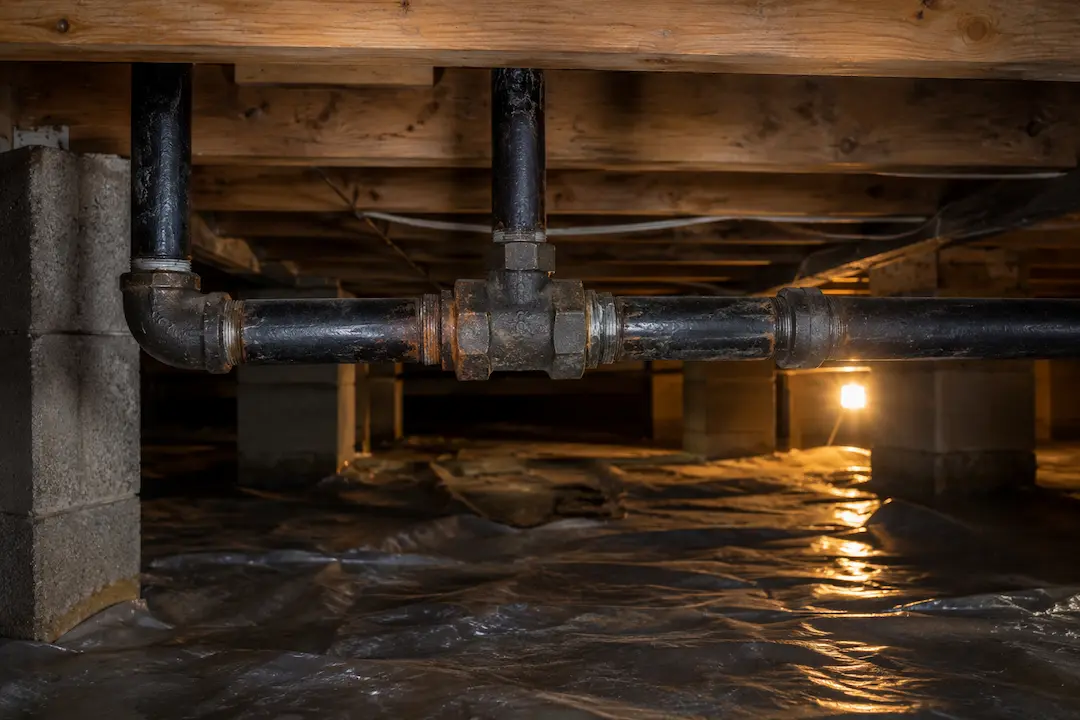
Worth saying plainly: if the utility comes out, red-tags an appliance and shuts something off, they aren’t going to repair your house piping. That’s not a brush-off, just where their responsibility ends and ours begins. Expect the handoff so it doesn’t feel like you got passed between one service call and the next.
Everett homes don’t all age the same way
A lot of the housing stock here has been added onto, re-piped, or converted at least once. We’ve crawled under Silver Lake ramblers where the gas run to the furnace was clearly done a decade apart from the run to the water heater, with an undocumented fitting in between. Older places near the waterfront sometimes still have a capped stub from an appliance that left in the nineties.
Those transitions, old work meeting newer work, are where we find problems. Rarely a dramatic split in a pipe. Usually a threaded joint that held twenty years and finally gave up a little, or a flexible connector nudged once too often when somebody pulled the range out to clean behind it.
The other local wrinkle is the crawl space. We put mechanical equipment under the house here rather than in a basement, and a crawl space doesn’t move air the same way. Gas loose down there can sit a while before it works up into the living space, part of why a leak under the floor goes unnoticed longer than one behind the stove.
Signs your home is telling you something’s wrong
- A gas bill climbing while nothing about your habits changed.
- A pilot light that keeps going out.
- A burner flame that’s yellow and lazy instead of crisp and blue.
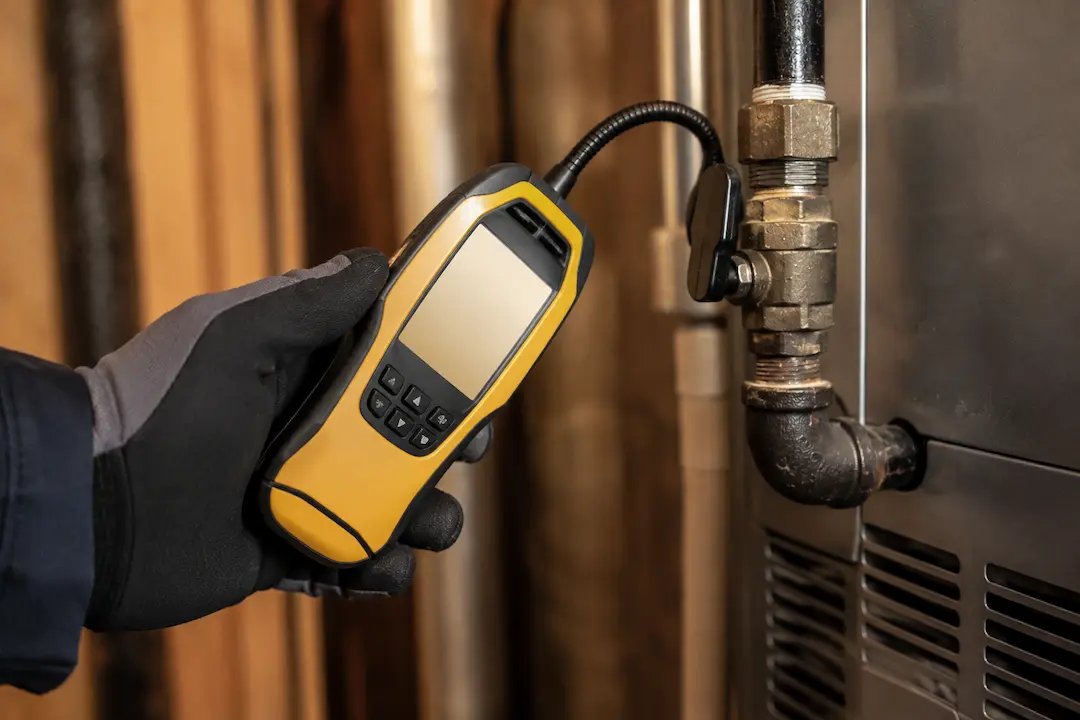
None of those is proof alone, but two in the same month is worth professional leak detection: a combustible-gas detector settles the detection question in minutes, not weeks.
What happens if a slow leak goes unnoticed
This is the version that worries us more than the dramatic one. A gas leak in Everett homes can sit at a very low, slow release long enough that the odorant never builds to a level you’d consciously register, especially in a vented crawl space or drafty garage. It also creeps up on you: noses adapt, and a smell that’s always there stops registering as a smell at all. The people living with a slow leak are usually the last to notice, while a visitor clocks it in the entryway.
Could that smell be something else?
Before you spend a night convinced the house is going to go up, know that a few ordinary things smell close enough to fool people, and we’ve been called out for all of them. A dry floor drain or rarely-used guest bath lets sewer gas up through the trap, and that carries its own sulfur note. A failing car battery vents something similar. So does a bag of onions past their prime.
The useful distinction: sewer smell is heavier, wetter, tied to one room with a drain in it. Gas odorant is dry and sharp, and strongest near an appliance or a pipe. If it’s the second one, stop diagnosing and go outside.
A few pages on our site that go deeper
More information on each of these, if you want to go deeper on a specific service:
- Gas line installation and repair
- Fast emergency plumbing response
- Our water heater team
- The local Everett plumbing service
A few more gas safety habits worth keeping
Good gas safety in an Everett home doesn’t take much: know where your main shutoff is, keep the area around your natural gas appliances clear, and don’t ignore small leaks just because they seem harmless. A yearly check on the connections behind your range and water heater catches most gas leaks before they turn into anything bigger. If you’re planning a new gas line installation, or adding a natural gas appliance to a home that didn’t have one before, loop in a licensed plumber early so the line and the permit are handled together, not as an afterthought. For more information on servicing a specific appliance, our team can walk through it during a routine visit. Basic gas safety is mostly about noticing your home early and scheduling a routine service visit before a small natural gas problem grows into a bigger one.
Home safety around natural gas comes down to a short list. Keep flammables away from your water heater and furnace. Test your carbon monoxide alarm on the same schedule as your smoke alarm, since a gas safety habit only helps if you actually keep it up. Know your home’s gas shutoff before you need it, not while you’re standing in an emergency wondering where it is. And if a routine service visit turns up a worn connector or an aging gas line, treat the fix as normal home upkeep rather than a crisis, because catching a small natural gas issue early is exactly what keeps it from turning into a real gas emergency later.
Our service area covers Everett and the surrounding Snohomish County communities, and every service call starts the same way: a straightforward safety check on the gas line and connections, an honest explanation of what we found, and a repair plan sized to the actual problem rather than a guess. Whether it’s one loose connector or a full gas line installation, the same gas safety standard applies to every home we work on, and every leak we’re called out for gets treated with the same care as the last one.
A quick safety checklist for natural gas appliances
- Know where your gas shutoff is before you need it, not during an emergency.
- Keep flammable items clear of natural gas appliances like your water heater and furnace.
- Schedule an annual safety check on the gas line and connections behind each appliance in your home.
- Treat any hiss, odor, or unexplained gas bill increase as a safety issue worth a professional look, not something to sit on.
- Keep your natural gas utility’s emergency number somewhere easy to find, not just buried in your phone, since acting fast is most of what gas safety comes down to.
Questions people ask us after the gas company leaves
Is it free to get a gas leak checked?
Puget Sound Energy doesn’t bill you for an emergency response. Reporting a suspected leak costs nothing, and they’d rather come out on a false alarm than have you talk yourself out of a real one. A plumber’s visit to test and repair the piping on your side of the meter is regular paid work. Better you hear that up front than be surprised by it.
Will a carbon monoxide detector pick up a natural gas leak?
No, and this catches people out. A CO alarm detects carbon monoxide, a byproduct of fuel burning badly. Carbon monoxide symptoms like headaches, dizziness, and drowsiness can look a lot like early gas leak signs, but they come from a different problem entirely. Raw natural gas that never got burned is a different thing, and a standard CO alarm sits there silent through it. Combination units exist; check the box and see which job yours is actually doing.
Can I use soapy water to find the leak myself?
For confirming one fitting you already suspect, with no odor in the air, yes, that’s a legitimate check. For hunting a smell you can’t place, no. That has you walking around a house with an unknown gas concentration in it, which is the exact situation the leave-first rule exists for.
How long does a gas line repair take?
Depends almost entirely on the location of the leak. A straightforward leak repair on a bad appliance connector or a single failed joint we can reach is short work. A leak in a run buried under a driveway, or inside a wall, turns into a bigger day. We’d rather look first than quote a timeline over the phone and walk it back later.
We only use gas for the fireplace. Does that change anything?
It changes the odds, not the rules. A fireplace sitting unused most of the year still has a live line and a shutoff feeding it, and the seasonal ones are where we find neglected valves and dried-out connections, precisely because nobody’s looked since last winter.
Gas work is one job we’d rather you didn’t sleep on.
If you’ve had a smell you can’t explain, a pilot that won’t stay lit, or a gas bill that stopped making sense, we’ll come test the piping and tell you what’s actually going on. This page is general information, not a substitute for a professional inspection. A gas leak in Everett homes doesn’t wait for a convenient time, and neither should you. And if you’re smelling it right now, close this page, get outside, and call the gas company first. We’ll still be here after, and gas safety in your home is always worth the call.
Danika Plumbing & Electric
11015 Airport Road, Everett, WA 98204
Phone: (425) 374-1557 |
office@danikaplumbing.com
Licensed in Washington (DANIKPL839PF)