
Hybrid Water Heaters (Heat Pump Water Heaters)
Home » Hybrid Water Heaters
Hybrid Water Heaters
(Heat Pump Water Heaters)
We’ve installed enough hybrid water heaters over the years to know exactly what homeowners want to hear: is this thing actually worth it, will it work in my house, and what’s the catch?
Fair questions.
A hybrid water heater — also called a heat pump water heater — is one of the most energy-efficient ways to heat water for your home. It uses heat pump technology to pull warmth from the air around it instead of generating heat from scratch like a traditional tank. That fundamental difference can cut your water heating costs significantly — often by 50-70% or more compared to a standard electric water heater, depending on your usage patterns and local utility rates.
But it’s not a magic box.
Hybrid systems have specific installation requirements, they need more space than conventional tanks, and they work best in certain environments. When they’re a good fit, they’re excellent. When they’re forced into the wrong setup, they underperform and frustrate homeowners.
This page walks through how hybrid water heaters actually work, what makes them different from tankless and traditional tank systems, and what you should know before installing one in your home.
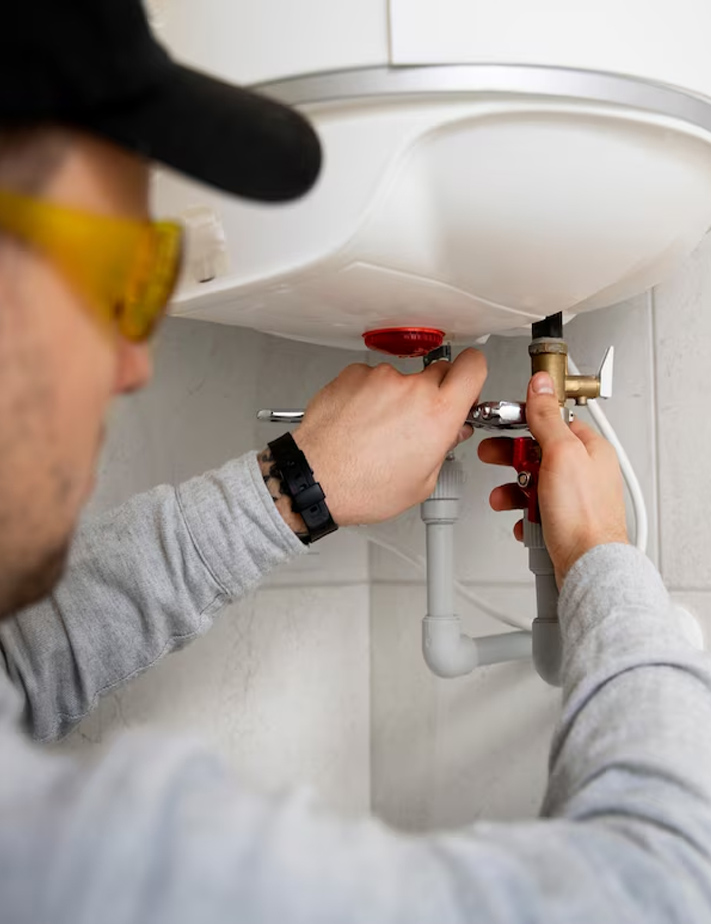
What Is a Hybrid Water Heater?
A hybrid water heater combines two technologies in one unit: a heat pump and traditional electric heating elements.

The heat pump is the primary workhorse. It operates like a reverse refrigerator, extracting heat from the surrounding air and transferring it into the water tank. This process is incredibly efficient because you’re moving heat rather than creating it.
When hot water demand spikes — say, three showers back-to-back on a cold morning — the unit switches to its backup electric heating elements to keep up. That’s the “hybrid” part. You get the efficiency of a heat pump with the reliability of conventional electric heating when you need it.
Most hybrid units have a 50-80 gallon storage tank, which means you’re still working with stored hot water, just heated in a smarter way.
They’re not tankless. They’re not conventional electric tanks. They’re something in between, designed to deliver better efficiency without sacrificing performance.
How Hybrid Water Heaters Work
Here’s what’s actually happening inside a hybrid water heater.
The unit pulls in ambient air from the room. A fan draws that air across an evaporator coil, where refrigerant absorbs the heat. Even “cool” air around 50-70°F contains usable thermal energy.

That refrigerant, now carrying absorbed heat, moves through a compressor. The compression process concentrates the heat, raising the temperature significantly.
The hot refrigerant then flows through a condenser coil wrapped around or inside the water tank, transferring that concentrated heat into the water. The refrigerant cools back down and cycles through the system again.
As a byproduct, the unit exhausts cooler, dehumidified air. If it’s installed in a basement or garage, you’re essentially getting free dehumidification. Some homeowners love this. Others find the cool exhaust air annoying in winter.
When demand exceeds what the heat pump can handle, the electric elements kick in automatically. You don’t notice the switch. You just keep getting hot water.
The entire process uses about one-third the electricity of a conventional electric tank heating the same amount of water. That’s not marketing spin. That’s thermodynamics.
Why Homeowners Choose Hybrid Water Heaters
-
Energy Savings This is the big one. Hybrid water heaters can use up to 60-70% less energy than standard electric water heaters in optimal conditions.
For a household using 60-70 gallons of hot water daily, that can translate to $300-500 per year in energy savings, depending on local utility rates. Over the 10-15 year lifespan of the unit, that adds up. -
Rebates and Incentives Many utility companies and government programs offer rebates for high-efficiency water heaters. Rebates can range from $300 to $1,000 or more, which helps offset the higher upfront cost.
We've seen rebate programs change year to year, so it's worth checking what's currently available before purchasing. - Environmental Impact If reducing your home's carbon footprint matters to you, a hybrid system makes a measurable difference. Lower energy consumption means fewer emissions, especially if your electricity comes from fossil fuel sources.
- Dehumidification Bonus The cool exhaust air can be a feature, not a bug. Basements and garages often have humidity issues. A hybrid water heater naturally dehumidifies the space as it operates. We've had homeowners tell us they got rid of their standalone dehumidifier after installing a hybrid unit. Free secondary benefit.
- Reliable Hot Water Supply Because you're working with a storage tank, you get the same reliable supply you'd expect from a traditional tank heater. The heat pump just makes the process more efficient.

Is a Hybrid Water Heater Right for Your Home?
Not every home is a great candidate for a hybrid system. Here's what actually determines whether it'll work well in your situation.

-
Space Requirements Hybrid water heaters are larger than conventional tanks. Most units are around 6 feet tall and 2 feet in diameter.
More importantly, they need clearance around the unit for airflow. You typically need at least 1,000 cubic feet of air space — roughly a 10x10 room with 8-foot ceilings. Tight closets don't work. Small mechanical rooms can be borderline. Garages and basements are usually ideal. -
Ambient Temperature Heat pumps work by extracting heat from the air. If the surrounding air is consistently below 40-45°F, efficiency drops significantly.
Unheated garages in cold climates can be problematic. Conditioned basements or heated garages work well. -
Noise Considerations Hybrid water heaters aren't silent. The compressor and fan generate a low hum, somewhere between a refrigerator and a dehumidifier.
If the unit is in a basement or garage, most people don't notice. If it's near living spaces or bedrooms, the noise can be annoying. -
Hot Water Usage Patterns For average to high hot water usage, hybrid systems excel. If you're heating water for showers, laundry, dishwashing throughout the day, the efficiency savings are significant.
For very low usage households, the energy savings might not justify the higher upfront cost. A well-insulated conventional tank could make more sense financially. -
Existing Infrastructure If you're replacing an electric water heater, the electrical infrastructure is usually already in place. That keeps installation costs reasonable.
If you're switching from gas, you're dealing with more complexity and expense. Not impossible, but the cost-benefit equation changes.
Hybrid Water Heater Installation
Installing a hybrid water heater isn't a drop-in replacement for a conventional tank, even though they occupy similar space.
- Condensate Drain Line Because the unit dehumidifies air, it produces condensate water. That water needs somewhere to go. You'll need a condensate drain line routed to a floor drain, sump pump, or exterior drainage. If none of those exist near your water heater location, we're running new drainage. That's additional labor and cost.
- Air Filter Access Hybrid units have an air filter that needs regular cleaning or replacement. Installation needs to account for filter access without requiring furniture to be moved or panels removed. Poor filter access leads to neglected maintenance, which kills efficiency.
- Electrical Considerations Most hybrid water heaters run on a standard 240V/30A circuit, similar to conventional electric tanks. If your existing circuit is correctly sized, you're usually fine. Some older installations have undersized breakers or questionable wiring. We verify and upgrade when necessary. You don't want a water heater tripping breakers or creating safety issues.
- Sound Dampening If the unit is near living spaces, sound dampening pads or vibration isolation can make a real difference. We evaluate this during the site assessment.
- Proper Clearances We've seen DIY installations where the unit is crammed into a space with barely enough room to open the access panels, let alone allow for proper airflow. Airflow isn't optional. It's how the system works. Restricted airflow means poor performance and premature compressor failure.
- Pipe Connections Heat pump water heaters can produce vibration. Proper use of flexible connectors on the water lines prevents stress on the plumbing connections. We also install thermal expansion tanks when required by code or when the plumbing system needs one to prevent pressure buildup.
- Installation Timeline A straightforward replacement typically takes 3-5 hours. If we're running new condensate drains, upgrading electrical, or dealing with tight access, it can take longer. We give realistic timeframes during the initial assessment. No surprises.

Hybrid Water Heater Repair & Troubleshooting
Hybrid water heaters have more components than conventional tanks, which means more potential points of failure. But most issues are repairable.
Common Issues We See

- Compressor Failure The compressor is the heart of the heat pump system. When it fails, the unit can still heat water using the electric elements, but you lose all efficiency benefits. Compressor failure is usually covered under warranty for several years, but labor for replacement isn't cheap. This is one reason proper installation matters — poor airflow and overheating shorten compressor life.
- Refrigerant Leaks Less common, but it happens. Low refrigerant means poor heat transfer and reduced efficiency. Refrigerant systems are sealed. Leaks indicate a manufacturing defect or installation damage. These require specialized equipment to diagnose and repair.
- Clogged or Dirty Air Filters This is the most common performance issue, and it's entirely preventable. A clogged filter restricts airflow, forcing the heat pump to work harder or default to electric heating. Efficiency drops. Energy bills rise. Regular filter cleaning solves this. Most homeowners forget.
- Electric Element Failure Even though the electric elements are backup, they still get used. They can fail just like in a conventional tank. Element replacement is straightforward. We stock common sizes and can usually handle this same-day.
- Control Board Issues The electronic controls manage the heat pump operation, temperature settings, and mode switching. Control board failures are less common but require specialized replacement parts.
- Temperature and Pressure Relief Valve Problemss Same as any water heater. The T&P valve can develop leaks or fail to operate correctly. Standard maintenance item.
When to Call for Service
- No hot water despite unit running
- Lukewarm water only
- Unit cycling constantly
- Unusual noises (grinding, squealing, loud vibration)
- Water pooling around the base
- Error codes on the display
- Significantly higher electric bills without usage changes
Most hybrid water heaters have diagnostic modes and error codes. We use those to pinpoint issues quickly rather than guessing.
Maintenance, Efficiency & Lifespan
Hybrid water heaters last 10-15 years with proper maintenance. Neglect maintenance, and you'll see failures on the earlier end of that range.
Regular Maintenance Tasks
-
Air Filter Cleaning (Every 1-3 Months)
This is the single most important maintenance task. Remove the filter, rinse it with water, let it dry completely, reinstall. Takes five minutes. Prevents hundreds of dollars in efficiency loss. -
Annual Tank Flush
Sediment builds up in the tank over time, especially in areas with hard water. Flushing the tank once a year removes sediment and maintains heating efficiency. We drain a few gallons, check for excessive sediment, and flush until the water runs clear. -
Anode Rod Inspection (Every 2-3 Years)
The anode rod prevents tank corrosion. When it's depleted, the tank starts corroding. Replacing the anode rod extends tank life significantly. Hybrid tanks have anode rods just like conventional tanks. Most homeowners don't even know they exist. -
Condensate Drain Check
Make sure the condensate drain line isn't clogged. A blocked drain can cause the unit to shut down or leak water. Quick visual check every few months is enough. -
T&P Valve Test
Test the temperature and pressure relief valve annually to ensure it operates correctly. Lift the lever briefly and let it snap back. Water should discharge and then stop cleanly. -
Efficiency Optimization
Set the temperature to 120°F unless you have specific reasons to go higher. Higher temps waste energy and increase scalding risk. Use "efficiency" or "heat pump only" mode if your unit has selectable modes and your hot water usage is moderate. The unit will rely more heavily on the heat pump, maximizing savings. Use "hybrid" or "auto" mode if you have high or unpredictable hot water demands. The system will automatically balance between heat pump and electric elements. -
Expected Lifespan
The heat pump components (compressor, refrigerant system) typically last 10-12 years. The tank itself can last 12-15 years with proper anode rod maintenance. Electric heating elements last 8-12 years on average and are inexpensive to replace. You'll likely replace the unit for efficiency or feature upgrades before it completely fails, much like a conventional water heater.

Hybrid vs Tankless vs Traditional Tank Water Heaters
We get asked constantly which type of water heater is "best." The honest answer: it depends on your situation, budget, and priorities.
Hybrid Water Heaters
- Best for: Households with moderate to high hot water usage seeking energy efficiency without sacrificing storage capacity
- Energy efficiency: Excellent (60-70% more efficient than electric tanks)
- Upfront cost: $1,200-2,500 for the unit, plus installation
- Ongoing costs: Low operating costs, moderate maintenance
- Hot water delivery: Reliable stored supply, same as conventional tanks
- Space requirements: Significant — needs clearance for airflow
- Lifespan: 10-15 years
- Best installation locations: Conditioned basements, heated garages, mechanical rooms with adequate space
Tankless Water Heaters
- Best for: Homes with limited space, consistent hot water demand, or where running out of hot water is a major concern
- Energy efficiency: Very good (gas models) to excellent (high-end electric models)
- Upfront cost: $1,000-3,500 for the unit, plus installation (gas models require venting upgrades)
- Ongoing costs: Low energy costs, descaling maintenance needed in hard water areas
- Hot water delivery: Unlimited but flow-rate limited — can struggle with simultaneous high-demand fixtures
- Space requirements: Minimal wall-mounted footprint
- Lifespan: 15-20 years with proper maintenance
- Best installation locations: Utility closets, exterior walls, anywhere space is limited
Traditional Tank Water Heaters
- Best for: Budget-conscious replacements, straightforward installations, households with predictable hot water usage
- Energy efficiency: Baseline (least efficient of the three)
- Upfront cost: $400-1,200 for the unit, plus installation
- Ongoing costs: Higher energy costs, minimal maintenance
- Hot water delivery: Reliable stored supply, capacity limited by tank size
- Space requirements: Moderate — needs floor space but no special clearances
- Lifespan: 8-12 years
- Best installation locations: Anywhere with floor space and access to utilities
If you want deeper comparisons, we’ve written separate guides on tankless water heaters and traditional tank water heaters that go into more detail about installation requirements, operating costs, and when each system makes the most sense. This page focuses specifically on hybrid systems, but understanding all three types helps you make the right choice for your home.
Why Professional Experience Matters with Hybrid Systems
Hybrid systems are still relatively new compared to traditional tanks, which means installer experience varies widely. You can't install a hybrid water heater the same way you'd install a conventional tank. The technical requirements are different, the failure modes are different, and the long-term performance depends heavily on installation quality.
-
Site Assessment
Before recommending a hybrid system, we evaluate the installation location. Clearances, ambient temperature, noise considerations, drainage access, electrical capacity. If any of those are problematic, we discuss it upfront. Installing a hybrid unit in a space that doesn't support it properly just creates frustrated homeowners and service callbacks. -
Proper Condensate Management
We've seen DIY installations where the condensate line drains into a bucket that needs regular emptying. Or worse, into an area without proper drainage, causing water damage. Condensate management needs to be permanent and code-compliant. That means proper slope, secure connections, and drainage to an appropriate termination point. -
Vibration and Sound Control
Heat pump compressors create vibration. Improper mounting or rigid pipe connections can amplify that vibration and transmit sound throughout the plumbing system. Flexible water connectors, isolation pads, and proper mounting reduce noise and vibration significantly. -
Electrical Safety
Undersized circuits, loose connections, or incorrect breaker sizing create safety hazards and nuisance tripping. We verify electrical capacity, check wire sizing, ensure proper grounding, and confirm everything meets current code requirements. -
T&P Valve Test
Test the temperature and pressure relief valve annually to ensure it operates correctly. Lift the lever briefly and let it snap back. Water should discharge and then stop cleanly. -
Understanding Operating Modes
Many hybrid water heaters have multiple operating modes: heat pump only, hybrid/auto, electric only, vacation mode. We explain what each mode does and when to use it. Homeowners who understand their system get better performance and efficiency. -
Expected Lifespan
The heat pump components (compressor, refrigerant system) typically last 10-12 years. The tank itself can last 12-15 years with proper anode rod maintenance. Electric heating elements last 8-12 years on average and are inexpensive to replace. You'll likely replace the unit for efficiency or feature upgrades before it completely fails, much like a conventional water heater. -
Warranty Protection
Most manufacturer warranties require professional installation. DIY or unlicensed installations void the warranty. That's a costly risk on a $2,000+ water heater. -
Realistic Expectations
We set honest expectations. Hybrid water heaters aren't perfect for everyone. They're quieter than some homeowners expect and louder than others hope. They work brilliantly in the right conditions and poorly in the wrong ones. Selling someone the right system the first time beats replacing the wrong system twice.

Serving Homeowners Throughout Our Service Area
We install and service hybrid water heaters throughout the greater Seattle Area (Snohomish and King Counties). From coastal communities dealing with salt air corrosion to inland areas with hard water challenges, we’ve worked in enough varied conditions to know what performs well and what causes problems. Local experience matters when you’re dealing with regional water quality, climate variations, and building practices that differ from one area to another.
Success Stories from Real Homeowners
Frequently Asked Questions About Hybrid Water Heaters
Schedule a Consultation
If you’re considering a hybrid water heater or comparing it to other options, we’re happy to walk you through the details specific to your home.
We’ll assess your space, discuss your hot water usage, explain what rebates might be available, and give you honest recommendations based on what actually makes sense for your situation.
No pressure. No sales tactics. Just straightforward guidance from people who install these systems regularly and know what works.