Most folks don’t think about plumbing until something goes sideways at 11 p.m. on a Tuesday. And really, why would you? Until water shows up where it shouldn’t, the system just… works. Or it appears to.
But every property in Everett — from the 1920s craftsmans tucked into Grand Ave, to the new townhomes going up near Silver Lake, to the warehouse spaces out near Paine Field — runs on the same three plumbing systems working quietly in the background. They’re separate. They do different jobs. And when one of them starts to fail, it almost always shows up as a problem somewhere in another one.
Out here we get about 41 inches of rain a year (the U.S. average is 38, just so you know), and a chunk of that falls in November alone — roughly 6 inches across 21 wet days. That kind of weather puts more wear on your plumbing than the same setup would see in Boise or Bend. Older galvanized lines corrode from the inside. Cast iron sewers crack from soil settling around the Snohomish River bluffs. Side yards turn into ponds because the storm drainage was undersized when the house went up in ’78.
This is what our Everett plumbing team works on every day out of our shop on Airport Road. Here’s a plain-English breakdown of the three plumbing systems running through your property, what each one does, and where they tend to fail in this corner of the Pacific Northwest.
How These Three Systems Actually Hold Up Around Everett
Three systems. That’s it. Supply, waste, and drainage — every house in town runs on the same setup, but the way each one ages depends a lot on where you bought and when the house was built. The 1920s craftsmans on Grand Ave have galvanized supply lines that have been narrowing internally since the Eisenhower administration. The 1960s and 70s splits around Pinehurst still have a fair amount of cast iron drain pipe. And the new builds going up near Silver Lake have PEX everywhere with a manifold system most plumbers from the previous generation never trained on.
What ties them all together: weather. Snohomish County’s wet half of the year (October through May, no real letup) hammers the drainage system in ways the other two never have to deal with. We’ve stood in dozens of basements where the supply lines and waste pipes were technically fine, but the foundation drainage was so undersized for 41 inches of annual rain that the house was effectively drowning from the outside in. If you’re heading into a remodel, our breakdown of renovation plumbing cost-savers covers what to inspect before walls open up.
For most Everett homeowners, the system most likely to fail first is the one you can’t see. Buried supply lines, sewer laterals, foundation drains — they go years without complaining, then announce themselves at the worst possible time. Pre-purchase inspections often miss them too, which is why we put together our residential plumbing inspection checklist — it walks all three systems in order, in plain English.
If you’re already noticing slow drains, pressure drops at the tap, or surface water near the foundation, that’s a same-week call before it becomes a same-night 24/7 emergency plumbing situation. Or just reach the Everett plumbing team directly — we’ll scope it before we guess.
Potable Water — Where Your Drinking Water Comes From (And Where It Goes Wrong)
This is the line bringing fresh water into the building. And in Everett, that water has a pretty interesting backstory — it starts as snowmelt and rain in the Sultan Basin about 30 miles east of us, gets collected in Spada Lake Reservoir (roughly 50 billion gallons of storage), runs through the City of Everett Water Filtration Plant, and then travels through 48- to 51-inch transmission mains before splitting off into the small service line that ties into your house.
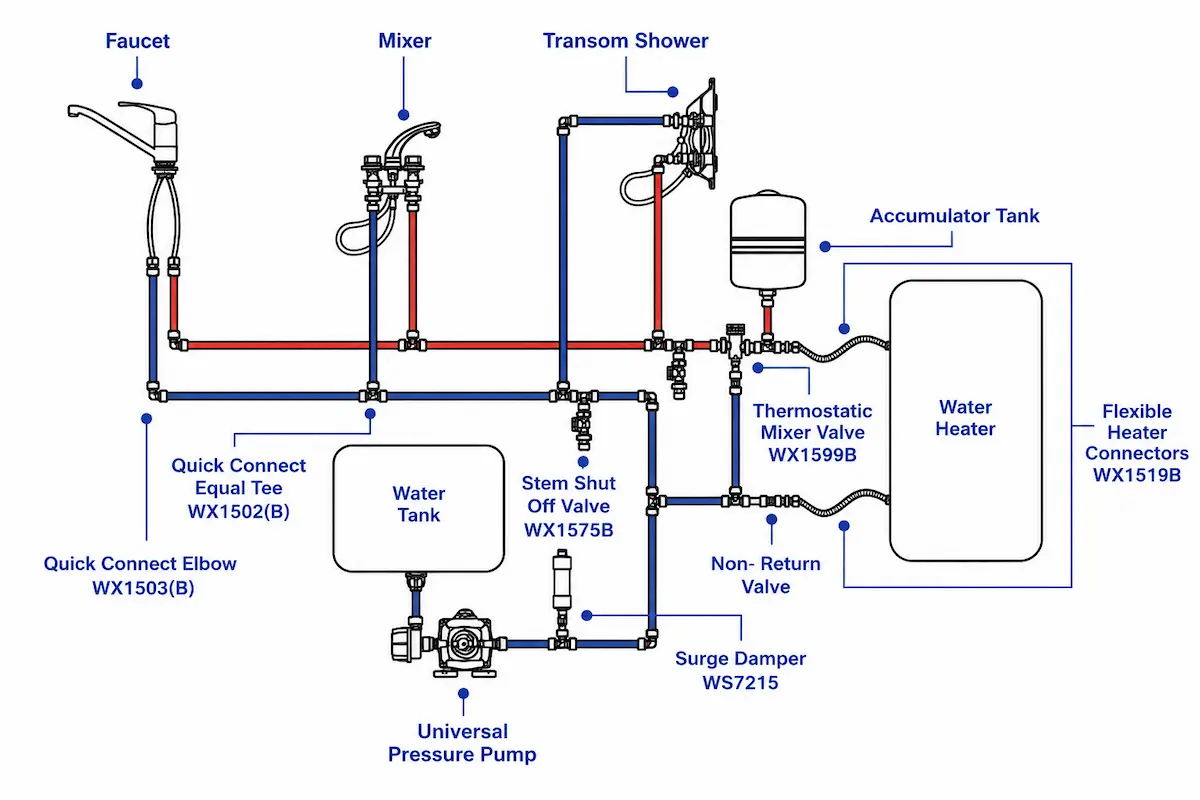
One thing worth knowing: Everett’s water is naturally soft. That’s great for your skin and your laundry, but soft water is also slightly more aggressive on copper than hard water — which is why we see pinhole leaks in 1980s and ’90s copper repipes more often than you’d think.
If your house was built before 1985 and still has the original galvanized supply line, you’ve probably noticed pressure drops, rust-tinged water first thing in the morning, or fixtures that drip no matter how many washers you swap. That’s the supply side aging out. We do whole-home repipes across Everett, from Bayside down to Holly.
The Sewer System — Probably The Oldest Thing Under Your Property
Everything that goes down a toilet, sink, tub, or floor drain exits the building through the sewer system. Branch drains tie into a main stack, the main stack drops into a building drain under the slab, and the building drain runs out to either the City of Everett sewer main or, in some of the unincorporated pockets of Snohomish County, a septic tank.
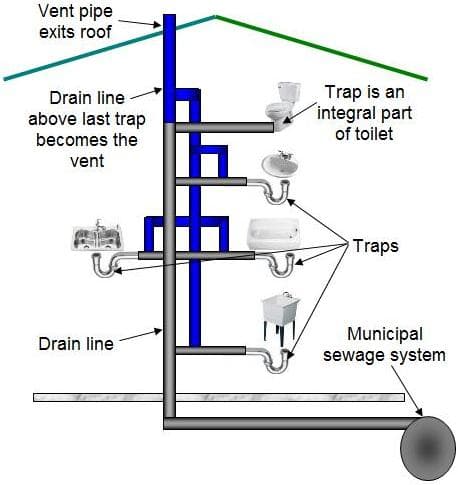
The trouble in Everett is the age of what’s underground. The median Everett home was built around 1981, and roughly 15% of the housing stock predates 1940. That means a lot of homes through Riverside, Delta, and the older Northwest Everett blocks still have original cast iron or Orangeburg pipe running out to the city main. Both of those materials hit the end of their useful life decades ago, and we’re cutting them out almost every week now.
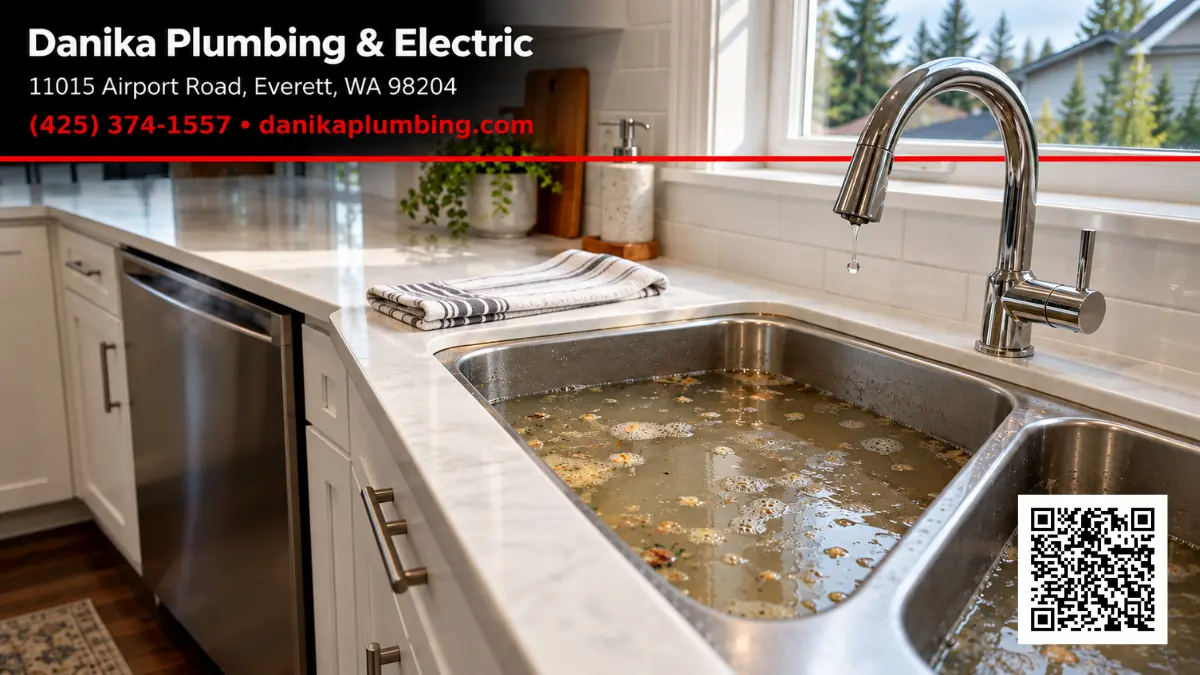
Tree roots from those big maples lining the older streets, hairline cracks, belly sections holding standing water — those are the usual suspects. Gurgling toilets, sewer smell in the yard, or drains backing up in your lowest fixtures? That’s the sewer talking. We handle sewer repair across Everett, including hydro jetting and trenchless replacement when the lot layout allows.
Drainage — The System That Earns Its Keep Every November
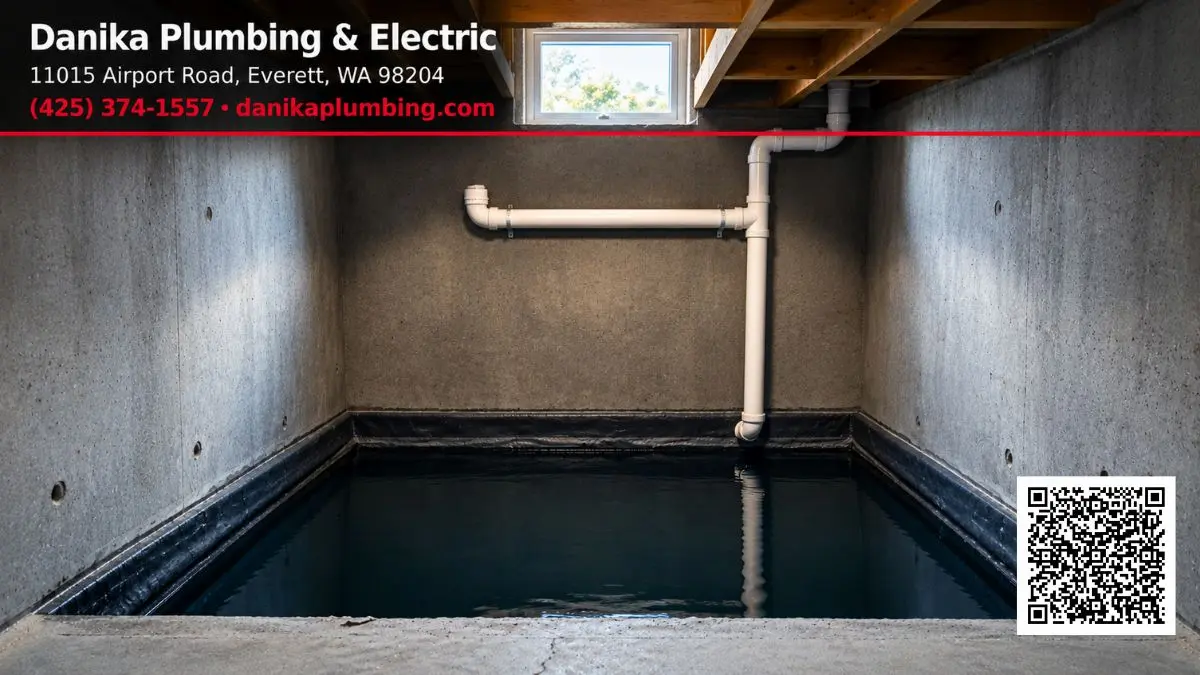
Different system entirely. Drainage handles water that hits the property from outside — rain off the roof, runoff from the driveway, groundwater pushing up against the foundation. And in Everett, this is the system that does the most actual work.
We’re talking about an average of 41 inches of rain per year, with November typically dumping close to 6 inches across 21 wet days. The wettest watershed feeding into our region (the Sultan Basin) gets around 165 inches annually — one of the wettest in the continental U.S. That’s a lot of water trying to get somewhere.
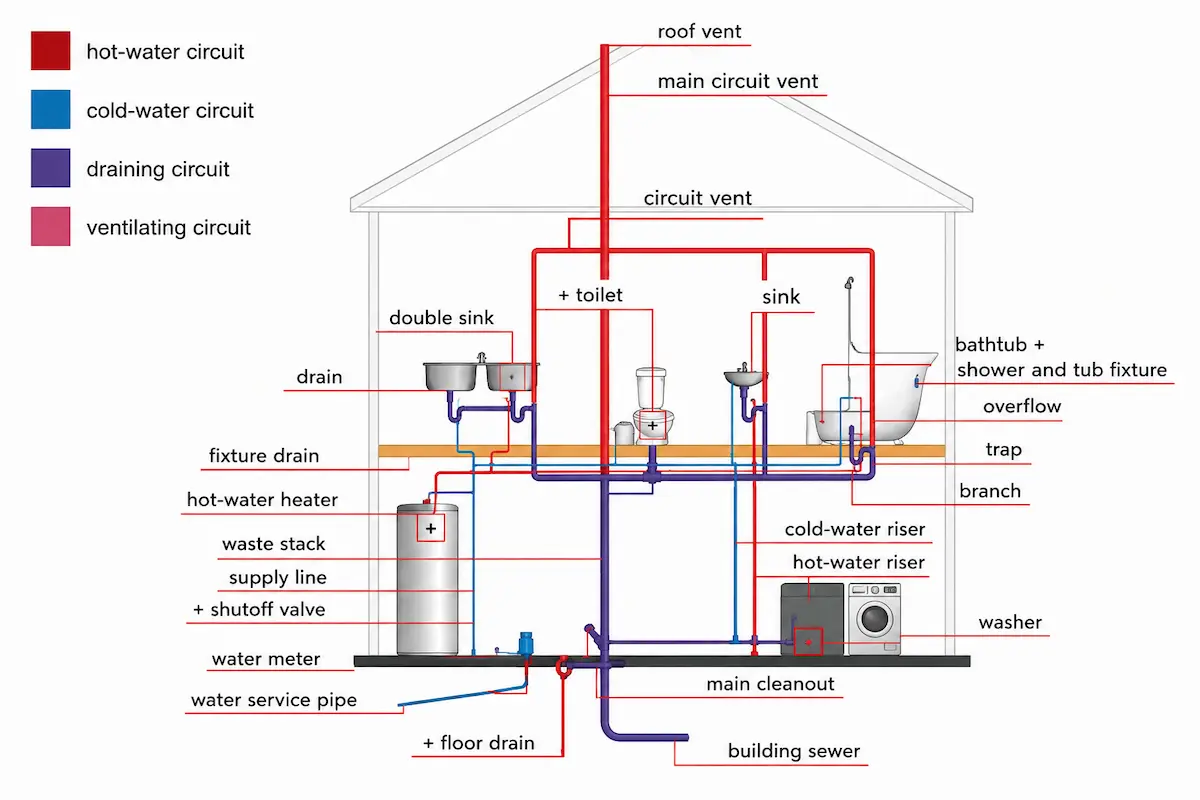
Your gutters and downspouts feed into a perimeter drain or a tightline that moves water away from the foundation. Side yards and low spots usually rely on a French drain. If you’ve got a basement or daylight basement, there’s almost certainly a sump pump pit doing the heavy lifting.
We see drainage failures pile up every fall. Crawl spaces that smell musty by Halloween. Wet drywall on the lower level by Thanksgiving. The fix is usually some combination of French drain installation, tightline replacement, or Everett sump pump service — ideally done before the storms start rolling in off Port Gardner Bay.
How These Three Systems Quietly Talk To Each Other
Here’s the thing nobody really tells you: these three systems are separate by design, but they tend to fail together.
A cracked sewer line lets groundwater seep in, which overloads the drainage and a soggy patch shows up in the yard. A failing potable supply line drips inside a wall, the framing rots, and suddenly there’s mold creeping out near the bathroom vent. Drainage backs up against the foundation, water finds the lowest point in the house, and the next thing you know there’s two inches sitting on top of your sewer cleanout in the crawl space.
That’s why when we get a call for one issue in Everett, we usually take a quick look at all three. It’s faster, it’s cheaper for the homeowner, and it catches the small stuff before it turns into a wet-drywall, dry-out-the-crawlspace, call-the-insurance-company kind of week.
If something’s not draining right, smelling right, or pressuring right at your place, we’re a few minutes up Airport Road from just about anywhere in Everett. You can reach us at (425) 374-1557 or schedule online. And if it’s a Sunday at midnight and the water heater just decided to retire — we run a 24/7 Everett emergency line so you’re not stuck waiting till Monday with a wet floor.
Everett Plumbing Questions We Get All The Time
Where Does Everett WA Tap Water Come From?
Everett’s tap water comes from Spada Lake Reservoir, about 30 miles east of the city in the Sultan River watershed. The reservoir holds roughly 50 billion gallons of snowmelt and rain, which is treated at the City of Everett Filtration Plant before piping into homes across Snohomish County.
What Kind Of Pipes Do Older Everett Homes Have?
Most Everett homes built before 1985 have galvanized steel supply lines and either cast iron or Orangeburg sewer pipes. Around 15% of the city’s housing stock predates 1940 and may still run on original lead-jointed cast iron. These materials commonly fail today through corrosion, root intrusion, or collapsing pipe walls — see our Everett repiping service for replacement options.
Why Does My Everett Basement Flood Every November?
Everett averages around 6 inches of rain in November alone, spread across roughly 21 wet days. Older homes often have undersized perimeter drains, failing sump pumps, or clogged tightlines that can’t keep up with sustained rainfall. Once groundwater builds against the foundation, water finds the lowest point and seeps in.
Is Everett WA Tap Water Hard Or Soft?
Everett tap water is naturally soft, which is nice for skin, hair, and laundry but slightly more aggressive on copper than hard water. That’s part of why pinhole leaks show up in copper repipes from the 1980s and ’90s more often than homeowners across Snohomish County tend to expect.